Sunday, February 26, 2012

Oscar 2012, a ho-hum evening

To almost no one's surprise, The Artist wins best picture.
I can always tell when it's Oscar night. The dazzling fashions? Not really. The excitement of seeing movie stars on TV? Not so much. I know it's Oscar night because it's the only night of the year that you'll catch me watching E!, the entertainment channel. Of course, I only watch the red carpet ceremonies on E! until ABC begins its Oscar coverage. This year, I was glad I tuned into E! because the highlight of the evening arrived when Sacha Baron Cohen (in full Dictator regalia, dumped ashes on red carpet interviewer Ryan Seacrest.

Cohen, whose next movie is called The Dictator, said the urn he spilled down the front of Seacrest's tuxedo contained the ashes of the late Kim Jong-Il. Kim Jong-Il, said Cohen, wanted his ashes sprinkled on the red carpet, as well as on Halle Berry's chest.

Hey, on a boring and mostly predictable Oscar night, you take your thrills where you find them.

Host Billy Crystal improved over last year's combo of James Franco and Anne Hathaway, but -- let's be honest -- that duo set a very low bar. It didn't take long for me to begin wishing Eddie Murphy hadn't dropped out as the host.

At times, Crystal seemed to be the only person chuckling at his one-liners, and his opening movie montage and subsequent song started well enough, but soon drifted into mediocrity.

Oh well, Crystal inserted himself into a scene from The Descendants, awakening from a fake coma after George Clooney kissed him, which I guess was supposed to be funny and daring.

When Chris Rock appeared to present the award for best animated feature, he joked about how easy it was to provide a voice for an animated character. He also provided a hint of what was missing from the evening, a little sharpness, a little irreverence, a little willingness to make jokes that didn't seem to suffer from varicose veins.

The awards?

It was another year of honoring pictures that didn't exactly go crazy at the box office. I was only surprised once, and that was when Dame Meryl Streep -- she of the 17 Oscar nominations -- won best-actress for playing Margaret Thatcher in

The Iron Lady. On this Oscar night, Meryl became The Gold Lady, beating Viola Davis, who seemed to be the favorite of almost every prognosticator, including me. Streep won for a fine performance in a movie that scored a 53 rating on Rotten Tomatoes, not exactly the stuff of which Oscars are made.

Said Streep: “When they called my name, I had this feeling I could hear half of America going, ‘Oh no. Oh, come on. Why her? Again?'"

As a Viola Davis fan, I felt she'd read my mind.

Octavia Spencer won best supporting actress for The Help, though. She was one of the few Oscar recipients who showed some genuine emotion.

Woody Allen won for writing the best original screenplay (Midnight in Paris), but didn't show up at the ceremony. I wondered if he was home watching the Oscars or if he'd switched over to the NBA All-Star Game.

And what was the Academy thinking? Did Adam Sandler really belong in a bit in which various actors ruminated on what makes a great movie?

And what was up with the Cirque Du Soleil number? I took it as one more sign that Hollywood -- which spent the whole evening trying to remind us how much we love movies -- has lost confidence in itself.

Angelina Jolie figured out that the best way to get attention at the Oscars is to do a little flaunting; she showed some leg. Granted, it was only the right leg that protruded brazenly from her gown, but she made a show of it.

I had one genuinely happy moment watching the Oscars, aside from the fact that I impressed with myself for being able to Tweet throughout the program, a minor achievement to be sure, but an achievement nonetheless. My moment of joy arrived when Daniel Junge and Sharmeen Obaid-Chinoy won an Oscar for the best documentary short. Junge (They Killed Sister Dorothy and Iron Ladies of Liberia) lives in Denver, and, more importantly, is building an impressive body of documentary work. He's a true talent, and his Oscar was well-deserved, especially since he was nominated a year ago in the same category (The Last Campaign of Governor Booth Gardner) and lost.

Saving Face tells the story of Pakistani women who have become victims of acid attacks, mostly by crazed husbands. It's an eye-opening film, and amid its horror and suffering, it manages to suggest that a bit of surprising evolution may be taking place in Pakistan, at least when it comes to such abused women. (For the record, Junge is the second Denver filmmaker to win an Oscar in this category: Donna Dewey -- A Story of Healing == was the first.)

Enough with the local color.

I thought it was mildly ironic that a French filmmaker (Michel Hazanavicius) won an Oscar for making a film in Los Angeles that celebrated movie history. He beat Martin Scorsese (for both best director and best picture), an America who went to Paris to make Hugo, a film that also captured some of the wonder of early moviemaking.

Oscar predictors may have been feeling slightly uneasy early in the evening when Scorsese's Hugo began to pile up technical awards (cinematography, production design), but the evening ultimately worked its way toward the expected finale with The Artist winning best picture, its fifth Oscar.

And one thing's for sure. You can bet that there'll be plenty of rueful jokes from industry insiders about Harvey Weinstein (of the Weinstein Company) and his uncanny ability to win Oscars. The Weinstein Company distributed The Artist in the U.S.)

Oh well, it's late in the evening, and I'm ready to put Oscar to bed. If you've been at an Oscar party, you're probably just arriving home, wondering why you have to get up for work tomorrow morning and unable to escape the slightly depressing fact that you do.

You can find a complete list of winners at The Academy of Motion Picture Arts and Sciences web site.

Friday, February 24, 2012

'Act of Valor' is an ode to Navy SEALs

The Navy SEALs sare tough and daring, but Act of Valor falls short.

Act of Valor is an action film without professional actors, at least not many of them. Directors Mike McCoy and Scott Waugh use real Navy SEALs to make an unabashed ode to warrior virtues, as embodied in an elite team that finds itself in a long series of battles. These frenzied set pieces begin with and evolve from the rescue of a female CIA agent who has been captured and tortured by terrorists.

Narrated by one of the SEALs, the movie works hard to glorify the warrior spirit, and, for some, it will serve as a kind of big-screen recruiting poster, although obviously not all military personnel have the desire or ability to participate in this kind of activity.

Act of Valor follows the exploits of Bandito Platoon as it moves from one operation to the next, leaving little breathing space in between. I assume that McCoy and Waugh couldn't make a film using real SEALs unless they intended to extoll the military, so it's hardly surprising that they spare no effort in underlining the platoon's coherence and courage.

We see families left behind. We see men who know that they can't be thinking about the distractions of home when they fly into action. We see acts of selfless heroism. Moreover, we get a sense of appreciation for how such elite units (presumably an increasingly integral part of U.S. defense strategy) go about their business.

The filmmakers splay real SEAL maneuvers across a barebones narrative. There's machismo, patriotism and physical daring here, but the problem with the movie is that ... well ... it's not exactly a movie.

The script is really an excuse to march these warriors into a variety of battles with glaring, blaring explosions and lots of gunfire. (The filmmakers reportedly used live ammunition.) The SEAL characters are sketchily developed, and the movie -- never overly concerned with plot -- pits the SEALs against enemies that pose a terrorist threat.

Some of the scenes (an interrogation, for example) remind us why most features are made with real actors. There's a reason John Wayne made war movies while guys named Eisenhower and Patton fought wars. I'd have preferred to see a documentary about the SEALs. I wanted to hear real SEALs speaking their own words. I wouldn't have minded a bit of nuance here or there. But that's just me.

Now let me say something else. I tend to resent movies that engage in any kind of moral browbeating. I'm talking about movies that set up an awkward dynamic. If you don't like Act of Valor, you must hate everything it stands for -- or so this kind of unstated innuendo goes.

Get this: Not admiring Act of Valor is not the same as disapproving of Navy SEALs or denying their courage or their ability to deal with extreme difficulty. Act of Valor celebrates the valor of the SEALs, but it's as close to propaganda as movies ought to get.


Thursday, February 23, 2012

Fighting for a child's life

A French movie about parents under extreme stress.


There's a little too much cinematic self-consciousness in Declaration of War, a French melodrama about the travails of a couple shamelessly named Romeo and Juliette. Romeo and Juliette meet at a party, tumble through a furious courtship montage and wind up with a new baby. As is often the case, the glow of romance quickly gives way to practical concerns. The baby cries all the time. Romeo is trying to whip a new apartment into shape. Sounds familiar, but not all the couple's problems fall within normal parameters. Romeo and Juliette soon learn that their baby has a brain tumor, and this very scary knowledge sets the movie on its true course. It's probably important to know that director Valerie Donzelli, who plays Juliette, once had a relationship with the actor who plays Romeo, Jérémie Elkaïm. The two had a baby together and that baby went through arduous cancer treatments, some of them in the hospital where much of Declaration of War was filmed. The elements for a moving story are in place, but Donzelli doesn't always help her dramatic cause. Some of the cinematic devices she employees seem a little too cute for this kind of subject matter. These include intermittent chunks of narration that help the movie leap ahead in time and a bit in which Romeo and Juliette express their love in song. Fortunately, a welcome level of realism partially offsets Donzelli's worst impulses; Romeo and Juliette are beaten down by what seems an endless round of medical treatments in which every bit of good news (the tumor has been removed) seems to be followed by an equal helping of woe (it was malignant). The baby's difficulties begin at roughly the same time as the invasion of Iraq in 2003, but the real war here is between two indefatigable parents and the disease that threatens their child. Donzelli makes no attempt to canonize herself or her partner in this intermittently affecting look at what sustained stress can do to young lovers who get way more than they bargained for. If life is a learning experience for which we're all ill-prepared, this story enrolls Romeo and Juliette in a post-graduate course.


'Bullhead,' ah those mean Belgian fields


Bullhead -- a Belgian movie populated by thugs who sell illegal drugs used to fatten cattle -- is one of five 2012 nominees for best foreign-language film. Peculiar and grim, the movie focuses on the distorted life of a steroid-using young man (Matthias Schoenaerts) who suffered a debilitating beating when he was a kid. Schoenaerts' Jacky now finds himself living through an uneasy adulthood. I'd never heard of the so-called "hormone mafia" before Bullhead, and the fact that the movie can be a bit confusing didn't help clarify matters. Bullhead begins with a provocative bit of narration that serves as introductory warning: "In the end," we're told, "we're all fucked." Flag hoisted. Message delivered. There's bleak sailing ahead. The movie's ability to hold us in its grip springs from Schoenaerts' roid-raging performance as a cattle farmer who injects himself with staggering amounts of testosterone. At first, Schoenaerts' Jacky seems like one more addition to an endless gallery of brutal movie thugs, but Bullhead enables us to understand Jacky's brooding frustrations. It eventually becomes clear that director Michael R. Roskam -- who's making his feature debut -- has concocted an elaborate saga in which Jacky seeks a revenge that begins to look like the price he expects the world to pay for the torments he's suffered. Roskam's weird, counter-intuitive take on bucolic life pushes a mean-streets mentality into the rural world of cattle farming. As the story develops, a cop is murdered; a hormone trafficker tries to cover the crime; and Jacky -- a grotesque, graceless and sometimes pathetic figure -- veers further out of control. The emotional core of the story centers of Jacky's strained relationship with a childhood pal (Jeanne Dandoy) who witnessed what happened to young Jacky, but didn't intervene. Roskam catches us up in Jacky's rage, despair and loneliness, and a bulked-up Schoenaerts creates a scary, sad character who can't tame his own violence, much less that of the world. Intense and chastening, Bullhead sometimes feels a bit too much like a hormone-stoked freak show, but it leaves you stunned.


Wednesday, February 22, 2012

Oscar prediction, best picture

OK, time for the a best-picture prediction. I hated the Academy's switch to a 10-nominee format, and I'm no more fond of its variable approach: no more than 10 pictures, no less than five. The proliferation of nominees shows just how desperate the Academy is to expand interest in its golden moment. It can't have been lost on those who make the Academy's rules that many of the movies that find their way onto Oscar's short list aren't exactly blockbusters. Of this year's nominees, the closest we get to movies that feel as if they're aiming at head-nodding, mass approval are The Help and War Horse. It's difficult to believe that Extremely Loud and Incredibly Close -- which scored an embarrassing 46 on Rotten Tomatoes -- is even on the list. And although Terrence Malick's The Tree of Life stands as an impressive and singular work, I doubt whether it ranks among the top three vote-getters on Oscar's list.

Best picture, the nominees:
The Artist
The Descendants
Extremely Loud and Incredibly Close
The Help
Hugo
Midnight in Paris
Moneyball
The Tree of Life
War Horse

I'm predicting a win for The Artist with a fallback to The Descendants. I read somewhere that a campaign had been launched to encourage voters to think about which of Oscar's nominees someone might want to watch years down the road. Voters who think that way may be pushed toward The Descendants as a more durable picture than The Artist, which has a high "delight" factor, but which, by its very nature (silent and black and white) seems a bit of a novelty. It's also possible that The Help will exert its appeal and win, especially if this proves to be a year of excessive vote-splitting. For all that, The Artist seems primed to take home the Oscar.


One more time. I won't be able to say this after today, so ....
Join me, Denver Post Film Critic Lisa Kennedy, Starz Denver Film Festival Director Britta Erickson and Oscar maven Bob Becker at 7:30 p.m. tonight -- that's Wed., Feb. 22 -- at the FilmCenter/Colfax, 2510 E. Colfax Ave. for a pre-Oscar Cinema Salon. The atmosphere will be informal and the talk will be lively.


Tuesday, February 21, 2012

Oscar predictions, actor and actress

OK, time to get serious. We're approaching the three awards that tend to be most remembered: best actress, best actor and best picture. Don't get me wrong. It's great that Oscar gives the rest of the industry its due. We need reminders that art direction, music, cinematography, make-up, costumes and editing are vital parts of the movie industry. But you rarely hear folks leave a movie gushing about a great editing job, and most of the time cinematography seems to be equated in the poplar mind with pretty pictures. If most people are willing to admit to a bit of ignorance when it comes to the technical aspects of movies, nearly everyone feels qualified to opine about actors, as well as on the overall quality of a film. So let's get to my predictions about who'll win best actress and actor at this Sunday's (Feb. 26) Oscars.

Best actress, the nominees:
Glenn Close, Albert Nobbs
Viola Davis, The Help
Rooney Mara, The Girl With The Dragon Tattoo
Meryl Streep, The Iron Lady
Michelle Williams, My Week With Marilyn

I wasn't a big fan of The Help, but I am an admirer of Viola Davis, and I think she'll win in this category. Most observers seem to argue that the best-actress contest boils down to a battle between Davis, who played Mississippi maid Aibileen Clark in The Help, and Meryl Streep, who portrayed former British prime minister Margaret Thatcher in The Iron Lady. I'd rule out Rooney Mara, who was fine and flinty in The Girl With The Dragon Tattoo. She's young, and should have more shots at an Oscar. I didn't buy Glenn Close as a woman masquerading as a man in Albert Nobbs, and although Michelle Williams, as Marilyn Monroe, was the best thing about the slight and negligible (I know, lots of people love it) My Weekend With Marilyn. She'll probably go home without a statue.

Best actor, the nominees:
Demian Bichir, A Better Life
George Clooney, The Descendants
Jean Dujardin, The Artist
Gary Oldman, Tinker Tailor Soldier Spy
Brad Pitt, Moneyball

I suppose this one boils down to a race between George Clooney (The Descendants) and Jean Dujardin (The Artist). I initially favored Clooney, but shifted after the Screen Actors Guild went for Dujardin. An awful lot of actors cast ballots in the Oscar voting. I certainly wouldn't be upset if Clooney were to win, but as we inch toward Sunday, Dujardin seems to be the favorite.

And did I happen to mention the Cinema Salon Wednesday, Feb. 22? No, well let me clue you in. I'll be joined by Denver Post Film Critic Lisa Kennedy, Starz Denver Film Festival Director Britta Erickson and Oscar maven Bob Becker at 7:30 p.m., Wed., Feb. 22 at the FilmCenter/Colfax, 2510 E. Colfax Ave. Chances are good that we'll put on a more interesting show than you'll see Sunday night when the Oscars are awarded.


Monday, February 20, 2012

More predictions, best director

With Oscar now only five days away, the suspense mounts -- or at least it's beginning to bubble upward. Today's prediction focuses on direction, and, yes, we're nearing the home stretch of my predictions because I'm only dealing with the major categories. No best make-up or best song for me. I've got three more to go, best actor and actress and best movie.

Best director, the nominees
Woody Allen, Midnight in Paris
Michel Hazanavicius, The Artist
Terrence Malick, The Tree of Life
Alexander Payne, The Descendants
Martin Scorsese, Hugo


The Directors Guild of America winner usually wins the Oscar. This year, the DGA picked Michel Hazanavicius, who directed The Artist. The smart money is on Hazanavicius because of the ascendance of The Artist among Academy voters and because of the DGA award he's already won. I'm not going to go against the smart money, but I have to reiterate my admiration of Terrence Malick and for The Tree of Life, a movie that tried to meld the personal and the cosmic. Even those don't regard Tree of Life as an unalloyed triumph (and I guess I belong in that group) surely will acknowledge that it's the most ambitious movie in the lot. I'd rule out Woody Allen in this category. In another year, Alexander Payne might have had a clear path to best picture and best director. Not this year. It's always a bit dangerous to try to assess the degree of difficulty faced by a director, but judging from afar, I'd say that Hugo is the most difficult of all the movies represented on this list, a 3-D production with spectacular sets, two child actors and a sense of delicacy that's unusual for a big movie. Still, I wouldn't bet against Hazanavicius. He's probably a lock.


What? You thought I wasn't going to mention the upcoming Cinema Salon program? You thought I wasn't going once again to invite you to join me, Denver Post Film Critic Lisa Kennedy, Starz Denver Film Festival Director Britta Erickson and Oscar maven Bob Becker at 7:30 p.m., Wed., Feb. 22 at the FilmCenter/Colfax, 2510 E. Colfax Ave. We'll help you prepare for Oscar so that you can amaze friends and family. And if we don't do that, we'll at least give you an interesting evening of pre-Oscar chat.


Sunday, February 19, 2012

Predictions, docs and foreign films

The prediction game continues. Today, best guesses for the documentary feature and foreign-language categories. Putting these two together is not meant to diminish the importance of either, but to save a little space. Know that most predictions about the year's best foreign-lanuage film are made by people who haven't seen them all. That's certainly true in my case, but when it comes to Oscar, you don't always have to have seen every film to know which way the winds of victory are blowing. Anyway, here are today's predictions:

Best documentary, the nominees:
Hell and Back Again
If a Tree Falls
Paradise Lost 3
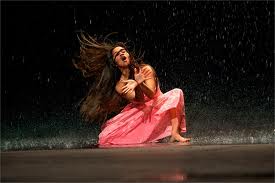
Pina
Undefeated

Another difficult category, but Wim Wenders 3-D look at the work of choreographer Pina Bausch might be the best reviewed of all these films, a combination dance and interview film that introduced many viewers to Buasch's daring work. If there's an upset in this category, it's likely to come from Hell and Back Again, director Danfung Denis'examination of the life of Marine Sgt. Nathan Harris, who we meet in the midst of battle in Afghanistan and who we watch struggle after being severely wounded and returning to his North Carolina home.

Best foreign-language film, the nominees:
Bullhead (Belgium)
Footnote (Israel)
In Darkness (Poland)
Monsieur Lazhar (Canada)
A Separation (Iran)

I've only seen two of these films, but I'm going with A Separation because it's one of the best films of 2011, a beautifully nuanced look at a deteriorating Iranian marriage and the difficulties that arise when the husband hires a young woman to take care of his father, an aging man who's suffering from dementia. Agnieszka Holland's In Darkness is considered the best challenger in this category. Holland tells the story of Jews forced to hide in the sewers of Lvov during the Nazi occupation of Poland.

Don't you hate all the self-promotion you find on the Web? I certainly do. Having said that, let me once again invite you to join me, Denver Post Film Critic Lisa Kennedy, Starz Denver Film Festival Director Britta Erickson and Oscar maven Bob Becker for an Oscar preview Cinema Salon, 7:30 p.m., Wed., Feb. 22 at the FilmCenter/Colfax, 2510 E. Colfax Ave. We'll predict, I'm sure, but we'll also talk about why we still care (if we do) about the whole damn business. I enjoy doing these lively, informal Salon programs, in part because the audiences can be fun. I encourage you to try one.


Saturday, February 18, 2012

My predictions: Best screenplays

The predictions continue. Here's another installment in the march toward Oscar, my predictions for the best screenplays (adapted and original). Remember, the Oscars will be awarded on Sun. Feb. 26.

Best adapted screenplay, the nominees:
The Ides of March, George Clooney, Beau Willimon & Grant Heslov
The Descendants, Nat Faxon, Alexander Payne & Jim Rash
Hugo, John Logan
Tinker, Tailor, Soldier, Spy, Bridget O'Connor & Peter Straughan
Moneyball, Aaron Sorkin, Steven Zaillian & Stan Chervin


The Descendants is the likely winner here. The movie's trio of credited writers did a fine job adapting Kaui Hart Hemmings' 2007 novel for the screen. The three main characters -- a father and his two daughters -- were memorable, and the movie managed an exceptionally difficult feat, mixing humor and serious drama without capsizing.

Best original screenplay, the nominees:
Midnight in Paris, Woody Allen
Margin Call, JC Chandor
A Separation, Asghar Farhadi
The Artist, Michel Hazanavicius
Bridesmaids, Kristen Wiig & Annie Mumulo


Woody Allen's Midnight in Paris is the front runner (and my pick) in a category that -- with the exception of Bridesmaids -- includes nothing but award-worthy nominees. A Separation likely will win best foreign-language film, so it probably will miss out in this category. It's possible, if unlikely, that the intricate and literate Margin Call screenplay could prevail.

I pick Allen because the movie was one of his most popular, and because every awards show needs to honor someone who isn't likely to show up.

Caveats: It's always dangerous to count Aaron Sorkin out, and if The Artist goes crazy, it might win best original screenplay.

*


Join me, Denver Post Film Critic Lisa Kennedy, Starz Denver Film Festival Director Britta Erickson and Oscar maven Bob Becker for an Oscar preview Cinema Salon, 7:30 p.m., Wed., Feb. 22 at the FilmCenter/Colfax, 2510 E. Colfax Ave. We'll predict, I'm sure, but we'll also talk about why we still care (if we do) about the whole damn business anyway.

*An update: The Writers Guild of America Sunday (Feb. 19) announced that The Descendants won its award for best adapted screenplay, and Midnight in Paris took the award for best original screenplay. After I originally posted my predictions in this category, a reader commented negatively on Woody Allen's Midnight in Paris (See below). I wouldn't have voted for it as best original screenplay, either, but the professionals evidently admired it more than any other picture in the competition.