Rocky Mountain Movies & Denver Movie Review
FOR MOVIE LOVERS WHO AREN'T EASILY SWEPT AWAY
Wednesday, May 24, 2023
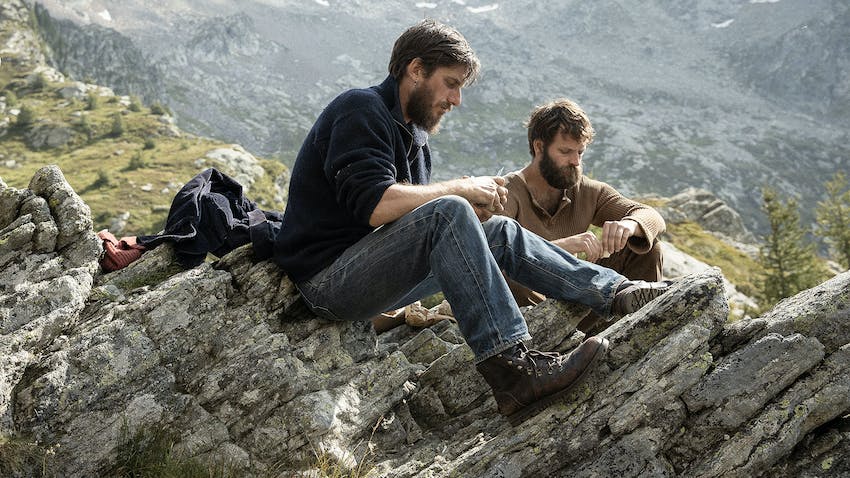
Men with mountains to climb
Thursday, October 25, 2018
A father struggles with his son's addiction
An addiction drama starring Timothee Chalamet and Steve Carell, Beautiful Boy deals with a father who desperately tries to help his talented, once-promising 18-year-old son kick a meth habit.
Chalamet's performance and the painful relevance of the movie's subject carry it a long way, but Beautiful Boy falls short of the dramatic powerhouse that surely must have been intended.
Belgian director Felix Van Groeningen tells the story of David Sheff (Carell), a successful freelance journalist who finds it impossible to accept his son’s precipitous decline. Nic (Chalamet) has gone from being a model child with a glowing future to a drug-addicted loser who seems permanently to have lost his way. Somehow, Nic has stumbled into a death spiral of a life.
Shackled to flashbacks to healthier times, the movie grinds away at our sympathies by showing the halting (and vaguely monotonous) ways in which Nic's cycle of recovery and relapse unfolds.
Based on books by both the real father and son (David Sheff's Beautiful Boy and Nic Sheff's Tweak), the movie casts its heaviest gaze on Carell's character. David and his artsy second wife (Maura Tierney) have two additional children, but most of David's attention is absorbed by Nic's increasingly powerful addiction. No matter how hard Dad tries, he’s unable to push Nic's life back on track.
The movie asks an audience to become involved in the struggles of a family that seems to fit most known definitions of "privileged." I know a few freelance writers and they don't seem to be living as well as Carell's David, a journalist who has a wonderfully appealing house in Northern California.
Perhaps director Van Groeningen (The Broken Circle Breakdown) sees that as part of the point. Even the well-heeled of Marin County can't immunize their kids from the scourge of drugs. It's possible for parents to do all the right things and still be blindsided by tragedy.
A bearded, super-earnest Carell carries a major burden here. He must show David's desire for control, his journalistic inquisitiveness (at one point he even tries drugs himself) and a father's one-note persistence when it comes to his wayward son. Looking drearily somber, Carell isn't entirely up to the task.
Riding high on praise from his work in Call Me By Your Name, Chalamet continues to impress as a smart kid who knows how to rationalize his drug use. He says meth enables him to see a drab black-and-white world in color. Chalamet also hints at Nic's rebellion against being a creative, success-bound child and budding writer.
Nic's decline comes into sharpest focus when he and a girlfriend (Kaitlyn Dever) hit low points of homelessness and physical decay on the streets of San Francisco.
I suppose the movie deserves credit for not specifying exactly why Nic has become an addict. Instead of providing pat answers, Beautiful Boy asks us to share in the torments of its characters, but it can feel like a tutorial on the way drug addiction impacts families.
A screenplay credited to Luke Davies (Lion) and Van Groeningen hints that for Nic to abandon his drug habit, David must let go of a carefully constructed image of his son, an intriguing idea but one that probably doesn't come into sharp enough focus as the movie wends its way through an often-exhausting 111 minutes.
Wednesday, December 4, 2013
Bluegrass in Belgium? You bet
An adorable kid with cancer. A soundtrack loaded with country music. Guys wearing cowboy hats, and driving pickup trucks. A woman ornamented with enough tattoos to decorate a small fleet of sailors on shore leave.
These are but a few of the ingredients that made a committed urbanite like me less than eager to watch The Broken Circle Breakdown, a Belgian import built around characters who are fascinated by America, particularly the alternately rhythmic and plaintive tunes that once helped downtrodden residents of Appalachia cope with hardscrabble lives.
Initial reservations aside, I'm certainly glad I ignored by own biases because director Felix Van Groeningen hits an emotional jackpot with this story about two lovers whose initially giddy but ultimately troubled relationship gives the movie its beating, vibrant heart.
Alternating between the couple's problematic present and its often delirious past, Van Groeningen tells the story of bluegrass musician Didier (Johan Heldenbergh) and his tattoo artist wife Elise (Veerle Baetens), who also happens to be a fine singer and who's quickly incorporated into Didier's band.
Along with their fellow musicians, Didier and Elise enjoy an upbeat bar-band life that's enriched by music, camaraderie and care-free exuberance.
Although he's initially thrown by Elise's unexpected pregnancy, Didier seems to adapt to fatherhood quickly: He clearly loves his daughter Maybelle (Nell Cattrysse), and has more than a little difficulty coping when she's diagnosed with cancer. We know about Maybelle's grave illness from the start because the movie opens in the hospital where the six-year-old begins her treatment.
Many of the musical scenes and much of the courtship between Didier and Elise play at levels that are so upbeat they're dizzying. The underlying question, I suppose, is whether Didier really understands the pain at the heart of some of the music that he plays. Is he playing with authenticity or is he playing at authenticity?
Van Groeningen keeps bringing the movie to a boil and then taking all the fizz out of it, showing us again and again that a fun beginning doesn't always lead to a pleasant conclusion.
Broken Circle Breakdown -- named for the tune Will the Circle be Unbroken -- often flirts with corniness. Didier has a shaggy, purportedly endearing quality that's borderline annoying: An appreciative Elise enjoys his antics -- at least until she no longer can.
But as the movie progresses, Van Groeningen strips away the excitement of new love to show us depths of pain and sadness that may have been there from the start. Scenes in the present don't just alternate with the past, they comment on them, gradually expanding our knowledge in ways that give them new meaning.
Toward the end, there's an almost over-stuffed quality to the movie, which tries to jam an awful lot into an essentially narrow frame.
In one late-picture scene, for example, Didier unleashes his rage during a performance, ranting about the way religion has undermined the science that might help those suffering with cancer. By that time, the drama has shifted to focus on the different ways in which Didier and Elise try to cope.
You come away from Broken Circle feeling that life doesn't always make sense, but knowing, too, that sometimes music can help some folks carry on despite the pain.
True to the movie's dual concerns -- music and personal tragedy -- Van Groeningen also understands that not everyone can bear the worst burdens. That knowledge keeps his movie from turning into one more helping of cinematic self-help. Broken Circle Breakdown makes for an emotionally rich experience in which not all pain and suffering can be eased.
For some, there simply can be no comfort. Others choose to play on. I wonder if Van Groeningen isn't asking us to respect either choice.

