Tuesday, December 20, 2022

‘Whale’: Misery that doesn’t love company


A vast expanse of artificial flesh encases Brendan Fraser in The Whale, enabling the 54-year-old actor to play Charlie, a man who has compulsively eaten his way to a monumental 600 pounds. 
 Not surprisingly, Charlie is self-conscious about his weight: He teaches on-line writing courses at a local college but doesn't allow his students to see him. He keeps the camera on his computer off.
  Charlie's immobilizing bloat began when his gay lover committed suicide, a double tragedy because Charlie had left his wife (Samantha Morton) and daughter (Sadie Sink) to pursue what he expected to be the love of his life.
  Living alone in a cluttered apartment in a small town in Idaho, Charlie is visited by Liz (Hong Chau), a nurse, friend, and the sister of Charlie’s dead lover.
  Liz starts the dramatic clock ticking: If Charlie doesn't head to a hospital, his death from congestive heart failure is imminent, Liz tells him.
  Intent on self-destruction, Charlie refuses to budge. He relies on Liz to bring him hefty sub-sandwiches and has large pizzas delivered to his door. He leaves cash and tips in the mailbox so that the delivery kid doesn't see him.
   Much has been made of Fraser's performance. Many think he has put himself on an Oscar track. Some of this has to do with Fraser's previous work in movies such as Encino Man, George of the Jungle, and several Mummy movies, not exactly Oscar bait.
    Oscar nomination or not, Fraser deserves credit for creating a character who could have been little more than a gimmick. Flashes of humor peek through Charlie's bulk, assuring us that he retains his humanity. Maybe he's just a decent guy who lost control of himself.
    But two hours of watching Charlie wallow in self-recrimination isn't enough to fill a movie and that's where the trouble starts.
     As the supporting cast arrives, Aronofsky cranks up the unpleasantness.
     Charlie's visitors aren't exactly fully developed characters; they're illustrations of Charlie's problems: An estranged former wife (Morton); an aggrieved teenage daughter (Sink) who spews venom; and a missionary (Ty Simpkins) who believes faith and fervor can save Charlie.
     Put another way, The Whale is one sour movie, full of harsh encounters that can feel as repellent as Charlie's compulsive eating, which includes buckets of fried chicken and as many candy bars as his mouth can hold.
     The movie's title, by the way, doesn't refer to Charlie. When he's agitated, Charlie recites a passage from a cherished essay on Moby-Dick, repeating it as if it were a prayer. 
    Aronofsky (Requiem for a Dream, Black Swan, and The Wrestler) peers into the waning days of an emotionally wounded man whose life has been sadly diminished. 
    Fair enough, but The Whale sometimes feels more like an intrusion than a movie, invaded privacy wearing the mask of drama.
    Toward the end, Aronofsky tries to give Charlie, and presumably, the audience, a redemptive lift. It's too late.
    Put another way: I think I was supposed to root for Charlie to be saved; I just wanted him to be left alone.

Monday, December 19, 2022

My 10 best movies of 2022

    As the movie business becomes increasingly fragmented, it's almost foolish to create a list of 10-best movies for 2022 or any other year. Compiling such a list is more habit than anything else because it has become impossible to keep up with all movies released on all platforms.
   In September of 2022,  for example, some 28 documentary features were released in one form or another and that's not counting documentary series. 
   I know that it won't take long before I find movies I haven't seen on the 10-best lists of other critics. That's the way of things these days. 
    So I preface this 10-best list with a cautionary note. These movies are among those that I most admired and enjoyed in the universe of movies that I was able to explore.
    I didn't think about it while making this list, but as it turns out, five of the 15 films mentioned here (including honorable mentions) were directed by women. Moreover, seven of the listed films had women as their main character.
    Meaningful or just a coincidence of this particular year? Only time will tell.
    Oh well, meaningful or not, old habits are difficult to break, so here's my list.

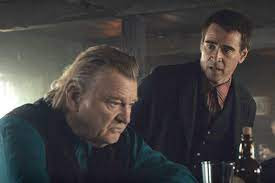
1. The Banshees of Inisherin

A rueful Irish tale about a broken friendship between two men played by Colin Farrell and Brendan Gleeson. Writer/director Martin McDonagh took his story in a shockingly unexpected direction, leaving us to mull all that we'd witnessed. 


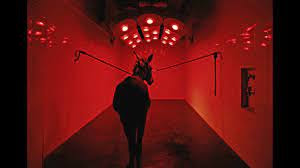
2. EO

Director Jerzy Skolimowski tells the story of a forlorn donkey whose adventures cast a profound light on the relationship between humans and the animal life of our beleaguered planet. Heartbreaking and beautiful moviemaking.

3.  Tar

    
Sophisticated, provocative and fueled by Cate Blanchett's fierce performance as a famous conductor, Tar gave director Todd Field a platform from which he could orchestrate a compelling drama about genius-level talent, power and its abuses.

4. Aftersun


I can't think of many child performances better than the one Frankie Corio gives in this story about a dad (Paul Mescal) who takes his 11-year-old daughter on a Turkish vacation.  Director Charlotte Wells took a relaxed but revealing look at the way a woman remembers the father she didn't really know.

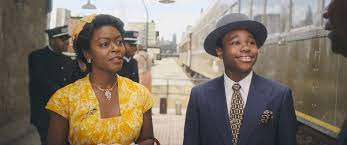
5. Till
Director Chinonye Chukwu smartly builds the story of the 1955 murder that sparked the Civil Rights movement around a fiercely illuminating performance from Danielle Deadwyler, who plays the grieving determined mother of 14-year-old Emmett Till. Solid moviemaking.

6.  Top Gun: Maverick

Few expected Tom Cruise to score big with a sequel to a movie that opened in 1986. But Cruise and director Joseph Kosinski shrewdly surrounded the star with an appealing young cast led by Miles Teller. A movie about Navy pilots and the military? Partly. But this one's really about star-driven entertainment that delivers.

7. Nanny and Pearl


I hate doubling up on a 10 best list but these two horror movies feature strong work from cast and crew -- and, more importantly, were about something more than jump scares. Nanny gave director Nikaytu Jusu an opportunity to explore the relationship between a Senegalese immigrant and the liberal whites who hire her to take care of their daughter. Second in a series from director Ti West, Pearl features an astonishing performance from Mia Goth as an ambitious, sexually awakened woman consigned to a dreary life. Both movies show what can be done when horror meets with a bit of artistic aspiration.

 8. Happening


This French movie reached US shores at a time when few topics felt more incendiary and relevant than abortion. Director Audrey Diwan tells the story of a 23-year-old student (Anamaria Vartolomei) who hopes to become a writer. A one-night stand leaves Vartolomei's Anne pregnant. The year: 1963 and abortion is illegal in France. This  keenly focused movie shows the obstacles Anne must surmount to obtain an abortion. The result: Powerful and honest moviemaking.


9. Decision to Leave
It took me a while to warm up to director Park Chan-Wook’s tangled, complex take on film noir. Park (Old Boy) has little interest in creating a straightforward narrative but his subject is familiar: a married detective who holds himself in high regard (Park Hae-il) falls for a Chinese woman (a great  Tang Wei) who’s a suspect in a murder investigation. Cliched? Yes, but Park’s artfully fractured narrative pushes deep into the lives of the detective and his “prey.” Park isn’t so much telling a story as examining a provocative question: Can a lover ever be fully known?

10. Emily the Criminal

Aubrey Plaza hits the target with a drama about an aspiring artist whose felony record locks her out of the job market. Director John Patton Ford, who also wrote the screenplay, engineers a crime story that makes Emily part of a credit card fraud scheme. Plaza's  performance burns through some late-picture improbabilities and turns this LA-based movie into a winner.

Honorable Mentions

1. After Yang


Korean-born director Kogonada displays a deeply developed aesthetic sense in this meditative look at a family's attachment to an android known as a “technosapien.” A restrained Colin Farrell creates the perfect character for the movie's transfixing calm.

2. Official Competition

Argentine directors Gaston Duprat and Mariano Cohn's entertaining, funny comedy focuses on a movie director (a terrific Penelope Cruz) who exacerbates and toys with conflicts between two of her actors (Antonio Banderas and Oscar Martinez). 

3. Marcel the Shell With Shoes On
Ridiculous? Of course. But this bit of stop-motion animation from director Dean Fleisher-Camp takes off from a YouTube hit, landing a charming, funny, and perceptive bit of cinematic play. Great voice work from Jenny Slate as the voice of Marcel.

4. Both Sides of the Blade

Director Claire Denis looks at a successful woman (Juliette Binoche) who becomes involved in a love triangle. Vincent Lindon and Gregoire Colin portray the men in a story that finds Binoche's Sara trying to negotiate two sides of a romantic coin while resisting the tug of her personal history.


Wednesday, December 14, 2022

A masterwork about the life of a donkey


   Director Jerzy Skolimowksi's EO has virtues that most directors seem to have forgotten. 
   The film says everything that needs to be said in an economical one hour and 26 minutes. 
    A simple story is rich, evocative, and deeply meaningful -- and told with a minimum of dialog.
   Moving through a variety of episodes, sometimes without benefit of expository transitions, EO qualifies as one of the year's best films, a masterwork from an 84-year-old director who has no time for superfluities.
  With a terrific assist from cinematographer Michael Dymek, Skolimowski spins a fable-like tale about a donkey named EO. Actually six were used in shooting the movie. 
  But what elevates EO has less to do with the lovable donkey that becomes its main character than with how humans impose themselves on EO. 
   The movie begins with EO working in a traveling circus. He teams with Kasandra (Sandra Dryzmalska) for a popular animal act.
  Unlike others in the circus, Kasandra cares about EO. She offers him security and affection.
   Hopes of happiness vanish when EO is sent to a horse farm as the result of a protest by an animal rights group. There, he becomes a beast of burden, a fate that had been foreshadowed when a circus hand used him to haul trash to a dump.
  At the horse farm, EO occupies the bottom position on the totem of animals prized by humans. He's uncooperative, so he's taken to a farm where donkey's are raised for trail rides. EO has trouble adjusting to another unfamiliar surrounding.
   EO misses Kasandra and we feel the pain of a creature subjected to the whims of the humans around him. When Skolimowski shows us EO's dark gleaming eye in closeup, we sense deep loneliness.
   After a brief reunion with Kasandra, EO sets out on his own. He hopes to find Kasandra. He wanders through a forest at night. When a soccer game is disrupted by hooliganism, EO suffers a severe beating. He later encounters a truck driver and a wandering young man who introduces him to his mother (a briefly seen Isabelle Huppert).
    EO's journey is Dickensian, an innocent creature is sent into a world that's less than welcoming. He travels from Poland to Italy, moving through situations he wasn't made for.
   Cinema buffs will no doubt cite Robert Bresson's 1966 Au Hasard Balthazar as an obvious predecessor, but it doesn't matter whether you've seen that movie. EO is its own mysterious creation, enriched by Pawel Mykietyn's unsettling score.
   And note: EO isn't Eddie Murphy's Donkey in Shrek. He's not a vehicle through which human traits pass; he's a donkey, often shown in closeup to remind us that the movie is about him, as well as about the humans he meets.
   Still, we're asked to understand that if we don't see EO's worth, we put ourselves at odds with much of the life that inhabits our embattled planet. EO may suffer for his innocence but Skolimowski knows that we've long since lost ours. 
   Through some of the year's most captivating and even surreal imagery, Skolimowski (Shout, Moonlighting) restores some of the world's mystifying strangeness, something we've blurred with ignorance, callousness and unrecognized responsibility. 
     EO is many things, but most of all it's a heartbreaker of a movie -- and I don't mean that in a corny way.


Critics Choice nominees for this year's films


Everything Everywhere All At Once leads this year's Critics Choice Awards nominations with a total of 14 nods. The Awards ceremony will be held on Jan. 15 and will be broadcast on the CW network. Check local listings for times.
The Critics Choice Association has a pretty good track record when it comes to serving as a bellwether for Oscar, perhaps because CCA casts a wide net and diverse net. The organization represents more than 600 media critics and entertainment journalists. I'm one of them.
So if you're addicted to Oscar pools or just an interested bystander, the list of the 28th Annual Critics Choice Award nominees offer a good way to gear up for another awards season.

Best Picture
Avatar: The Way of Water
Babylon
The Banshees of Inisherin
Elvis
Everything Everywhere All at Once
The Fabelmans
Glass Onion: A Knives Out Mystery
RRR
Tar
Top Gun: Maverick
Women Talking

Best Actor
Austin Butler, Elvis
Tom Cruise, Top Gun: Maverick
Colin Farrell, The Banshees of Inisherin
Brendan Fraser, The Whale
Paul Mescal, Aftersun
Bill Nighy, Living

Best Actress

Cate Blanchett, Tar
Viola Davis, The Woman King
Danielle Deadwyler, Till
Margot Robbie, Babylon
Michelle Williams, The Fabelemans
Michelle Yeoh, Everything Everywhere All at Once

Best Supporting Actor
Paul Dano, The Fablemans
Brendan Gleeson, The Banshees of Inisherin
Judd Hirsch, The Fabelmans
Barry Keoghan, The Banshees of Inisherin
Ke Huy Quan, Everything Everywhere All at Once
Brain Tyree Henry, Causeway

Best Supporting Actress
Angela Bassett, Black Panther: Wakanda Forever
Jessie Buckley, Women Talking
Kerry Condon, The Banshees of Inisherin
Jamie Lee Curtis, Everything Everywhere All at Once
Stephanie Hsu, Everything Everywhere All at Once
Janelle Monte, Glass Onion: A Knives Out Mystery

Best Young Actor/Actress
Frankie Corio, Aftersun
Jalyn Hall, Till
Gabriel LaBelle, The Fabelmans
Bell Ramsey, Catherine Called Birdy
Banks Repeta, Armageddon Time
Sadie Sink, The Whale

Best Acting Ensemble
The Banshees of Inisherin
Everything Everywhere All at Once
The Fabelmans
Glass Onion: A Knives Out Mystery
The Woman King
Women Talking

Best Director
James Cameron, Avatar: The Way of Water
Damien Chazelle, Babylon
Todd Field, Tar
Baz Luhrmann, Elvis
Daniel Kwan, Daniel Scheinert, Everything Everywhere All at Once
Martin McDonagh, The Banshees of Inisherin
Sarah Polley, Women Talking
Gina Prince-Bythewood, The Woman King
S. S. Rajamouli, RRR
Steven Spielberg, The Fabelmans

Best Original Screenplay
Todd Field, Tar
Daniel Kwan, Daniel Scheinert, Everything Everywhere All at Once
Martin McDonagh, The Banshees of Inisherin
Steven Spielberg, Tony Kushner, The Fabelmans
Charlotte Wells, Aftersun

Best Adapted Screenplay
Samuel D. Hunter, The Whale
Kazuo Ishiguro, Living
Rian Johnson, Glass Onion: A Knives Out Mystery
Rebecca Lenkiewicz, She Said
Sarah Polley, Women Talking

Best Cinematography
Russell Carpenter, Avatar: The Way of Water
Roger Deakins, Empire of Light
Florian Hoffmeister, Tar
Jausz Kaminski, The Fabelmans
Claudio Miranda, Top Gun: Maverick
Linus Sandgren, Babylon

Best Production Design
Black Panther: Wakanda Forever
The Fabelmans
Avatar: The Way of Water
Everything Everywhere All at Once
Elvis
Babylon

Best Editing
Babylon
Top Gun Maverick
Avatar: The Way of Water
Everything Everywhere All at Once
Elvis
Tar

Best Costume Design
Black Panther: Wakanda Forever
Glass Onion: A Knives Out Mystery
Everything Everywhere All at Once
Elvis
The Woman King
Babylon

Best Hair and Makeup
Babylon
The Batman
Black Panther: Wakanda Forever
Elvis
Everything Everywhere All at Once
The Whale

Best Visual Effects
Avatar: The Way of Water
The Batman
Black Panther: Wakanda Forever
Everything Everywhere All at Once
RRR
Top Gun: Maverick

Best Comedy
The Banshees of Inisherin
Bros
Everything Everywhere All at Once
Glass Onion: A Knives Out Mystery
Triangle of Sadness
The Unbearable Weight of Massive Talent

Best Animated Feature
Guillermo del Toro's Pinocchio
Marcel the Shell with Shoes On
Puss in Boots: The Last Wish
Turning Red
Wendell & Wild

Best Foreign Language Film
All Quiet on the Western Front
Argentina, 1985
Bardo, False Chronicle of a Handful of Truths
Close
Decision to Leave
RRR

Best Song
Carolina, Where the Crawdads Sing
Ciao Papa, Guillermo del Toro's Pinocchio
Hold My Hand, Top Gun: Maverick
Lift Me Up, Black Panther, Wakanda Forever
Naatu Naatu, RRR
New Body Rhumba, White Noise

Best Score
Guillermo del Toro's Pinocchio
The Batman
Tar
Women Talking
Babylon
The Fabelmans

Sights and sounds dominate new 'Avatar'


  You almost can write a review of Avatar: The Way of Water without seeing the movie. In the hands of director James Cameron, you can be sure the movie will boast an abundance of visuals that dazzle and delight.
  In this case, kudos to Cameron for underwater footage that features beautifully imagined sea creatures and flora. If you see the movie in 3D, you may feel as if you can touch what you're watching.
   When it comes to the technical aspects of imaginative expression, Cameron excels, and his mixture of live and digital imagery unfolds seamlessly.
   You also know that, in broad terms, the movie, like the first installment, will pit environmentally oriented tribal creatures of the planet Pandora (good) against the military/industrial forces of people from the dying planet of Earth (bad). 
    You also know that Cameron will freshen the story, in this case focusing on the children of Jake (Sam Worthington) and Neytiri (Zoe Saldana), a trio of kids who are also befriended by Kiri (Sigourney Weaver), a girl whose mother Grace (also Weaver) appeared in the last installment. 
    I’m not going to get into the genetic history of these characters because ... well ... beats me.
    Not surprisingly, the movie's third act offers a tremendous jolt of action, and, unlike what you'll find in the work of some of his contemporaries, Cameron's combat proves legible. You can tell what’s happening. Really.
    In full awed-by-nature mode, Cameron also pays homage to whale-like creatures — here called tulkuns —- giant sea mammals who are intelligent and helpful. 
    The tulkun are linked to a newly introduced tribe, the Metakayina, Pandora island folks who can swim underwater for long periods and who have developed an ethos based on their relationship to the sea and its creatures. 
    The plot begins moving when Sully and his family take refuge among the Metakayina, who are ruled by Ronal (Kate Winslet) and Tonowari (Cliff Curtis). The children of this royal pair interact with Jake and Neytiri's kids, giving Cameron an opportunity to explain Metakayina culture while offering some fairly typical teen conflict.
   You also know that Sky People (Earthlings) will be greedy and brutal. The Sky People have devised a way to use the memories of the previous military characters to create clones that appear to be Na’vi. So Quaritch (Stephen Lang), the last movie's villain, has a tail and a narrow Na’vi physique.
    Of course, he's still a jerk.
    Motivated by something akin to revenge, Quaritch wants to destroy Jake, ostensibly because Jake has become the leader of the rebels. 
   Every time, Quaritch opens his mouth, the movie sounds as if it's channeling a Vietnam war movie, complete with episodes in which soldiers attempt to brutalize the local population of Pandora's islands.
    All this means that The Way if Water has been engineered to generate big-time box office returns by filling the screen with  better realized visuals than can be found in the first edition — and those were pretty impressive, too.
   Shifting the focus to teenagers and turning Jake into a stern but worried dad adds a more juvenile flavor, but most adults probably won’t mind. 
    Look, if you’re searching for a sophisticated story, eloquent dialog, and revelatory thinking, Avatar probably is not the place to start. 
     Cameron aims for immersive experience, so much so that when you visit a new environment, you may feel like you’re entering another terrifically designed attraction in the Cameron collection of theme parks.
    I don’t mean that as a criticism but as a way of suggesting how it feels like to watch a spectacle-oriented movie, which has an ending (several actually) in which Cameron keeps trying to top himself and often succeeds. 
   In the idyllic world of my imagination, The Way of Water wouldn't  be an event movie that's poised to break records for popcorn sales. But in the real world governed by spinning turnstiles, we probably should be grateful that The Way of Water comes from Cameron, a filmmaker who gives audiences what they pay for — richly realized journeys to other worlds.
    The Way of Water, if you haven't heard, is three hours long, but I wasn't much bothered by its length. It did, however, give me time to think. During an underwater battle involving a sinking vessel, for example, I couldn't help asking myself, "What? Cameron didn't get enough of this with Titanic?"

Thursday, December 8, 2022

'Pinocchio' told in a darker register


   If you appreciate stop-motion animation, you'll no doubt be enthralled by Guillermo del Toro's Pinocchio, an animated work co-directed by del Toro and Mark Gustafson. 
   I've read that del Toro has better served the familiar story's source material, a tale first told in 1883 by Carlo Collodi. Never having read the original, I'll take the word of others, notably because del Toro has made a darker version than we might expect, considering the story 's Disneyfied past.
   Note, however, that del Toro includes a lengthy World War II segment, which, if memory serves, never made it into Collodi's 19th-century work. Neither did Benito Mussolini, the pompous dictator who shows up here.
   Ostensibly a musical, the movie is more notable for its often gloomy tones than for any soaring musical work. 
   Ever obsessed with the horrors of fascism and the dread of death, Del Toro (Pan’s Labyrinth and more recently Nightmare Alley) works his favorite themes into this overlong movie while also acknowledging religion, albeit in somewhat ambiguous fashion. 
   Early on, Pinocchio's dad (David Bradley 's Geppetto) is seen restoring an altarpiece of Jesus on the cross. In this version, Gepetto isn't a Santa's workshop kind of craftsman. 
   The outline of the familiar story remains. When Geppetto's beloved son (Gregory Mann as both the real-life son and Pinocchio) is killed by a bomb, Geppetto drowns his sorrows in alcohol. Once a noble craftsman and loving father, Geppetto becomes an inconsolable drunk. 
   A Wood Sprite (Tilda Swinton) brings the wooden Pinocchio to life. Although death is very much on the movie's mind, Pinocchio himself has more lives than a cat. He can be killed and brought back to life. In one adventure after another, he tries to win his father's love.
   Ewan McGregor gives voice to Sebastian Cricket, who also serves as the movie's narrator. Christoph Waltz turns up as the voice of Count Volpe, the exploitative entrepreneur who tries to turn Pinocchio into a sideshow attraction. 
   Del Toro has done his best to keep Pinocchio from looking like a lovable puppet, making no attempt to conceal Pinocchio's wooden origins. He's not exactly kindling but he's no cute make-believe boy, either.
   I'm not sure how kids will respond to this version of Pinocchio. I wouldn't want to deny the creativity and care of del Toro's filmmaking but too often I found the movie more impressive than enjoyable. 

'Emancipation': History as horror


    In  1863, President Lincoln issued the Emancipation Proclamation. The Civil War was still raging and the news of liberation couldn't reach all those who were enslaved in the South.
   Compelling and often horrific, Emancipation begins when one enslaved man is separated from his family and sent to a Confederate work camp. 
   Known as Peter, the man learns of Lincoln's proclamation from an overheard conversation. When he finds an opportunity to flee, he takes it.
   Will Smith stars as Peter, a runaway who has two goals: to reach freedom and to reunite with the wife (Charmaine Bigwa) and the children from whom he has been separated.
   In the hands of director Antoine Fuqua (Training Day), Emancipation blends a variety of genres, often to striking effect: Historical horror and action movie tropes revolve around the barebones character Smith creates.
    Peter is a man of faith, determination, and grit. Unbroken by  the brutalities of enslavement, Peter always manages to suggest stature, which, unfortunately underscores Smith's star power. Peter's clearly a cut above his contemporaries.
    Fuqua and cinematographer Robert Richardson present the movie's images in near black-and-white with touches of color occasionally peeking through, greenery and such. Emancipation has a sustained starkness that matches the barbaric treatment inflicted on the movie's Black characters.
   If you're in the market for an actor to play a quietly mean white man, you definitely want to consider Ben Foster. Foster plays Jim Fassel, the relentless hunter who tracks Peter. The pursuers are on horseback; Peter often must run barefoot.
    Fuqua overdoes the adventure elements, notably in a scene in which Peter battles a swam gator. And at times, the movie's chase elements can't help but seem too conventional.
    Emancipation includes a lengthy epilogue involving a grisly battle that Peter joins. Fuqua strips Civil War combat of anything resembling glory, turning it into a wanton, chaotic bloodbath.
    The movie was inspired by a real photograph that was distributed during the war years. It was titled Whipped Peter. Abolitionists used it to persuade the world that there was nothing noble or genteel about the foundations on which Southern life was built.
   Fuqua stages a reenactment of the taking of the photograph toward the movie's end.
    Emancipation may suffer from an odd problem: By stylizing the movie so completely, Fuqua creates something that can feel disassociated from anything real, a super-vivid world full of desaturated color, ominous images, stark moods, gliding cameras, sneering brutalities, and venomous characters. 
      I found myself conflicted about this. It's difficult to argue against portraying the institution of slavery as worthy of blood-curdling treatment. It may not totally work but can we blame Fuqua for wanting to stamp the word "horror" on a shameful bit of American history? He does so at every chance he gets.

Wednesday, December 7, 2022

Too much polish, not enough nerve


  Few 2022 movies are as impeccably crafted as director Sam Mendes's Empire of Light. Set
during the Thatcher years of the 1980s, the movie focuses on the Empire Theater.
 Once a proud movie palace, the aptly named Empire stands for a time when both movies and Great Britain had a more exalted profile than they did in the 1980s, not exactly a high point for either reality or fantasy.
   It should be stated at the outset that the movie offers another bravura performance from Olivia Colman. Colman excels as a mentally disturbed woman who manages The Empire, joylessly submits to the sexual advances of her sleazy boss (Colin Firth), and develops a relationship with a young black man (Michael Ward) who lands a job at the theater.
    Empire of Light wants to pay tribute to the powers of cinema  while telling telling the stories of the people who work at a place where the downtrodden masses once sought glamor and escape.
     So given all this polish and craft, why does Empire of Light fail to get where it might have gotten?
     The most obvious reason involves Mendes's issue-laden screenplay, which sketches its way through racism, the rise of right-wing street punks, as well as sexual abuse and mental illness. 
      Colman's Hilary has a troubled past that's reflected in the uneasiness of Colman's demeanor. A solitary figure who has been stabilized by lithium, Hilary develops a relationship with Ward's Stephen, who's acutely aware of the racial climate in the surrounding town. 
       At one point, Hilary shows Stephen the upper stories of the Empire building, which once housed a ballroom but has become a refuge for pigeons. It's as if she's sharing a forbidden secret with him: It cements their connection.
      Hillary will invest more in the relationship than Stephen, but he's kind and genuinely concerned about a woman who's much older than he is.
      Nicely calibrated performances, including from Hannah Onslow as one of the theater's employees, Tom Brooke, as junior manager, and Toby Jones, as the movie's projectionist, have a strange consequence. They add to a feeling that Empire has been over-groomed, notably by cinematographer Roger Deakins' wondrous images and production designer Mark Tidesley carefully appointed sets. (A real theater in the seaside town of Margate was used for filming.)
      It would be unfair to say that any sense of urgency suffocates under the weight of production design, but only Colman shatters the movie's often decorous surfaces, most notably in a scene in which Hilary (sans lithium) crashes a gala opening of Chariots of Fire, a premiere that Firth's character regards as pivotal in the re-establishment of the theater's cultural and social primacy. 
        Hilary becomes an uninvited intruder on the stage, where she recites Auden and generally makes a large crowd feel ill at ease. Something real and disturbing overtakes the palace of fantasy and, in the case of Chariots of Fire, any feeling of reassurance that picture might have offered.
       It may be inadvertent, but Empire of Light works less as a  tribute to the transporting power of cinema, an old-hat subject anyway, than as testimony to the power of an actor to unleash something volcanic, nervy and difficult to categorize.
     Even in a movie that can't leap over the high bar it sets, Colman continues to amaze.


Monday, December 5, 2022

A mother/daughter relationship explored


Tilda Swinton plays dual roles of daughter and mother in The Eternal Daughter, director Joanna Hogg’s intensely focused examination of the complexities and nuances of a mother/daughter relationship. Swinton’s Julie has brought her mother Rosalind to a Welsh hotel to celebrate her mother’s birthday. Julie, a filmmaker, plans to begin a screenplay based on her mother’s life. Hogg fills the soundtrack with eerie suggestions, cluing us to the idea that there’s more here than meets the eye. It’s no surprise that Swinton, with modest help from make-up, meticulously details the tics and behaviors of both Julie and Rosalind. The movie quietly (very) builds toward a big reveal, which will make you want to replay much of the story in your mind before you reach a verdict about Hogg’s achievement. Hogg (The Souvenir, The Souvenir: Part II) works at her own pace, resisting the temptation to be hurried, which  means that the movie can feel a trifle dull at times. Still, the affections and tensions of a mother/daughter relationship prove intriguing and Hogg winds up with a carefully realized exploration of a psychologically rich subject made more vivid by Swinton's capable work. I don’t want to give away more, but Hogg leaves us with a provocative question: Are ghosts real, and if so, what are they made of?