Showing posts with label Documentary. Show all posts

Thursday, February 24, 2022

Time for the Oscar-nominated short films

     It's always dangerous to draw broad generalizations from a limited universe of films, but it's tempting -- and not all temptations should be resisted. If one were to generalize -- and I'm about to do just that -- this year's crop of Oscar nominated short films paints a fairly bleak portrait of worlds full of crushed ambitions, dashed hopes, oppressive societies, and lost opportunities.
    Having said all that, it may seem odd to say that there's also uplifting amounts of creativity and dedication in this year's crop of short films -- and, as always, I recommend that you see them, although I'm not going to provide individual reviews of each effort. 
   Count me among those who are peeved that the Academy decided not to include awards for short films in its live telecast. I understand that the show tends to drone, but the Oscar platform provides a much-needed opportunity for the Academy to honor individual expression and true independence. 
    Evidently, the winners will be recognized during the broadcast, but it's not the same as being part of the live proceedings.
   A final note: Many of the live action shorts (small dramatic features) seem to have abandoned the once-prevalent punch-line approach to short filmmaking. I'm talking about films that ended with a memorable kicker, something to burn the film into memory.
   I'd call that a good thing.
  So what about this years crop of films? We begin with the animated shorts.
Affairs of the Art. Beryl, a Welsh woman tells stories about the obsessions of family members while lamenting her failure to develop as an artist. Hand-drawn animation produces often grotesque images that include one character's preoccupation with taxidermy and a portly woman's wrestling match with a push-up bra. Directed by Joanna Quinn and written by Les Mills. 
Bestia
.
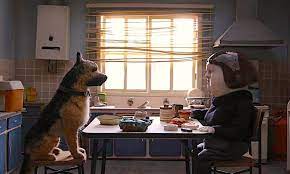
 Director Hugo Covarrubias takes a chilling look at Ingrid Olderock, a real-life character who was dubbed "The Woman with the Dogs." Olderock helped "disappear" people during the Pinochet era in Chile. Her idea of how to employ her German Shepherds doesn’t exactly qualify as pet friendly. Presented as a stout, expressionless doll, Olderock provides the centerpiece of a disturbing film.
Boxballet. Set in 1993, this Russian entry focuses on a relationship between a rail-thin ballerina and a tank of a boxer who's seen better days. Director Anton Dyakov and co-writer Andrey Vasilyev create a beauty-and-the-beast fable that proves touching.
Robin Robin. More geared toward typical expectations than its fellow nominees, Robin Robin was directed by Daniel Ojari and Michael Please and produced by Aardman Animations, best known for Wallace and Gromit films. Raised by a group of mice, a robin finds her identity and learns how to be a productive member of the group that nurtured her. That sounds didactic but Ojari and Please work with a light touch that makes room for peppy musical numbers. Their goal is to entertain, not instruct.
The Windshield Wiper. Spanish director Alberto Meigo tries to answer an age-old question: What is love? He tells the story by focusing on a man sitting alone in a cafe and musing on the question. Composed of memories, emotions, and quietly poignant episode, the  resultant film offers a mix of personal and slightly abstracted  observations.

Live Action
The Dress. This 30-minute Polish entry introduces us to Julka, a woman who works as a maid in a hotel and happens to be what we now call "a person of short stature." Julka's size figures into a story that refuses to dismiss her desires for sexual and emotional intimacy. Director Tadeusz Lysiak builds toward a disturbing encounter with a purportedly empathetic truck driver has shattering impact. Anna Dzieduszycka's performance as Julka proves memorable.
The Long Goodbye. Riz Ahmed, who shares a writing credit with director Aneil Karia, stars in a British film that begins by immersing us in the bustle of a family preparing for a wedding. Joy vanishes when a group of white nationalists terrorizes the Pakistani family as the police stand idly by. Hand-held and jittery in ways that I found off-putting but must have been intended to emphasize the transition from chaotic anticipation to racist violence. 
Ala Kachuu
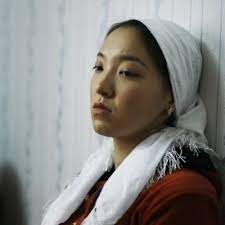
. Sezim, a woman living in Kyrgyzstan, tries to convince her mother to allow her to attend university. Denied the chance, she leaves her rural village and heads to the city. While waiting for university admission, Sezim works in a bakery where she becomes a target for a young man who wants to kidnap a woman to become his bride. To westerners, Semi's story may seem unbelievable -- but Swedish director Maria Brendle exposes what's said to be a fairly common practice in a culture in which female roles are oppressively defined.
Please Hold. KD Davila offers a disturbing but clever look at a future in which artificial intelligence and computerized responses dominate everything -- including the unjust jailing of an innocent man who finds himself stuck in a Kafkaesque nightmare that very much resembles experiences we've all had with automated phone calls.
On My Mind. Martin Strange-Hansen's film finds a man sitting at a bar looking massively depressed. When he learns that the bar has a karaoke machine, he implores a sympathetic bartender and the place's greedy owner to allow him to sing one song, "Always on My Mind." Sounds corny but Strange-Hansen keeps emotions under control as the movie slowly reveals the reasons for this tormented man's song and why he wants to sing it. 

Documentaries
Lead Me Home. Pedro Kos and Jon Shenk tackle homelessness in Los Angeles, San Francisco, and Seattle. The directors contrast the high-gloss beauty of these cities with the teeming impoverishment of people who have wound up living on the street. A little slick and perhaps too diffuse to have as much impact as may have been intended, but still effective.
The Queen of Basketball
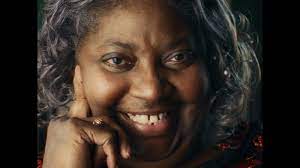
. Luisa Harris, a six-foot, three-inch center,  won high school and college championships, an Olympic silver medal, and even was drafted by the then New Orleans Jazz of the NBA. Harris declined a tryout, thinking that she couldn't dominate the way she had in women's basketball. Harris, who played during the 1970s, preceded the WNBA and never got a chance to take her talent to a logical next stage. Director Ben Proudfoot's film introduces her to a wider audience.
Three Songs for Benazir. Set in Afghanistan, the movie chronicles the life of a young husband who wants to join the military to fight the Taliban. His family prefers that he keep his head down. Instead, Shasta winds up working in the opium fields and developing an addiction he must overcome. Feelings of helplessness -- being observed by US drones and subjected to Taliban cruelty --  pervade a story that must have been extremely difficult to film by co-directors Elizabeth and Gulistan Mirzael but which could have benefited from fleshing out.
When We Were Bullies. Director Jay Rosenblatt's documentary examines a bullying incident in which the director participated when he was a kid in a Brooklyn elementary school. Rosenblatt contacted fellow classmates, most of whom remember a playground incident that has troubled Rosenblatt ever since it occurred some 50 years earlier.
Audible. A look at a young man who plays football for the Maryland School of the Deaf, a team that compiled a 42-game winning streak. often defeating hearing teams. Director Matthew Ogens focuses on Amaree, a kid who excels at football but must deal with some difficult emotional issues, including the suicide of a friend. Ogens brings us into the non-hearing world and makes us care about the kids who live in it.


Thursday, January 30, 2020

It’s time to consider short films

Taken individually, the short films in this year's Oscar program are all refreshingly concise; i.e., no more than 40 minutes in length. But the only way these shorts can be seen is in packages, five films in each serving. Although this kind of presentation is unavoidable, the approach can be frustrating.

Watching five films in succession leaves little time to digest what you've seen. No sooner has one film finished than you're asked to involve yourself in another. I think this hurts high-impact films, particularly those in the documentary-shorts category.

The short documentary In the Absence, for example, examines a series of inept decisions that made the Sewol ferry disaster of 2014 even worse. You'll recall that 300 people died in that Korean ferry accident. High school students on a field trip made up the bulk of the casualties. Watching Absence in the same program as the charming Walk Run Cha-Cha can make your head spin.

Even in the animated category, wild tonal shifts can be found as one film gives way to another. Memorable, director Bruno Collet's touching look at a painter suffering from Alzheimer's bumps up against Matthew A. Cherry's Hair Love, a story about an African-American father struggling to master the art of combing his daughter's hair. Hair Love, by the way, might be the most buoyant of the animated shorts, although it, too, strikes some serious notes.

Of course, there's a flip side to what I'm saying. These packages of Oscar-nominated short films provide a window into an astonishing range of approaches and interests. Shorts also constitute one of the few areas where you can be reasonably sure that filmmakers are following their interests rather than the usual commercial imperatives.

And in a moment when few features run less than two hours, shorts also remind us that brevity needn't be an obstacle to telling a meaningful story.

Animated Shorts

This year's animated shorts stuck me as less self-consciously arty than those of previous years, although they often traverse difficult emotional terrain. Siqi Song's Sister can be viewed as a companion piece of Nanfu Wang's documentary One Child Nation. Song explores the impact of China's one-child policy on a boy who imagines what his life might have been had he had a sister.

Director Daria Kascheeva's Daughter employs stop-action animation to create a story about a woman who remembers her difficult relationship with her father while he lies on his deathbed. Kashcheeva sculpts her characters from paper mache, a technique that gives the movie a heavy, somber feeling that perfectly fits its subject.

I already mentioned Hair Love and Memorable, so I'll move to Kitbull, an entry from Rosana Sullivan who has worked for Pixar; Sullivan introduces us to a scraggly stray cat who befriends an abused pit bull, an unlikely friendship that carries obvious metaphoric weight.

I've always found it difficult to predict winners in the shorts category, so I'm not going to try, although I'll tell you that my favorite is Collet's Memorable, which depicts an artist losing touch with his two principal loves, his wife and his art.

Live-Action Shorts
As I watched Saria -- a recreation of a real-life story -- I had to remind myself that I wasn't watching a documentary. This speaks to the film's power. Director Bryan Buckley doesn't flinch from a difficult topic and the ending of his film packs a horrific wallop.

Belgium's A Sister, directed by Delphine Girard, almost instantly becomes an exercise in high tension. A woman who has been kidnapped tricks her abductor into allowing her to call her sister to check in on her daughter. Instead of phoning her sister, she reaches a police emergency operator who plays along and tries to save the woman.

Marshall Curry's The Neighbors' Window begins as if it's going to be a kinky study of voyeurism. Initially attracted to watching a couple's lovemaking, a New York husband and wife continue to observe the lives of two people occupying the apartment across the street from them. The story increasingly focuses on the prying wife -- a mother dealing with three small children -- who becomes obsessed with what she sees the couple's freedom. You may be able to guess where Curry's story is headed, but the movie succinctly makes its point. And, no, the moral of the tale has nothing to do with the wisdom of buying curtains.

Directed by Meryam Joobeur and Maria Gracia Turgeon, Brotherhood takes us to Tunisia for a story about tensions between a father and a son, a young man who left home to join fighters in Syria. The son returns with a pregnant young woman who's hidden by a niqab and who he introduces as his wife. Faced with terrible unemployment, many of Tunisia's young men left for Syria and, as is the case here, many came to regret their decision. The relationship between the returning son and his brothers proves touching as the story builds toward a tragic conclusion that left me with questions about precisely what the filmmakers were trying to say.

Yves Piat and Damien Megherbi may have made the category's prohibitive favorite, the amusing NEFTA Football Club, which also takes place in Tunisia. While playing in the desert, two brothers discover a lost donkey that's wandering about wearing a set of earphones. We'll later learn what the earphones are about, but the story reveals its first twist when the older brother realizes that the donkey is carrying bags full of drugs. Could this be a gateway to a huge windfall? Obstacles and various O. Henry-like turns make the film instructive and entertaining.

Documentary Shorts

Ever heard of Resignation Syndrome? I hadn't, but I learned about it while watching John Haptas and Kristine Samuelson's Life Overtakes Me, the moving story of eastern European children who fall into catatonic states as a way avoiding tensions resulting from constant threats of deportation from Sweden, the country to which their parents have fled.

In Laura Nix's Walk Run Cha-Cha, we meet a Vietnamese couple that arrived in the U.S. 40 years ago. Paul and Millie Cao talk about leaving Vietnam, being reunited in the US and living lives built around work and family. After raising their kids and meeting their responsibilities, Paul and Millie take up dancing. Finally, they feel a measure of true personal freedom.

As mentioned earlier, Yi Seung-Jun's In the Absence explores the tragic story of a ferry accident. I'd say that Jun's film has more emotional punch than the others in this category, which rounds out with Smriti Mundhra and Sami Khan's St. Louis Superman and Carol Dysinger's Learning to Skateboard in a Warzone (if you're a girl).

St. Louis Superman introduces us to Bruce Franks, a father and rapper who runs for a spot in the Missouri State legislature after the shooting that roiled Ferguson, Mo., in 2014.

In Learning to Skateboard, Dysinger tells the story of an Afghan program that uses skateboarding to help instill confidence in girls who also receive instruction in reading and math, sometimes against the wishes of parents who either fear for their daughters safety or have tradition-bound ideas about what girls should be doing with their time.

If you have the time, you’d do well to see all three programs. You’ll be informed and entertained, but you’ll also be helping to support a form of cinematic expression that’s a vital part of film culture. You'll also notice that unlike some of the other Oscar categories, women are well-represented.


Thursday, February 7, 2019

Once again, time for Oscar shorts

Even if you're not a devotee of the Oscars, you should applaud the fact that each year, the Academy of Motion Picture Arts and Sciences puts a spotlight on short films. Generally speaking, short films are long on creativity and on sustained willingness to tackle subjects that aren't often found in mainstream fare.

This year, for example, the French Canadian feature Marguerite offers a tender look at the regrets of an aging woman who never expressed her feelings to the love of her life, another woman. You'll also find a clear-eyed look at one of childhood's horrors (insane competitiveness) in the Canadian live-action short Fauve.

Overall, though, this year's nominees seem less impressive than what I remember from previous years. Still, you'll find docs that bring new light to the insidious impact of racism (Britain's Black Sheep) and Period. End of Sentence. takes us to rural India to alert us to an issue to which we've probably never given much thought.

In seven minutes, Night at the Garden — archival footage of a pro-Nazi rally that took place in Madison Square Garden in 1939 — reminds us that dark political currents aren’t new to the American experience.

One more thing: It's important to support the makers of short films whenever possible. If you see the whole package, you're bound to be moved by something and stimulated by something and you'll be casting a vote for open-borders cinema that isn't afraid to travel new turf.

List of short films nominated for 2019 Oscars
Live Action

Detainment. (Ireland) Directed by Vincent Lambe. A dramatization of the real-life story of a 1993 crime in which two Liverpool ten-year-olds were questioned about the kidnapping and murder of a two-year-old boy. The film’s re-enactments are based on police transcripts. 30 minutes. The film, by the way, has sparked controversy in Britain, particularly from the victim's mother. This New York Times story details the furor.
Fauve. (Canadian) Directed by Jeremy Comte. Two boys play a game that quickly and disastrously gets out of hand. 17 minutes.
Marguerite. (French Canadian). Directed by Marianne Farley. A lonely older woman feels the regrets of unexpressed love as she learns more about Rachel, the nurse who has become her caregiver. 19 minutes.
Mother. (Spain) Directed by Rodrigo Sorogoyen. An agitated thriller about a mother who receives a phone call from her six-year-old son telling her that he has been left alone on a beach. 19 minutes.
Skin (US). Directed by Guy Nattiv. The movie reveals the strange fate of a white-racist skinhead who indoctrinates his son in white supremacist ways. An unsettling look at a skinhead who seems to genuinely love his son. 20 minutes.

Documentary Shorts

A Night at the Garden. (US) Directed by Marshall Curry. A brief, disturbing look at footage from a pro-Nazi rally held at Madison Square Garden in February of 1939. Seven minutes.
Black Sheep. (UK) Directed by Ed Perkins. An interview with Cornelius Walker and re-enacted footage reveal the torment of a young black child whose Nigerian immigrant parents moved from dangerous London to the suburbs. There, the boy encounters brutal racism and adopts a soul-threatening attitude: "If you can't beat 'em, join 'em." 27 minutes.
End Game. Directed by Rob Epstein and Jeffrey Friedman examine the gut-wrenching issues that can torment family members when a close relative is put on palliative care. 40 minutes.
Lifeboat. (US). Director Skye Fitzgerald offers this year's entry on the horrors that accompany mass migration from North Africa to Europe. Refugees risk their lives on overcrowded boats, many drown and a few stalwart representatives of a non-profit try to save them. 34 Minutes.
Period. End of Sentence. (US) Rayka Zehtabchi's documentary exposes deep-rooted prejudice surrounding menstruation in an Indian village and efforts to help when the women create a business making sanitary napkins. 26 minutes.

Animation

Animal Behavior. (Canada) Directed by Alison Snowden and David Fine. A leech, a praying mantis, a cat, and a bird gather for group therapy in the office of a dog who happens to be a psychologist. The session is disrupted when an ape with anger-management problems arrives. 14 minutes.
Bao. (US) Director Domee Shi examines a mother's wishes when a Chinese-Canadian woman starts treating a dumpling as if it were her child. What's really going on? A metaphoric examination of mother's love in the face of increasingly independent offspring. Eight minutes.
Late Afternoon. (Ireland) Director Louise Bagnall's beautifully animated short examines the life and memories of an aging woman who seems to be suffering from dementia. 10 minutes.
One Small Step. (US/China) Andrew Chesworth and Bobby Pontillas direct a story about a Chinese American girl who aspires to be an astronaut and the single father who helps nurture her dreams. Eight minutes.
Weekends. (US) Writer/director Trevor Jimenez tells the story of a boy who shuttles between the homes of his divorced parents on weekends. 15 minutes.


Thursday, April 2, 2015

A disturbing look at rape on campus

The Hunting Ground is an eye-opening documentary about a serious problem.

You don't see a documentary such as The Hunting Ground for entertainment purposes. You see it because the movie will alert you to an important issue, the devastating impact of sexual assaults on U.S. college campuses.

The crime of campus rape often is compounded by the way institutions treat rape victims, who -- the film suggests -- can challenge a school's carefully constructed view of itself. With reputations on the line, the urge to minimize embarrassing crimes can be difficult to resist.

Director Kirby Dick (The Invisible War and This Film Is Not Yet Rated) and producer Amy Ziering introduce us to many women, but two stand out: Andrea Pino and Annie E. Clark, both from the University of North Carolina.

Both rape victims, Pino and Clark have pooled their efforts to counsel college women about what to do if they're raped and to create awareness among members the general public.

They've also filed a Title IX charge against North Carolina. Their complaint is built around the idea that equal access to educational programs -- the overall purpose of Title IX -- is impossible if women don't feel safe enough to move about a campus.

According to at least one survey, one in five women are victims of sexual assault. Although not everyone accepts that statistic, there's little question that those who are assaulted face a rough go.

Alcohol and fraternities can figure into the picture. If Sigma Alpha Epsilon -- the fraternity recently in the news for a racist episode on a bus -- didn't have enough trouble already, it turns up in Kirby's film. We're told that many women refer to SAE as Sexual Assault Expected.

Parents will (or at least should) be shaken by The Hunting Ground. No one sends their kid to college to be sexually assaulted by a fellow student, and it's impossible to listen to the stories told by the women in this documentary without being angered and moved.

Clearly, the problem should be a source of shame for every institution that doesn't respond fairly, forcefully and with more concern for finding the truth than for upholding an image.

Thursday, February 19, 2015

Recent Soviet history on ice

Red Army tells the story of the great hockey teams of the Soviet era

We've all heard stories about tough coaches, but there aren't many athletes who've plied their trade for a dictatorial coach who developed his style while working for the KGB. You'll meet just such an athlete in Red Army, a documentary in which the chill of the cold war reflects glaringly off hockey ice.

Director Gabe Polsky builds his documentary around Slava Fetisov, the gifted Soviet defenseman who played much of his career for Viktor Tikhonov, a former KGB agent who became head of the USSR's national hockey team during its heyday.

A stern taskmaster, Tikhonov alienated many who played for him. But aside from one stunning Olympic loss to the US in 1980, the Soviet team maintained extraordinary levels of excellence.

A patriot who ultimately was treated poorly by his country and by Tikhonov, Fetisov was introduced to the Red Army team under the tutelage of a kinder, more cerebral coach, the legendary Anatoli Tarasov.

A portly man who looked more like a happy grandpa than a brilliant hockey coach, Tarasov was credited with developing the team-oriented style of Soviet play that the Kremlin used as a basis for global propaganda.

A highly skilled and generally unselfish team became a symbol for the success of Soviet collectivism. Unfortunately, Tarasov eventually offended upper echelon Soviet leadership and lost his job.

Polsky's interviews with Fetisov quickly establish the defenseman as an imposing figure, someone who doesn't take kindly to anything he deems as BS. Fetisov immediately asserts his control over Polsky, who's smart enough not to argue about it.

Fetisov's story -- from his youth to his triumphant days with the Detroit Red Wings -- gives the documentary an interesting arc, exposing us to the hardships faced by Soviet players who were also in the military and who were forced to live spartan lives.

Tikhonov once barred one of his players from taking time off to visit his dying father. Fetisov tells us that he respected Tikhonov as a coach, but not as a man.

Even those who are familiar with the story of Soviet hockey will find plenty to chew over because Polsky understands that this is a case in which athletics and politics are inextricably (and often unfortunately) linked.

Polsky also details how difficult it was for Russian players to play in the West, even after glasnost and the resignation of Mikhail Gorbachev.

Once the Soviet empire dissolved, players were allowed to leave, but had to share their NHL salaries with the Russian authorities.

Fetisov refused to participate in any such arrangement, and suffered for it. He held his ground and insisted that if he were going to leave Russia, it would be on his own terms. Eventually, he prevailed.

Red Army tells a fascinating sports story, introduces us to more than one Soviet sports icon and stands as a fascinating look at what happens when the stakes of a hockey game involve a good deal more than winning or losing on the ice.

Thursday, February 28, 2013

A moving look at hunger in the U.S.

There's much that's alarming in the documentary A Place at the Table, a movie that deals with hunger in America, much of it found in the group sometimes referred to as "the working poor." A Place at the Table may be of special interest to Coloradans because it devotes considerable attention to Food Bank of the Rockies, and highlights the story of Rosie, an 11-year-old Colorado girl struggling with hunger. The movie also has plenty to say about "food deserts," -- urban areas where lack of access to healthy food is endemic. To their credit, directors Lori Silverbush and Kristi Jacobson don't shy away from political observations, examining problems related to the U.S.'s big-time food industry and its on-going preoccupation with processed foods. For me,  Jeff Bridges -- who founded the non-profit End Hunger Network -- makes the film's major statement. Bridges lauds charitable efforts, but points out that a problem of this magnitude -- one in four American children lacks healthy food -- only can be addressed by government. It's an interesting point to ponder at time when concern about government spending seems to be dominating the news. There's little question that it would take a massive exercise of national will to address this persistent problem. Do all of us care enough to demand that our government do something about hunger -- and food insufficiency (not knowing where the next meal is coming from)? Or are we content with the way things are? After watching A Place at the Table -- which gets for more specific and detailed than anything I can offer -- you may well wonder whether it's time that we decided.

Tuesday, August 7, 2012

A look at the great Ai Weiwei

The 55-year-old artist Ai Weiwei has been poking his finger in the eye of Chinese authority for years. Currently the subject of a case in which the Chinese government claims that Ai owes $2.4 million in back taxes and penalties, the artist has spent the better part of his adult life championing free expression and human rights.

In 2011, Ai spent 81 days in detention after being arrested at the Beijing airport. Since his release, Ai -- who helped design China's signature "birds nest" Olympic stadium -- gradually has been resuming his role as China's most famous artist and one of its highest profile provocateurs.

The documentary Ai Weiwei: Never Sorry examines Ai's life prior to his detention, a time when he made extensive use of art and social media to criticize the Communist Party.

Ai, whose work includes sculpture, photography and installation, was instrumental in calling attention to government corruption that contributed to the death of schoolchildren in the Sichuan earthquake of 2008. For his efforts, Ai was beaten by police in Chengdu, a case he pursued with no expectation of obtaining redress, but with a desire to expose the workings of an unjust system.

Throughout his career, Ai has proven himself adept at making adjustments: At one point in the film, Ai is invited to build a studio in Shanghai. When the political winds shift, the authorities order the studio destroyed. Ai responds by throwing a party, a river crab feast.

In Ai Weiwei: Never Sorry, director Alison Klayman introduces us to Ai's politics and art, which are often inseparable. We see Ai installing a piece at the Tate Modern in London ("Sunflower Seeds"); we see him working in Germany (a retrospective at the Haus der Kunst in Munich) and we see him at home in China, all of which makes Klayman's film must viewing for anyone interested in Chinese politics, contemporary art and the right of all people to express themselves freely.

I recently spoke with the 27-year-old Klayman about Ai and the making of Never Sorry:
Q. Can you tell us anything about Ai's current status?
Klayman:

Well, as you know, the court in Beijing ruled on his appeal to the charge (of tax evasion). (In July, a court rejected Ai's appeal; Ai was barred from the proceedings.) It's kind of amazing that they heard the case at all, but things didn’t go to his lawyer’s satisfaction. Weiwei spoke out strongly -- on twitter and to reporters -- about how he was kept from the trial. They refused to say where they’re getting the numbers for the $2.4 million fine. Ai still is being threatened with various on-going investigations. He was told he shouldn‘t travel. They're holding his passport. When he was released (from detention) he was under bail conditions for one year. Slowly, he has pushed the limits on all of his restrictions, but he's been unable to travel outside Beijing for the last year.

Q. Do you think your documentary can help Ai in his struggle to get back to where he was prior to his arrest?
Klayman: What I get from him is that he’s happy to have his story shared as much as possible. He's glad that the movie is seen as good. It's hard to tell where the decision making (about Ai) is coming from. It's not easy to understand why they (the Chinese authorities) do what they do. It's not clear whether outside pressure would make the Chinese double down on him. In the past, his international recognition has helped. The film will play a part in that.

Q. Did Ai's political views, which he makes no attempt to hide, make your job as a filmmaker more difficult?
Klayman: There are challenges in filming Ai Weiwei. He's a very strong individual, someone who has as many as 30 different projects going at any given time. He was open to letting me be around. I was not on the list of his major concerns, so I really had to assert myself. He's a famous, a world renowned artist. As for the challenges of working in China, I'd been there for several years and was somewhat familiar with Ai. My project wasn’t publicized. There are lots of things you have to think about -- how to get footage out of China, for example. You need a plan. But I never had any of my equipment touched.

Q. So how did this project originate?
Klayman: I lucked out. I already was in China. (Klayman lived in China from 2006 until 2010.) I wanted to do journalism and documentaries. I studied Mandarin. I had many different jobs and tutors. ... I met Ai because a roommate of mine was working on an exhibition at his gallery. I was asked if I wanted to make a video about the show. I was handed the chance to film him. I have an open attitude, and I wanted to do a good job. Ai could appreciate that.

Q. Much of Ai's art is playful, even though it deals with serious issues. I wonder if it was fun to be around him.
Klayman: A lot of the time it was. A big part of his personality is his love for life, new things and fun things and having a sense of humor. He likes to be a vibrant and enjoyable experience for the people around him. I felt no matter what happened, the film would be an enjoyable experience for audiences.

Q. Is it possible that politics will overwhelm art for Ai?
Klayman: I feel all of it (art and politics) is coming from the same impulse on Ai's part. Whether he was doing interviews or talking about things that are far from a fine art context -- politics and the Internet, for example -- I never felt as if he was taking off his art hat. I never heard him identify himself as anything other than an artist. For him, the role of artist is to be engaged and to protest for freedom of expression. Everything he does comes from the same motivation.

A. Can you return to China?
Klayman: That remains to be seen. I did go back after his detention, and I spoke out a javascript:void(0);lot while he was being detained. I went back in the fall, and didn't have any problems. But I have to apply for a new visa; I hope that they don't see Ai Weiwei as an anti-China film.

Q: Did making this documentary change you?
Klayman: How could it not change me? This has been my life's work for the last couple of years. It became even more serious when the stakes were raised by Weiwei's detention. Being around Weiwei and making the film has taught me not to think small. Seeing the work he's doing and how it's impacted people all over the world has taught me that big things are possible. Art can impact people in a way that transform politics. That's an exciting realization for me.

Thursday, October 14, 2010

Pushing the new education orthodoxy

Geoffrey Canada at work in Harlem.

Waiting for Superman, the new and much-discussed education documentary, makes a highly emotional case for the current wave of school reform. Oddly, though, the movie is at its best (which can be very good) when its commitment to storytelling subdues its more zealous aspirations. Director Davis Guggenheim, acclaimed for his work on the Oscar-winning documentary An Inconvenient Truth, focuses on five kids and their parents, and the closer he stays to them, the more impressive and, yes, heartbreaking his movie can be.

Watching a young girl's dejection at not hearing her name called for admission to an acclaimed New York City charter school couldn't be more wrenching. The youngster is ill-equipped to accept the cruel outcome of a lottery, the mechanism for deciding which students will get into charter schools when the number of applicants exceeds the number of open slots.

Guggenheim tells us that his documentary was born out of discomfort. Although he previously had made a documentary about public schools, Guggenheim wound up sending his own kids to private school. He wondered about parents who didn't have his resources, but also wanted the best for their children. What could they do?

Waiting for Superman has not suffered for a lack of attention. The movie already has been the subject of countless op-ed pieces and magazine stories. It has prompted television programs, and has become a focal point for the discussion of educational issues. But make no mistake: This is advocacy filmmaking. Title cards at the end encourage viewer involvement in the battle to reform U.S. schools.

Excuse me, if I don't climb aboard the reform express -- at least not based on what I saw in Waiting for Superman, which won't tell careful readers of any newspaper with good education coverage much that they don't already know. Waiting for Superman is not a balanced movie, and it helps glorify the dynamism of a small group of educators -- Geoffrey Canada in New York and Michelle Rhee in Washington, D.C., for example. Not that either Canada or Rhee -- both of whom have had national media attention -- need more time in the spotlight.

The movie follows the reformist script in blaming teachers' unions for the lack of progress in our schools. It avidly supports the charter-school movement. It argues against tenure. It parrots the current belief in test scores as the major ingredient in educational assessment. It's mostly in line with a long list of prescriptive measures that have come to define an education reform movement embraced by the Obama administration and its Education Secretary, Arne Duncan.

I'm not equipped to refute Guggenheim's arguments, and I don't for a minute doubt the sincerity of the reformers. I also have no interest discouraging anyone from seeing Waiting for Superman; it can be a valuable experience, providing it's taken as the beginning of the discussion, not the end.

If you want to round out your knowledge about education reform, you may want to check out a few of the following links, and, no, I'm not suggesting that there's anything comprehensive about the articles I'm referencing. I offer them only to demonstrate that there's more to the story, shadings you won't find in Waiting For Superman.

I don't think it was intended, but Waiting for Superman also illustrates another point: We seem incapable of discussing any problem without taking sides: Reformers vs. unions; dedicated teachers vs. educational slugs; innovative charter schools vs. failure factories; and on and on.

At heart, the reformers blame ineffective teachers for the failure of children to learn. They also see systemic inertia as a major obstacle to change. But I wonder how long it will take for the reformist banner to fly over a new orthodoxy that's as deeply entrenched and unyielding as the old one. Perhaps this already has occurred.

And I also wonder whether -- during a time of diminishing resources -- education hasn't been asked to carry the burden of deciding who'll get society's goodies and who won't. The whole business leaves me with a question: Just where exactly is the top to which teachers and students are supposed to be racing?


Lauded Harlem Schools Have Their Own Problems, New York Times, Oct. 12, 2010

D.C. School Chief's Rhee's next move probably toward the door. Washington Post, September 17, 2010. (Rhee has since resigned.)

Despite push, success at charter schools is mixed. New York Times, May 1, 2010.

Grading Waiting for Superman, The Nation, Oct. 11, 2010

Stop Trashing Teachers, by Diane Ravitch, The Daily Beast.

Waiting for Superman Won't Fly With Some Audiences, NBC News, Sept. 27, 2010.

Friday, July 11, 2008

China: sailing up a river of contradictions

This week, the Discovery Channel is airing Ted Koppel's "The People's Republic of Capitalism," a four-part look at contemporary China with an emphasis on the contradictions that have resulted from China's heady immersion in capitalism. For another -- and far more lyrical view -- of such contradictions, try Yung Chang's "Up the Yangtze," a documentary about the strange consequences of building the Three Gorges dam. Mao Zedong was keen on the idea of building the dam, which required massive flooding, which -- in turn -- meant relocating the populations of entire cities. Without being preachy, Yung exposes problems and peculiarities that have resulted from the Three Gorges project. He focuses, for example, on a family of subsistence farmers whose 16-year-old daughter, Yu Shui, goes to work on one of the tour boats that carry foreigners up the Yangtze, trips that partly focus on the glories of China's achievements. You won't see many Chinese on such tours. Maybe that's why workers on these ships are given English names -- Yu Shui becomes Cindy -- and are expected to serve the tourists with smiles and an unsullied optimism that doesn't always match the reality of their lives. Beautifully shot by cinematographer Wang Shi Qing, "Up the Yangzte" captures the hopes of those who aspire to prosperity in the new China and those who are being left behind.

WHEN WHERE YOU LIVE ISN'T HOME
Of note: Based on a novel by Monica Ali, "Brick Lane" chronicles the life of a young woman (Tannishtha Chatterjee) whose father ships her from Bangladesh to London to marry a supposedly prosperous emigre (Satish Kaushik). Chatterjee's Nazneen lives according to plan -- call it quiet desperation -- until she meets an attractive young man (Christopher Simpson) who opens her eyes to new possibilities. Director Sarah Gavron doesn't plow much fresh ground, but she presents a telling portrait of the lives of those who occupy a kind of limbo, people trying to understand where exactly they can feel at home in the world. Because the main characters are Muslims, Gavron also is able to show the kinds of anger that develops when a population feels that it's being excluded from the mainstream. In brief: Solid, if not inspired, filmmaking about an interesting and increasingly important subject.