Showing posts with label George Miller. Show all posts

Wednesday, May 22, 2024

The origin of a post-apocalyptic warrior


 If this review were a trial, we'd begin with stipulations, agreements that we can accept (or should) without argument.
  1. Few, if any, filmmakers are as skilled at creating propulsive action as George Miller, who offers some of the best bone-crushing, metal-bending sequences ever brought to the big screen.
  2. Not many filmmakers are as committed to harsh truths as Miller. When it comes to post-apocalyptic life, brutality reigns.
  3. In catastrophically depleted environments,  competition for resources feeds cruel compulsions to dominate.
   I begin this way because Miller has created four Mad Max movies that have offered sustained thrills while helping to redefine post-apocalyptic cinema.
   You can bet that Furiosa: A Mad Max Saga, Miller's latest and a prequel to the widely acclaimed Mad Max Road Fury, will deliver the goods as Miller  plunges into a forbidding hellscape where sentiment is as scarce as good grooming.
    Amid the rubble and mayhem, Miller also has insisted that his movies offer the kind of hyper fun that results from wowed appreciation of chases, crashes, fights, and collisions delivered at breakneck speeds.
   So where am I going with all this? What's my verdict on Furiosa: A Mad Max Saga, the story of a girl who matures into the teenager who'll become the warrior woman played by Charlize Theron in Fury Road?
   I saw Furiosa in IMAX at an evening screening after having awakened in Virginia at 5 a.m. EDT for a return flight to Denver. I was tired and jet-lagged, but my eyelids never drooped. A thudding persistent score, the ominous sound of a truck horn, and the roar of motorcycle engines enliven the forbidding  landscapes Miller creates so well. 
   And yet, I'd be remiss if I didn't say that some of the thrill is gone. Ditto for the exhilarating sense of discovery that Road Warrior initially brought. Don't take this as a pan, I said "some" of the thrill -- not all of it. 
    Furiosa begins with Alyla Browne playing Furiosa as a child who is taken from one of the last remaining flourishing spots on Earth, an Edenic green spot. After marauders capture Furiosa, her mother mother (Charlee Fraser) rides a horse and then a motorcycle to the rescue. Mom's efforts go awry -- but not without giving the movie a gripping prologue.
   When the story begins in earnest, Furiosa has been taken prisoner by Dementus (Chris Hemsworth), a ruthless warlord who lost his family and, as a consequence, decided that nothing but merciless violence will conquer his grief. Hemsworth seems to have fun with an outsized role, tempering Dementus's casually expressed sadism with humor.
   The movie eventually focuses on Furiosa's development. She starts as a crafty child devoted to keeping her green homeland free and hidden from those who would exploit it. She evolves into a warrior determined to avenge the early-film death of her mother at the hands of Dementus.
   As part of her development, Furiosa -- now played by Anya Taylor-Joy -- also becomes the pupil of a skilled driver who serves as a mentor (Tom Burke). The two might have made a great team for an entire movie instead of enriching one episode among many.
    Furiosa's story takes place against the backdrop of a brewing war between the forces of Dementus and those of Immortan Joe (Lachy Hulme). 
   Immortan Joe, you'll recall from the previous movie, presides over the Citadel, a fortress built into a cliff. The Citadel dispenses water to the rude and scoffing multitudes, the various tribes that roam this diminished world. 
    Taylor-Joy may not be as physically imposing as Theron, but she brings intensity to a role in which she speaks little, at times posing as a wily young man to escape the fate of young women destined to be held in a harem Immortan Joe uses for breeding purposes.
    No point recounting all the action, except to note that a highlight includes an attack on a speeding silver semi-truck by parachute-wearing warriors. Dementus rides in a chariot drawn by three motorcycles. A variety of  jerry-rigged vehicles revive the junkyard chic that has been a Mad Max staple.
    Some of the character names clue you into the nature of those who populate Miller's expansive desert environment: The People Eater, Organic Mechanic, Rictus Erectus, and Vulture. I had to consult the credits to catch all of these names, but it doesn't matter; it's their fierce looks that count.
   I wish my enthusiasm for Furiosa: A Mad Max Saga weren't tempered by the sense that the movie -- which includes chapter headings -- didn't always display the brisk ingenuity that audiences discovered in Mad Max 2: The Road Warrior (1981) back when Mel Gibson, the original Mad Max, had yet to become a divisive figure. 
   But if Furiosa has fallen off a bit, it hasn't broken into shards. Miller's skill and vision keep familiarity from breeding contempt -- even if we don't always invest in the fate of this teeming screenful of characters, desperate souls for whom good will isn't even a vague memory.
   Most of Furiosa takes place on arid terrain its characters call the Wasteland. For them, the name fits. For Miller, it's territory he still rules.


Thursday, August 25, 2022

A genie fails to conjure enough magic

   
  Australian director George Miller (The Road Warrior movies) travels to Istanbul to tell a story loosely based on an A.S. Byatt collection of short stories, The Djinn in the Nightingale's Eye.  Miller and his team put a lot of effort into creating a look that's designed to amuse, enchant, and sweep us away.
   Despite an intriguing theme about the role of storytelling in our lives, Three Thousand Years of Longing turns out to be one of those movies whose parts don't add up to a satisfying whole — and not all the parts are captivating, either.
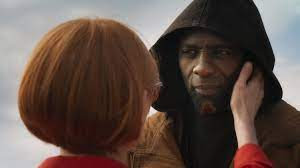
     Miller teams two fine actors in a tale about an academic (Tilda Swinton) and a Djinn (Idris Elba) who encounter one another after Swinton's Alithea Bonnie purchases a small bottle during a visit to Istanbul's Grand Bizarre.  
     Alithea returns to her hotel room, tries to clean up the bottle, and, lo, a genie emerges. The skeptical academic, who studies the role of narrative in mythic literature, is granted three wishes. She's reluctant to use them.
      While waiting for Alithea to make up her mind, the Djinn tells Althea stories, some of which Miller beautifully realizes while others falter. The imaginary Arabian backdrops often are more interesting than the stories that unfold in front of them. 
       A variety of characters emerge as the Djinn tells Alithea about his previous attempts to free himself from his bottle: If he grants three wishes, he'll be free. One tale involves a ravenous and infantile sultan who surrounds himself with portly women.
       Miller is a talented and important director who has veered off the Mad Max track before -- notably with Babe: Pig in the City (1998) and Lorenzo's Oil (1992). He previously tried his hand at fantasy with 1987's The Witches of Eastwick. 
      After his triumph with Mad Max: Fury Road (2015) and with another Road Warrior movie looming, it's easy to understand why Miller wanted a change of pace with a story that's meant to be savored rather energized by speed, the difference say between sipping a glass of wine and downing it with one mighty swig.  
     Put another way: I was rooting for Three Thousand Years of Longing but had difficulty sustaining interest as scenes between Swinton and Elba (shown in various sizes and often with smoke rising from his body) bogged down.
     At once majestic and knowing, Elba creates a memorable Djinn but Swinton's Alithea proves a bit dull, an academic who longs for love and companionship.
      Miller is too talented not to find some masterful moments but the movie suffers from a lack of drive, and when Alithea and the Djinn return to London, the screenplay expands to include a romantic dimension in which the fantastical and the mundane try to merge.
     Generous viewers may give Miller a pass. I'd have no quarrel with those who are so inclined but, for me, this story about the transcendent importance of stories seldom made it feel as the stakes were vital.
     Besides, the best way to celebrate stories is to tell a great one. Three Thousand Years of Longing falls short in that regard.

Thursday, May 14, 2015

George Miller takes action to the max

Mad Max: Fury Road has visionary moments, speed and a wild sense of daring.

In 1981, The Road Warrior became an arty, pedal-to-the-metal slice of action that caught critical eyes as a stand-out in Lincoln Center's New Directors, New Films series.

At the time, few moviegoers had seen Australian director George Miller's original entry into the series, 1979's Mad Max. Likewise, few knew that Road Warrior's star, Mel Gibson, had a passion for controversy and for Christ.

Miller followed Mad Max 2: The Road Warrior with 1985's Mad Max Beyond Thunderdome, a bigger and more heavily promoted movie that added Tina Turner to the mix.

Miller went on to direct Witches of Eastwick (1987), Lorenzo's Oil (1992), Babe: Pig in the City (1998), and Happy Feet (2006). He also wrote the screenplay for the original Babe. (1995)

This record suggests that Miller marches to his own drummer, which is why I'm beginning with background that usually gets buried in the depths of a review.

In Mad Max, Fury Road, Miller, who's now 70, resurrects Mad Max with British actor Thomas Hardy taking over the Gibson role and Charlize Theron adding additional marquee appeal.

Steeped in action, brutality and creative daring, Mad Max: Fury Road hardly qualifies as an actors' movie. With her hair shorn to crew-cut length and one arm digitally omitted, Theron proves that she, too, can be an action star.

Hardy -- a fine and volatile actor -- spends a good deal of the movie hidden behind an iron mask that Hannibal Lector might have regarded as a fashion statement. The past -- a lost family -- haunts Max, but Hardy seldom loses touch with Max's inner animal.

All of Hardy's dialogue might not fill a cocktail napkin, and Theron (really the dominant present in the film) benefits greatly from her character's name, Imperator Furiosa, which sounds like some forgotten and possibly disreputable Latin classic.

The action set pieces in Mad Max are so kinetically charged and bizarre that I spent a good deal of time wondering how Miller had managed to pull them off. I was more interested in what Miller and his team would do next than I was in the whisper of a plot that blows across the endlessly brown landscapes Miller found in Australia and in the South African desert.

The movie's most visionary achievement occurs early. Miller introduces us to The Citadel, a fortress carved into a cliff. A warlord, Immortan Joe (Hugh Keays-Byrne) rules this outpost.

When he's feeling especially good, Joe releases torrents of precious water from giant spigots, a gesture of totalitarian beneficence that's supposed to soothe the benighted multitudes who serve him.

Some of Miller's Citadel shots made me think of what Hieronymus Bosch might have painted had he lived in the age of the graphic novel, a hellish reversion to undisguised primitivism.

So here's the story: Captured by Joe's hordes, Max escapes, and hits the road. He eventually allies himself with Furiosa, who's fleeing the Citadel with five of Joe's wives, all of whom have lithe fashion-model figures. They've been selected to give birth to Joe's heirs.

Equally important are the costumes and vehicles. The latter seem to have been cobbled together from the spare parts of the world that preceded this post-apocalyptic chaos.

These range from vehicles that look like spiky, metal porcupines to trucks from which giant poles extend, allowing combatants to tip one way or another as they attempt to smash the opposition. A movie or Cirque du Soleil? Maybe it doesn't matter.

There's no faulting Miller's imagination. One of Joe's vehicles -- always in hot pursuit of Furiosa, Max and the runaways -- tethers a punk-rock guitarist to its hood. The rocker's heavy-metal licks are accompanied by ejaculated bursts of flame that shoot from his guitar.

That's the kind of humor, you'll find here, along with at least one terrifying mask. Joe, who somewhere along the line lost much of his face, wears a mask that makes the Joker's frozen rictus look like a wan smirk.

Surprisingly, a few quiet moments and even a bit of touching humanism can be found amid the debris.

Nicolas Hoult plays Nux, a former Joe loyalist who eventually sides with Max and the fleeing women. Nux has an endearing quality. And when Max finally reveals his name to Furiosa, the moment seems emotionally authentic in a stammering sort of way.

Such bits stand out because, as Max tells us at the outset, nothing is more important in this world than survival. Anything else should be deemed a debilitating luxury.

Miller makes this clear from the outset. Our introduction to Max consists of watching him stomp a scurrying lizard, which he then eats.

Despite the presence of the occasional emotional oasis, Mad Max 's throbbing, remorseless pace can cause the action to lose edge, a danger when a movie seems intent on bombarding us with epic-scaled overkill. You can get a little numb.

Fury Road may no longer have the kind of surprise quotient that accompanied its predecessors, but it retains the eccentricity of Miller's strikingly weird vision.

Whatever else you may think about Mad Max, pay attention to the word "mad" in the title. This is one demented action movie. I mean that in a good way -- I think.