Showing posts with label John Malkovich. Show all posts

Thursday, July 24, 2025

'First Steps' revives the Fantastic Four


   I'm not sure what it means, but if you look at the photo above, the blue and white outfits worn by the Fantastic Four may remind you of pajamas you'd expect find at a kiddie sleepover. I mention it because it's not easy to take Fantastic Four: First Steps, the movie from which this photo was taken, too seriously. Consider that a good thing.
  This fourth Fantastic Four movie represents an upbeat improvement over its three predecessors, which may be enough to kick it into recommendable territory -- provided you have any interest in another Marvel movie.
 Given a 60's aura by director Matt Shakman and recast with Pedro Pascal and Vanessa Kirby in pivotal roles, First Steps has a welcome low-tech quality in which a robot looks more clunky than sleek. Sci-fi elements such as teleportation operate at rudimentary levels, as does a story that expeditiously introduces the Four while taking care of world-building.
  Joseph Quinn and Ebon Moss-Bachrach complete the Fantastic quartet. A ton of CGI effects turn Moss-Bachrach into The Thing, a powerhouse who can lift a Volkswagen bug as if it weighed no more than a pebble. Quinn's Human Torch blazes his way through numerous action scenes.
   I'm to going to waste space describing all the superpowers of the Four, but it's important to know that when we meet them, they're living as a family in a New York apartment that has a mid-century garnish.
   For the record, Pascal's Reed Richard (a.k.a. Mr. Fantastic) and Kirby's Sue Storm (a.k.a. Invisible Woman) are married and expecting a child, which leads to scene in which Sue gives birth aboard a spaceship while dealing with a zero-gravity environment.
   The newborn, a mixture of CGI and a real infant, becomes an important plot element. The world-devouring villain, Galactus (Ralph Ineson), offers to spare Earth if Sue gives him Baby Franklin. When Sue declines, the failure of the Four to stave off doom raises the ire of the world's populace. Sue chooses the one above the many.
   Looking like a sleek statue inspired by an awards show, Silver Surfer (Julia Garner) serves as Galactus's reconnaissance specialist. She surfs to new worlds, identifying planets that will feed her overlord's voracious appetite, although he's a bit tired of roaming galaxy after galaxy in search of nourishment. 
   The effects employed in the movie's finale are effectively realized, and Galactus's ominous-looking space ship reinforces the sense of doom facing Earth's inhabitants.
    Happily, First Steps doesn't overdo the interconnections that burden many Marvel films. You won't need a glossary to follow a plot designed for efficiency.
   I can't say that I was emotionally invested in First Steps. The movie's comic-book artifice makes it difficult really to fear for Earth's future, but a bit more than tolerable beats the heck out of terrible.
   On that level, First Steps satisfies.

Wednesday, January 12, 2022

It's January. Do we need to wake up yet?

Shattered

The Pink Cloud

     The thing about January, at least in terms of movies, is that there’s not much to say. Many moviegoers are still catching up with last year’s best efforts. Moreover, a kind of tacit acknowledgment among the movie faithful promises that nothing terribly significant will happen before the new year tightens its grip on the collective consciousness.
    I’m excluding deaths, which this January included Peter Bogdanovich and Sidney Poitier. 
     Sad news aside, it’s with low-voltage spirit — or maybe it’s just a mood — that I turned my attention to two movies that have the year 2022 firmly affixed to their release. 
    I begin with Shattered, a movie that falls into the category commonly known as thrillers. Such movies often tell stories in which crime figures prominently.  The nastier the crime, the bigger the supposed thrills.
     Classified as a thriller, Shattered caught my attention because it features an appearance by John Malkovich.  Malkovich can project a judgmental quality embellished by hints of superiority. He knows how to add a sinister garnish to a commonly turned phrase.
    Unfortunately for Shattered, Malkovich portrays a minor character, a motel operator whom the screenplay eventually feeds to its femme fatale, a conniving woman who inflicts pain and death with an angelic, choir-girl smile plastered on her face.
     Shot from certain angles, this woman (Lilly Krug) looks beautifully innocent. We’re meant to understand that a lonely, newly divorced tech whiz (Cameron Monaghan) could easily be infatuated by her.
     Having sold his company for a mega-fortune, our tech whiz has moved into an isolated house in Montana that reeks of modernism. 
      Shattered involves a home invasion with a twist. The homeowner -- Chris by name -- invites the perpetrator into his house after she offers to nurse him back to health. While walking to his car with his new love interest, Chris was attacked by a pipe-wielding thug. The result: a badly broken leg.
    The screenplay touches the expected bases. We’re briefly introduced to Chris's former wife (Sasha Luss) and his young daughter (Ridely Asher Bateman), a sure sign that they will re-emerge at some later point.
       Krug's Sky has no interest in the tech whiz aside from the fact that he’s rich. Predictably heartless, she's unfazed by the sadistic impulse required to drill into the cast that encases Chris's mangled leg. She wants to steal Chris's identity and take his fortune. She's cruel but shallow.
       Just in case we didn't know that Sky is up to no good, she also murders her lesbian lover and roommate (Ash Santos), having moved in with Santos's character because her digs offered a view of the tech whiz’s home. Sky used a telescope to case the joint.
      Eventually, Sky's partner in crime (Frank Grillo) shows up, perhaps for no other reason than to break the sadistic monotony of Sky’s cruel rampage. 
      A familiar, played-out story leaves us to wonder how much we're supposed to care about an MIT grad who seems to have over-achieved himself into what looks like early and pointless retirement.
       Formula hardly matters in movies anymore but character still does, and Shattered’s crew falls low on the interest scale.
       Nothing about The Pink Cloud -- an allegorical offering from Brazil -- qualifies the movie as a thriller. Though shot before COVID, the movie acquires topical resonance in these days of quarantine and isolation, which -- as I'll explain later -- becomes a double-edged sword.
       The Pink Cloud poses an interesting question: What would happen if you found yourself quarantined with a stranger with whom you’d just had a sexual encounter? What if a diverting afternoon's   pleasure suddenly turned into a kind of sentence?
        So goes the fate of Giovana (Renata de Lelis) and Yago (Eduardo Madonna), the unfortunate duo that learns they are stuck in Giovana's apartment after a lethal pink cloud descends on their  town. 
   Once exposed to the mysterious cloud, death occurs within 10 seconds.
    The situation might have been bearable for both Giovana and Yago had it not gone for years. But the damn cloud won't go away.
     As time passes, the movie’s reluctant couple deals with the birth of a son, the result of their first encounter. They eventually tire of each other and seek ways to escape their isolation. He tries virtual relationships and she immerses in a virtual reality mask that enables her to simulate the experience of lying on a sandy beach. 
       Pink Cloud explores relationships in pressure cookers while glancing at parental responsibilities in a severely limited world. 
     Interesting stuff, but the movie solves some of its problems a bit too easily. Food and other purchases are delivered through a tube that attaches to one of the apartment's windows. It’s not clear how the movie's implied economy works. 
    And, of course,  neither we nor the characters know where the cloud came from. Perhaps, it originated in Metaphor Land, inviting comparison to any situation in which the atmosphere suddenly turns toxic.
    Director Iuli Gerbase's employs a couple of Zoom calls and FaceTime exchanges to open things up, but the movie centers around the way Giovana and Yago differ. Simply put, she yearns for the outside world; he comes to terms with confinement and may even like it.
    The two actors are good, but haven't we had a taste of isolation and sensory deprivation during the past couple of Covid years? The idea of experiencing more of it in a movie may not be the most appealing of prospects. 
    It may be odd to say but Gerbase seems to have made the movie too effective for its own good. I appreciated the effort but wanted out.

    So that’s early January. 
     I want to say something about Poitier. Poitier became a star when I was a kid. I saw The Defiant Ones (1958) at the Embassy Theater in North Bergen, New Jersey. I remember thinking that Tony Curtis, with a southern accent by way of New York, was no match for Poitier. 
     With its italicized symbolism — white and black convicts chained to each other and on the run — survives more as a social artifact than a telling statement about race in America.  
     Times have changed but current views about race haven't impinged on Poitier’s movie-star status. 
    If I had to pick a favorite Poitier movie it would be Raisin in the Sun, a 1961 big-screen adaptation of Loraine Hansberry’s play. As Walter Lee Younger, Poitier gave one of his angriest, most vulnerable performances. He made us feel Walter Lee’s delusions, as well as the intensity of his desire to break the bonds of a suffocating job as a white man’s chauffeur.
     Like most memorable actors, Poitier infused his work with flavors (anger, conviction, and stature among them) that suggest far more than what was often written on the pages of the screenplays he brought to life.  
       He was one of the greats. 
     

Tuesday, November 24, 2020

Bob's Cinema Diary: 11/24/20 -- 'Mosul' and 'Last Call'

Mosul


Mosul, an Iraq-based story that charts the activities of a squad of renegade warriors, takes us into familiar war-time movie turf: Buildings demolished by explosions, civilian lives destroyed, and homeless children wandering bombed-out streets. I don't mean to be callous but it's important to note that director Matthew Michael Carnahan isn't exactly breaking new cinematic ground. Mosul is more of an addition to the canon of intense war movies in the spirit of Ridley Scott's Black Hawk Down. At the same time, it should also be said that Mosul commands attention because of its fresh perspective; the movie tells its story from the viewpoint of Iraqis whose lives have been shattered by war. Set in 2017 and based on a New Yorker article, Mosel pits  a group of rogue fighters against the by-then staggering fighters of Isis. The group's leader (a convincingly tough Suhail Dabbach) has concocted a mission whose purpose doesn’t become clear until the final going. Early on, the team is joined by a young Kurd (Adam Bessa) who gradually blends into the squad, known as the Nineveh SWAT team. Shot entirely in Arabic, it's not always easy to tell who the SWAT team is fighting. But that may be the point: Order has so broken down that it's not always possible to discern who is a friend and who, foe. By the end, you'll know why the men have persisted in their self-defined mission, a touch that seems intended to justify their hardness.  An atmosphere of chaos precludes deep character development. Still, there's something to be said for a movie that tries to shed an American perspective. The fighters in Mosul aren't battling to preserve freedom or for any other abstraction: They're fighting in hopes that they can keep their loved ones alive.

Last Call
When I was young, I regarded Dylan Thomas as the greatest of all poets. But time marched on and took my taste in poetry along with it.  Thomas, though still a worthy poet, appealed to me because he lived hard and died young, a romantic notion to which only the young are naive enough to subscribe. Last Call, a movie from director Steven Bernstein, both feeds and debunks the Thomas myth. Shot in black-and-white with interludes of color, the movie centers on the performance of Rhys Ifans as Thomas, a dissolute artist who spends much of his time in the US in the White Horse bar in Greenwich Village. He also ventures onto college campuses,  reading his poetry (declaiming might be a better word) to adoring college girls. Bernstein adopts what might be called a "poetic" approach to the material. We see Thomas's hallucinations as he spends his day drinking 18 double scotches in the White Horse, giving each drink a name. Enthusiasm marks an early drink, for example. We also see various figures from Thomas's life, notably his severely neglected wife (Romola Garai), the man arranging his tour (Tony Hale), and the doctor (John Malkovich) who understands that Thomas has entered a death spiral. More significantly, Rodrigo Santoro plays the bartender who pours Thomas's scotch and occasionally jabs at the great man's leaky ego. Although the movie runs for about an hour and 48 minutes, it can feel longer because it's like spending a day in a bar. Inebriation proves a mixed drink flavored with charm, intellect, wit, and cruelty. Ifans sometimes seems to be mumbling — albeit quite intelligently. Malkovich adds a serving of wry cynicism, bringing his trademark enunciation to the proceedings. Still, hanging out with drinks -- even those who achieved legendary status -- seldom proves enlightening.  


Monday, May 4, 2020

It feels as if we've already traveled this road..... but how much do we really care?

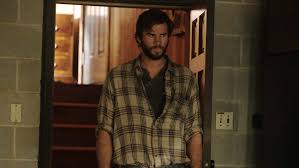
The movie revolves around the drug trade, drips with Arkansas-style colloquialisms, unfolds in clearly marked chapters, and plays around with the sequence of events that drive the story. Sound familiar? If so, it's because we've seen any number of movies that dive into a pool of tricky currents, ripples from a wave that’s broken before. Now that I've sounded a cautionary note, you might want to set it aside because Arkansas, a thriller starring Liam Hemsworth and a strong cast of supporting actors, resembles the way I feel when someone asks me how I'm doing in these days of coronavirus. "Good enough," is my standard reply and it fits director Clark Duke's debut movie. The pleasures of a movie such as Arkansas have little to do with its many plot twists. The fun here involves waiting to see who'll crop up in which role. The list includes John Malkovich as a park ranger mixed up in the drug trade, Michael Kenneth Williams as a dealer operating out of a convenience store, and Vivica A. Fox as a character who goes by the name "Her." She's some sort of a middle-person in the drug-dealing chain the movie rattles. Sitting atop this criminal pyramid, we find a character named Frog (Vince Vaughn in some of the wildest western shirts I've seen in some time). Functioning as a kind of straight man, Hemsworth portrays a shiftless drug dealer who hooks up with an ambitious young man named Swin (played by Duke). Every story needs a love interest, and Arkansas provides one in the presence of Johnna (Eden Brolin), a young woman who takes up with Swin. Swin? Yeah, the movie sometimes strains to be colorful and you may find yourself catching onto Duke’s character-heavy game. I don't mean to suggest that Arkansas should be mistaken for a character study. It's a merry go round that passes by a variety of characters, each a little more offbeat than the last one. Still, the screenplay by Duke and Andrew Boonkrong seldom trips over its own feet as it pirouettes through its abundant idiosyncrasies. "This world we're livin' in. It's morally atrocious," says one of the characters and we wonder whether the writers aren't trying to let us know that they're hip to their own game. But as I said at the outset, Arkansas is good enough for a look with Vaughn scoring as the piece's casually vile villain.

Thursday, December 20, 2018

'Bird Box': a wan helping of horror

Sandra Bullock joins the post-apocalyptic fray in Bird Box, a movie about a woman trying to find safety for herself and two small children. The situation is dire because the world has been ravaged by a lethal menace that, following current movie fashion, never is really defined. All that's clear is that those who have the misfortune of looking at the world will die, mostly by suicide. Normal vision has become fatal. Director Susanne Bier quickly gets down to business: Bullock's Malorie and her two charges (Vivien Lyra Blair and Juian Edwards) must negotiate a dangerous river to reach their only hope for safety -- and they must accomplish this goal while wearing blindfolds. The movie shifts between this river trip and events that occurred five years earlier when a flight to safety brought a pregnant Malorie into the home of Douglas (John Malkovich). There, a variety of refugees from the ill-defined terror try to survive. These include another pregnant woman (Danielle Macdonald) and a veteran (Trevante Rhodes) who leads an expedition (via GPS) to obtain groceries. The tensions in the house unfold in reasonably predictable fashion until the narrative catches up with itself and rejoins Malorie's river expedition. Comparisons with the far better A Quiet Place seem inevitable with Bird Box coming up a loser in any game of compare and contrast. Bullock gives a strong, fiercely determined performance; the rest of the cast is in equally good form. But in trying to surpass generic horror, Bird Box achieves only limited success.

Thursday, March 27, 2014

Cesar Chavez unionizes farm workers

Cesar Chavez, a truncated bio-pic about one of the country's most famous labor organizers, offers a step-by-step look at the hard work of winning decent working conditions and reasonable wages for migrant laborers in California.

Director Diego Luna, who starred in Y Tu Mama Tambien and who previously directed a small movie called Abel, does a solid job of refreshing memories about Chavez's landmark efforts during the 1960s.

Working from a script credited to Keir Pearson and Timothy J. Sexton, Luna concentrates on the five years in which Chavez (Michael Pena) helped organize the workers who picked grapes for California wine growers.

After deciding he needed to be closer to the workers he was trying to help, Chavez moved his family to the agricultural town of Delano, Ca., and began the arduous work that resulted in the formation of the Farmer Workers Union.

Chavez and coworker Delores Huerta (Rosario Dawson) ultimately found themselves leading a lengthy strike, which the workers ultimately won.

The rest of the supporting cast doesn't make much of an impression. A grower named Bogdanovitch (John Malkovich ) becomes the movie's main bad guy. Wes Bentley makes a brief appearance as a lawyer who helps Chavez. We also see Robert Kennedy (Jack Holmes), who turned up to support Chavez during a 25-day hunger strike that he staged.

Please, a moratorium on actors playing Kennedys. It almost always a distraction.

Chavez's wife Helen (America Ferrera) proves a woman of independent spirit, and, at times, Chavez's devotion to the farm workers causes him to spend less time with his oldest son than he'd like.

Pena portrays Chavez as a regular guy who believed in non-violence and who had no doubt that the farm workers were being exploited. His convictions seem almost inbred, an inseparable part of his being.

At times, Cesar Chavez can feel too routine, and the use of news footage doesn't do much to expand the movie's reach. We don't learn much about Chavez's eight children, and if Chavez had deep personal failings, the movie isn't interested in finding them.

Still, Cesar Chavez is represented as a tireless leader who wrought major changes and whose story deserves to be told. Viewed as an expansion of the voices represented in American movies, I'd call it a start. Let's hope it's not the finish.

Thursday, October 7, 2010

'Secretariat' gallops toward inspiration


Horse and owner on the verge of history.

"It's a very good Disney movie and I enjoyed it, but we know they have to convey certain values and photogenic moments." - Penny Chenery, the woman who helped bring Secretariat to racing's Triple Crown in 1973 and who's portrayed in the movie Secretariat by Diane Lane.

There's probably no better review you can read of Secretariat than Chenery's description of the movie that centers on her character, the driving force behind turning Secretariat into a Triple Crown winner at a time when there hadn't been one in 25 years. Chenery's words, spoken to John Anderson for a New York Times Sunday story, point toward the movie's goals, which seem to be divided between inspiration and fact.

As many have noted, Secretariat's race-track triumphs aren't exactly obscure, so the movie mingles the horse's amazing accomplishments with those of its owner, a determined Colorado woman who spent considerable time away from her family in an effort to save the Virginia stable her late father (Scott Glenn) left behind.

Secretariat runs his heart out, and Chenery displays the kind of single-minded focus that's needed to achieve greatness. When her dad dies, Chenery defies her brother (Dylan Baker), an academic who thinks the best move would be to sell the business. She also goes against her husband's wishes: Dylan Walsh's Jack Tweedy hopes his wife will come to her senses and remain at home with the family's four kids.

All Secretariat - a.k.a. "Big Red" - had to do was run; Chenery -- ably played by a determined Lane -- had to overcome long odds in a male-dominated world where few were prepared to take her seriously. But Chenery learned form her dad, a man who constantly encouraged her "to run her own race," a galloping variation of a standard Hollywood bromide: Follow your dream.

John Malkovich is allowed a few personality tics in an otherwise straight-ahead presentation; he portrays trainer Lucien Laurin, the French Canadian who emerged from an uneasy retirement to take over Secretariat's development and to display the worst taste in clothes this side of any stable. The man liked plaids.

Those unfamiliar with the story of Secretariat may not know that Chenery gained possession of the horse as the result of a complicated agreement by which a coin toss determined which of two owners would get first pick of one of two offspring of Bold Ruler, the great race horse that sired Secretariat. James Cromwell's Ogden Phipps won the toss, but picked the wrong horse.

In a movie such as this, the racing footage matters, and it definitely passes muster as Secretariat emerges victorious at the Kentucky Derby, the Preakness and finally at the Belmont Stakes. Before any of this can happen, Tweedy must devise a novel way to finance her operation.

Director Randall Wallace, who among other achievements wrote the script for Braveheart, pretty much follows genre rules, orchestrating the story like a driver who obediently pays heed to his GPS. Surprise is less the point here than crowd-pleasing execution. But that also means Secretariat can have the pre-digested feel of a movie that's been carefully programmed to hit all the right notes.

Put another way, I'd say Secretariat's aimed more at folks who love big-screen inspiration than those who get their kicks hanging around race tracks. I'm assuming you know to which of these groups you feel more allegiance.