It’s easy to see why Beetlejuice Beetlejuice, director Tim Burton’s follow-up to the 1988 classic, opened the 2024 Venice Film Festival. By the end of its high-spirited one hour and 32 minutes, the film has established itself as a celebration of the original.
Rocky Mountain Movies & Denver Movie Review
FOR MOVIE LOVERS WHO AREN'T EASILY SWEPT AWAY
Wednesday, September 4, 2024
After a long rest, Beetlejuice returns
It’s easy to see why Beetlejuice Beetlejuice, director Tim Burton’s follow-up to the 1988 classic, opened the 2024 Venice Film Festival. By the end of its high-spirited one hour and 32 minutes, the film has established itself as a celebration of the original.
Monday, June 19, 2023
A ‘Flash’’ too long’ -- but there's Keaton
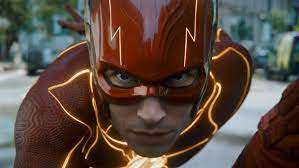
The first thing to know about The Flash is that it's 144 minutes long. Go ahead, sigh. I did. I begin here because this overstuffed helping of DC Comics chaos has trouble sustaining engagement beyond maybe the first hour and a half of its two-hour and 24-minute run time. A little more than halfway through, I started looking at my watch as I wondered how much more director Andy Muschietti (It) would throw into this frenzied whirl of a movie. The answer: a lot. We're talking Batman, supervillain Zod, Supergirl, time travel, and even two Flashes, both played by Ezra Miller, the actor who has had his share of legal troubles. You can look up Miller's woes, but I hope that he's able to straighten out his life and continue his career. Here, Barry Allen (a.k.a. The Flash) encounters a younger version of himself when he travels back in time. When we first meet Barry, he's troubled because his mother (Maribel Verdu) has been murdered, a crime for which his father (Ron Livingston) has been arrested. The movie's big kick involves the appearance of Michael Keaton, who reprises his role as Batman. I thought donning Batman’s cape weighed Keaton down; he's playing a reluctant, weary Batman, but Keaton’s work exceeds cameo levels and his presence registers as a plus. An early scene in which babies are vaulted through the sky (a baby shower of sorts) is almost weird enough to justify a look but Miller's high-strung performance wears thin as the movie wears on — and it does wear on. Despite its title, the last thing The Flash does is race quickly across the finish line. Keep an eye on Sasha Calle (Supergirl), though. She has enough edge to cut through the flying bric-a-brac, self-referential nods, noisy action, and plot overload. *
Thursday, September 2, 2021
Determining the worth of a human life
There's nothing terribly distinguished about the filmmaking in Worth, the real-life story of a battle for justice that ripped its way through the September 11th Victim Compensation Fund.
Friday, August 20, 2021
Maggie Q kicks butt; her movie -- less so
Maggie Q kicks a ton butt in The Protege, a thriller that can't quite decide whether it wants to leap into John Wick territory or play things straight. It winds up doing a bit of both -- albeit with uneven results. Q proves convincing as Anna, a woman plucked as a child from Vietnam in the late 90s and trained to be an assassin by Moody Dutton (Samuel L. Jackson), a guy who knows the killer's trade all too well and who recognizes young Anna's talent for the job. Director Martin Campbell tries to light some May/December sparks (tempered by plenty of nasty battling) when Michael Keaton shows up as Rembrandt, a man with his own killer chops and a sense that he's smarter than every other character in the movie. Rembrandt works for a rich white guy who has devoted his life to exploitative capitalism in Vietnam. Campbell stages plenty of action with violence levels that become increasingly outlandish as the movie makes its way from London to the British countryside and, finally, back to Vietnam. There, Robert Patrick turns up as a motorcycle-riding rogue who leads a band of scruffy associates. The actors seem fully committed to the screenplay's silliness, even in a scene that strains for humor when Q's Anna and Rembrandt, reach under a table and point pistols at each other's genitals. In her non-lethal life, Anna operates a bookstore specializing in rare volumes. She also drinks martinis. Remind you of anyone else? Like many such movies, The Protege requires a more than generous suspension of disbelief and never rises to the top of its kick-and-kill class. But it moves quickly, boasts a watchable cast, and features a performance by Q that doesn’t miss a beat, even when the movie tries to claim a bit of ethical high ground by telling us that Anna never kills anyone who doesn't deserve elimination. Nice of her, no?
Wednesday, March 27, 2019
An elephant flies but 'Dumbo' doesn't soar
I first saw Dumbo as a child in one of its re-releases, but haven’t seen it since, although I did watch selected clips on YouTube as I readied myself for director Tim Burton's new live-action remake.
Even with only a brief refresher, it’s clear that the Burton-directed Dumbo doesn’t match the great set pieces of the 1941 original, falling short in such crucial areas as humor, charm, and enchantment.
In telling the story, Burton has taken what Disney accomplished in 64 minutes and turned it into a 112-minute live-action feature with a CGI Dumbo. To expand on the original, the movie’s screenplay makes a deeper foray into the human world that the animated version wisely minimized.
The story begins when a World War I veteran (Colin Farrell) returns home. Newly widowed, Farrell’s Holt Farrier joins his two children (Nico Parker's Milly and Finley Hobbins' Joe) as he tries to resume his career as the star of a horse act in the Medici Circus, a rundown show that travels the US offering typical circus fare and what its mildly sleazy ringmaster (Danny DeVito) calls a "fake freak show."
Absent some of the musical numbers that enlivened the 1941 movie and including a less-than-impressive bow to the original’s famous Pink Elephant fantasy sequence, Dumbo occasionally yields to Burton’s darker instincts, though not entirely.
Dumbo also uses its story to illustrate what it seems to regard as the exploitative rise of the theme-park era, an interesting twist considering that Disney isn't exactly unfamiliar with theme parks.
Michael Keaton, who worked with Burton on Beetlejuice and a couple of Batman movies, plays a con man who wants the flying baby elephant to become the centerpiece of his new theme park, Dreamland. Keaton’s character doesn’t amount to much more than a weird hair cut and a faux accent. I wasn't sure what he was trying to do in giving the movie its hiss-boo villain.
As a veteran who lost an arm in the war, Farrell seems a bit lost. The kids are ... well ... Disney-style kids. They replace Timothy, the mouse of the original who encouraged Dumbo to fly on his own, putting aside the feather that the elephant believes enables him to flap his big ears and take flight. The feather helps explain how Dumbo discovers he can fly in the first place.
If you’ve forgotten, Dumbo's over-sized ears initially cause him to be scorned but eventually solidify his special place in the world.
Burton finds flashes of emotion in the story of a baby elephant separated from his mother -- Mrs. Jumbo -- tugging on the same heart-strings as the first movie, although I doubt whether you'll need to bring a full box of tissues to the new addition.
The CGI Dumbo isn’t as endearing as his predecessor, but Burton’s movie isn't particularly sweet nor does it allow the director fully to give himself over to his weirder impulses. An awful lot of energy seems to have gone into the film’s retro production design, and Danny Elfman's score strains to achieve a level of enchantment that the story doesn't always deliver.
Dumbo winds up taking us on a journey without the kind of surprises or stirring uplift that mark Disney at its best. I wouldn't say live-action versions of animated classics shouldn't be made, but this could be one case in which Disney might have done well to pass.
The original includes some dated material -- crows portrayed in racially stereotypical ways, for example -- but the bold creativity of Disney's animators still impresses. That makes the original feel fresher than much of what Burton and his team have created some 77 years later.
Thursday, September 14, 2017
He's very tough but who really cares?
Loads of people are familiar with author Vince Flynn’s Mitch Rapp, a disaffected loner recruited into the CIA after a terrorist murders his girlfriend on a beach right after the two have become engaged. It may take every fan of Flynn’s 16-book series to turn American Assassin — the first Mitch Rapp movie — into a hit.
Muddled by a scattered screenplay and hampered by Dylan O’Brien’s notably unremarkable performance as Rapp, American Assassin does a fair share of globe hopping but manages to go nowhere.
After his fiancee’s death, Rapp trains himself to become a killing machine, staging a one-man Libyan mission to kill the leader of the terrorist group responsible for his fiancee's death. When American troops disrupt his work, Rapp finds himself in the hands of the CIA, where the head of counter-intelligence (Sanaa Lathan) turns him over to Stan Hurley (Michael Keaton), a former Navy SEAL who trains his charges to be merciless killers.
At first, it seems as if swarthy complexions constitute the movie's only requirement for villainy, but we soon learn that a disaffected American (Taylor Kitsch) is trying to arrange a plutonium deal in Poland. Kitsch's character plans to sell Russian plutonium to Iranians — or some such.
That’s only the beginning of global hopscotching that takes Rapp to Turkey, Italy and other places, moving too quickly even to offer travelogue diversions.
In my view, only three reasons justify seeing American Assassin: a reasonably imaginative virtual reality training sequence, Keaton's crazed handling of a wince-inducing scene in which Stan is tortured and a late-picture explosion that can’t be described without giving away the movie’s climax.
Most of the time, American Assassin -- which was directed by Michael Cuesta (Kill the Messenger) -- fails to distinguish itself, looking like a low-rent version of the Jason Bourne movies with a little Jack Ryan thrown in.
For all its fights and action, American Assassin fails to generate the excitement we associate with the discovery of a new hero. The movie pauses for occasional chunks of listless exposition before leaping ahead to the next scene or country.
The net effect: Watching American Assassin made me feel as I if were skimming a second-rate novel, leafing from one chapter to the next, vainly hoping to stumble on something good.
Thursday, July 6, 2017
'Spider-Man' again. Surprise: It's OK
In Spider-Man: The Homecoming, Marvel pushes the reset button for Spider-Man, adding Tom Holland as the new kid from Queens, the superhero who can weave webs that snare bad guys.
Although not an origins story, Spider-Man: The Homecoming has the feel of one, mostly because Holland's Peter Parker spends much of the movie trying to figure out the parameters that govern the behavior of a super hero. He's aided in this endeavor by Robert Downey Jr.'s Tony Stark -- a.k.a. Iron Man -- who occasionally drops in to mentor young Parker in the fine art of super-heroism.
The movie treats Spider-Man as a typically insecure teenager -- albeit one who aspires to join the Avengers, a group that needs no introductions. If it does, you can stop reading now.
This Spider-Man movie is one of the entries in the Marvel Comics universe that didn't find a home at Disney. A Sony release, The Homecoming makes an amiable addition to a series that was rebooted once before.
So is Holland a better Spider-Man than screen Spider-Man, Tobey Maguire?
Let's say Holland falls somewhere in the middle. Overdoing Spidey's youthful exuberance and naivety, Holland sometimes teetered on the edge of getting on my nerves.
Fortunately, director Jon Watts allows other characters to carry some of the movie's weight. A schoolmate, nicely played by Jacob Batalon, thinks Parker should use his burgeoning superhero status to win over female classmates who might otherwise view him as a nerd.
An underused Marisa Tomei joins the cast as Parker's Aunt May. Tomei has one of the movie's best moments in a final scene.
Think of the undeveloped potential in Tomei's character. A widowed aunt takes care of a teenage boy in a cramped and probably over-priced Queens apartment. This particular widow still has her looks and easily could be living an entirely different life. She might even feel ripples of resentment about having to spend so much time coping with a high-school kid.
OK. I know. That's another movie.
Parker's high school woes include his fumbling attempts to endear himself to the girl of his dreams (Laura Harrier). The Homecoming spends enough time in high school to earn a well-deserved teen-movie diploma.
A nicely timed piece of comic business arrives when Tony Stark's personal assistant (Jon Favreau) tries to talk to Parker in a high school bathroom.
Of course, you'll find the usual number of action set pieces, the strongest of which takes place when Parker's Academic Decathlon team visits the Washington Monument. A battle on the Staten Island Ferry isn't bad, either.
Otherwise, the screenplay -- credited to six writers -- proves an episodic affair with a minimal through line. While working on a scavenging operation, contractor Adrian Toomes (Michael Keaton) purloins a powerful substance left on Earth by extra-terrestrials. The discovery becomes the basis for an illicit weapons business run by Toomes, who also has a comic-book identity. He's The Vulture.
At times, Toomes dons large, ominous-looking metal wings that allow him to defy gravity and fly about.
Ably played by Keaton, Vulture is a working-class guy whose life turns evil when the government robs him of a salvage contract he fairly won. Thus scorned, Toomes decides to take revenge on society's elites. He feels entitled to be a villain, and Keaton knows how to make him convincingly mean.
Spidey also has been given an internal conflict: Will he become a nationally renowned celebrity superhero or will he remain a hometown Queens boy, a neighborhood version of a superhero? The question gives the movie a bit of unexpected edge. Does Spidey have the self-assurance to shun the limelight?
A surprising twist adds flavor to the final act, which makes room for the multiple climaxes that Marvel movies can't seem to live without.
Given our justifiable fatigue with comic-book movies, Spider-Man: Homecoming fares better than we have any right to expect. It may not always soar, but it doesn't crash-and-burn either. Be thankful.
Thursday, November 12, 2015
The Catholic Church meets the press
As the nation lumbers toward another major election, you can be sure that some of the candidates will be taking aim at the media. Many already have.
Tiresome as they may be, these inevitable anti-media rants make Spotlight -- a terrific movie about how the Boston Globe's investigative team uncovered sexual abuses by priests in Boston's archdiocese -- a must-see reminder that journalists can (and often do) make important contributions to the betterment of their communities.
Director Tom McCarthy builds his story around the Globe's Spotlight team, a quartet of reporters who were given time to develop and report stories that required deep digging.
Michael Keaton, who played a newspaper editor in Ron Howard's sometimes overlooked The Paper, returns to the ranks of ink-stained wretches as Walter "Robby" Robinson, the head of the Spotlight team.
The story of pedophile priests didn't really take hold until the Globe got a new editor in 2001. Marty Baron -- played in a masterfully collected performance by Liev Schreiber -- was a Jewish newcomer to Boston. Baron, who's now editor of the Washington Post, thought that the Globe had a responsibility to look at the failings of one of the city's most revered institutions.
McCarthy (Win Win, The Visitor, and The Station Agent) keeps a complicated story on track in ways that sustain interest even though we already know the outcome of this unseemly tale.
In a way that works for the story, Spotlight doesn't really have a main character. It's about individual commitment within a context of team work, a much-needed tribute to role players. There are no star turns in Spotlight; the movie that celebrates journeyman work on every level.
The Spotlight team is ably represented by Mark Ruffalo, Rachel McAdams and Brian D'Arcy.
Ruffalo portrays Michael Rezendes, an avid, monkish reporter who eventually won the confidence of Mitchell Garabedian (Stanley Tucci), a lawyer who represented victims of church abuse. Initially mistrustful of the Globe, Garabedian had spent years trying to interest the paper in what he saw as wide-scale criminality within the church.
McAdams plays Sacha Pfeiffer; she's committed to the story but understands that it will shatter the church-centered world in which her grandmother -- like many Catholic Bostonians -- lives. Catholics made up 53 percent of the Globe's readership.
D'Arcy portrays James Matt Carroll. While working on the story, Carroll discovers that his own home isn't located far from a house where pedophile priests were hidden so that they could be "rehabilitated."
Billy Crudup portrays a lawyer who knows how to keep the lid on things by making settlements with victims; and Jamey Sheridan has a nice turn as a church attorney who wants to avoid scandal for what he deems a greater good: maintaining the order of things.
Len Cariou portrays Cardinal Bernard Francis Law, the church official who eventually was accused of covering up sexual abuses of priests in his archdiocese.
I don't normally like reviews that turn into lists of actors, but it's impossible not to acknowledge all of those who contributed to a fine ensemble cast, including John Slattery, who plays Ben Bradlee Jr., the editor who functions as Robinson's boss.
Spotlight's reach extends beyond the way journalists handle a complicated story, although it certainly shows the required grunt work. It's also about the way a community constructs a protective veneer around its valued institutions and how easy it is for lifelong members of that community to accept such facades as necessary and immutable.
McCarthy doesn't neglect the toll that the investigation takes on the journalists who are conducting it. Keaton, better and much less showy than he was in Birdman, wrestles with the conflicts generated by his varying identities and loyalties: journalist, Catholic and Bostonian.
We meet victims of priests who are conflicted about telling their story, sometimes because they've tried before and were met with indifference. We meet Boston bigwigs; and see what happens when a Cardinal tries to charm a newspaper editor who's not impressed by charm.
Spotlight bravely keeps its eye on truths that don't always make the Globe look good: The paper, we learn, had enough information to have begun reporting the story 20 years before it actually turned to the task.
Credit Spotlight for not imbuing its hardworking journalists with phony nobility, for not sensationalizing a tawdry story and for reminding us that journalists do more than, as some would have you believe, employ cheap tricks to play "gotcha" with politicians.
Thursday, January 15, 2015
'Boyhood' wins best picture at BFCA awards
Look, I understand that the awards season can feel interminable. But as a member of The Broadcast Film Critics Association, and as someone who always posts the Association's nominees, I feel I should share this year's winners with you.
The Critics Choice Awards were given out Thursday evening in Los Angeles, the same day as the Academy of Motion Pictures Arts and Sciences announced its nominees. You'll note a few differences.
Here are the winners:
Best Picture – Boyhood
Best Actor – Michael Keaton, Birdman
Best Actress – Julianne Moore, Still Alice
Best Supporting Actor – J.K. Simmons, Whiplash
Best Supporting Actress – Patricia Arquette, Boyhood
Best Young Actor/Actress – Ellar Coltrane, Boyhood
Best Acting Ensemble – Birdman
Best Director – Richard Linklater, Boyhood
Best Original Screenplay – Alejandro G. Iñárritu, Nicolás Giacobone, Alexander Dinelaris Jr., Armando Bo, Birdman
Best Adapted Screenplay – Gillian Flynn, “Gone Girl”
Best Cinematography – Emmanuel Lubezki, Birdman
Best Art Direction – Adam Stockhausen (Production Designer), Anna Pinnock (Set Decorator), The Grand Budapest Hotel
Best Editing – Douglas Crise, Stephen Mirrione, Birdman
Best Costume Design – Milena Canonero, The Grand Budapest Hotel
Best Hair & Makeup – Guardians of the Galaxy
Best Visual Effects – Dawn of the Planet of the Apes
Best Animated Feature – The Lego Movie
Best Action Movie – Guardians of the Galaxy
Best Actor in an Action Movie – Bradley Cooper, American Sniper
Best Actress in an Action Movie – Emily Blunt, Edge of Tomorrow
Best Comedy – The Grand Budapest Hotel
Best Actor in a Comedy – Michael Keaton, Birdman
Best Actress in a Comedy – Jenny Slate, Obvious Child
Best Sci-Fi/Horror Movie – Interstellar
Best Foreign Language Film – Force Majeure
Best Documentary Feature – Life Itself
Best Song – Glory, Common and John Legend, Selma
Best Score – Antonio Sanchez, Birdman
A few notable divergences from Oscar: The BFCA's best animated feature -- The Lego Movie -- was overlooked by the Academy of Motion Picture Arts and Sciences, which didn't nominate it in the animated feature category. Although he didn't win, David Oyelowo (also snubbed by Oscar) was a BFCA nominee for best actor. Oyelowo portrayed Dr. Martin Luther King Jr. in Selma. Selma director Ava DuVernay (overlooked by the Academy, as well) was nominated by the BFCA for best director. She didn't win, either, but made the short list. The BFCA honored Gillian Flynn (Gone Girl) for writing the best adapted screenplay. Flynn, who adapted her own novel, was ignored by Oscar, too.
If you're one of those folks who enter Oscar contests, you may want to peruse the BFCA list as you begin to decide where you'll be casting your votes.
Thursday, October 23, 2014
'Birdman' tries to ruffle lots of feathers
If you've been following this year's film festival news, you know that director Alejandro Gonzalez Inarritu's Birdman -- or more pretentiously Birdman: The Unexpected Virtue of Ignorance -- has taken flight in critical circles.
Michael Keaton, who hasn't occupied center stage in a movie for a while, has received raves for portraying a washed-up movie star trying to make a comeback on Broadway.
And even those who've objected to Inarritu's cacophonous, multi-story approach in 21 Grams and Babel seem to regard Birdman as a striking improvement.
I begin this way because Birdman arrives with a cache that proclaims the film a brilliant riff on celebrity, movies, stardom and heaven knows what else.
Obviously, I wouldn't have mentioned any of this unless I intended to take a different -- and less effusive -- tack.
Creative, willing to plunge into fantasy without apology or explanation and sharply acted, Birdman resembles, as someone has pointed out, a high-wire act -- except (and here's the rub) the wire might be located no more than two feet off the ground.
Put another way, Birdman has its virtues, but revovles around a less-than-riveting question: Can a movie star we don't particuarly like and with whom we may not identify earn a reputation as a credible actor?
Keaton portrays Riggan Thomas an actor who made his mark playing a superhero called Birdman. Thomas ditched the franchise, but eventually fell into hard times. Now, his money and self-respect are running out.
To redeem his reputation, Riggan has written a play, an adpation of a Raymond Carver story called What We Talk About When We Talk abokut Love. What rides on the play's success? For Riggan: Everything. For us? Much less.
Keaton does a fine job playing a man who's plummeting even as he's trying to take flight. Riggan is tormented by the blatant commericalism of his past success; his box-office triumphs drag on him like an anchor.
But even in a comedy this caustic, it would be nice to give a damn about whether Riggan saved himself or not. I can't say that I did.
Riggan fights an internal battle, even as he faces various obstacles that threaten his play. He often hears the voice of his Birdman character, either berating him for his failures or reminding him that he could (and should) reclaim his place as a bona fide movie star who doesn't need the pipsqueak acclaim of the New York theater crowd.
Working with the gifted cinematographer Emmanuel Lubezki (Gravity and The Tree of Life), Inarritu employs a ferociously mobile camera as he attempts to make it seem as if the entire story is unfolding in a single take, an approach that's augmented by Antonio Sanchez's solo drum score. It's a feat of sorts, but put to what end?
OK, so Keaton played Batman, and stopped playing Batman. For some, this shard of show-business reality adds resonance to Inarritu's movie, but I can't imagine anyone confusing Keaton with the character he's playing.
Most of the story takes place in the tumultuous days before the play's opening: Among Riggan's problems: A cast member has been struck on the head by a stage light that detached from its moorings.
Riggan, who's both starring in and directing the play, hires a replacement, an apparently well-regarded theatrical actor (Edward Norton), a performer whose attempts to find realism in everything he plays reaches ludicrous levels.
Norton finds comedy in the self-inflation of a talented actor who believes that he's fighting a lonely battle to save the culture.
Also along for what's mostly a backstage ride is Riggan's daughter (Emma Stone). She's fresh from rehab and almost always in couldn't-care-less mode.
Stone has a power moment when her character tells her father that nothing about him matters, and he'd best get used to it. Stone then shows us -- as anger drains from her face -- that she realizes she may have gone too far.
We also meet an actress who's finally realizing her dream of appearing on Broadway (Naomi Watts).Zach Galifianakis plays Riggan's attorney and principal advisor, a mostly exasperated fellow who's constantly trying to save Riggan from himself.
Low-grade contempt runs through the entire movie -- for Hollywood and its blockbuster lust, for actors who either are portrayed as deeply insecure or phenomenal twits and for the audience, which is left to ponder the meaning of realistically presented images in which Riggan moves objects with his mind. Power fantasies from a man who seems to control nothing?
The screenplay tosses in some additional characters, notably Thomas' former wife (Amy Ryan) and his actress girlfriend (Andrea Riseborough). Early on, she tells Riggan that she's pregnant, the last bit of news someone in his precarious position needs to hear.
Much of the movie is marked by scorn, but Inarritu really forces his point when we meet the drama critic for The New York Times (Lindsay Duncan). She insists that she's going to destroy the play, even though she hasn't seen it.
Why? Because she detests everything that Riggan stands for; i.e., Hollywood commercialism. Even in a movie with satirical aspirations, it's just another cheap shot.
Look, Inarritu's clearly trying to push his movie out of the usual big-screen comfort zones. But I found Birdman to be marching to a drumbeat of self-absorption, and for all of its agitated craft, it's not without dull spots.
Birdman is about the ways in which artists risk everything and bystanders (and critics) risk nothing. With all humility, I'd say that real risk takers don't feel the need to point out that they're laying everything on the line. They just do it.
You can spend a lot of time deconstructing Birdman, but you may find that once you've done with the exercise, you haven't arrived anywhere that deeply matters.
Thursday, March 13, 2014
Speed? Yes Everything else? No
Meth. Speed. I thought maybe Paul had found a new drug on which he could pin his career hopes.
OK, I'm kidding. I knew that Need for Speed was developed from a popular Electronic Arts video game, but I'm not kidding about Paul. I wanted to see what he could do on the big screen.
The answer: If Need for Speed is any indication (and I hope it isn't), not much.
Paul plays Tobey Marshall, a blue-collar guy from Mt. Kisco, New York. Thanks to a few contrivances Tobey joins with Julia (Imogen Poots) on a cross-country trip. The goal is for Tobey to reach San Fancisco so that he can compete in a high stakes race sponsored by a former racer named Monarch (Michael Keaton).
Guess what? It's not all about racing. Tobey wants to defeat his arch rival Dino (Dominic Cooper), the immoral rich guy responsible for the death of Tobey's best bud (Harrison Gilbertson).
Dino forces Gilbertson's Pete into a lethal crash during an early-picture race, but the wrongly accused Tobey spends two years in jail for the crime.
Joining Tobey on his four-wheeled adventures are his pals Benny (Scott Mescudi), Finn (Rami Malek) and Joe (Ramon Rodriguez).
When Finn leaves his day job, the movie adds some gratuitious nudity to the proceedings. Eager to rejoin his racing pals, Finn shocks his office mates by stripping off his clothes, baring his butt and returning to the world of vroom-and-zoom.
En route to San Francisco, Tobey and Julia are chased by cops and by other enemies who want to stop them.
And just in case you don't think cars are enough, the directors add a Cessna that serves as a traffic reporter for the speeding Tobey and, later, a couple of helicopters.
The action (yes, there's plenty) sometimes seems more like vehicular homicide than racing with overturned cars and fiery crashes that look as if no one possibly could survive them.
Nothing makes a great deal of sense here, and as shocking as it is to say, the movie makes the Fast & Furious films -- at least the better ones -- look like masterpieces.
Based on his work in Breaking Bad, I'm thinking there's more to Paul than Need for Speed allows him show. I hope I'm right.
Tuesday, February 11, 2014
'RoboCop' stomps into theaters
Topical issues -- drones, the use of high-tech killing machines and the role of private enterprise in ensuring public safety -- waft through the 2014 remake of RoboCop, although they don't necessarily have much sticking power. Retooled for a new century, this remake of Paul Verhoeven's 1987 blockbuster also works in a reliable old standard: amoral corporate greed.
Not content with creating robots for heavy duty law enforcement in such dangerous places as Tehran, an evil corporation -- the unimaginatively named OmniCorp -- decides that the best route to conquering the U.S. domestic market is to put a man inside a machine.
The argument goes something like this: A human touch would help convince people that a sophisticated killing machine could experience pangs of conscience or -- in a worst case scenario -- be moved toward regret upon inflicting collateral damage.
Like the original, the screenplay contrives to make Detroit detective Alex Murphy (Joel Kinnaman) the man in the machine. After assassins attempt to kill Murphy with a car bomb, his ragged remains are carted off to OmniCorp, where they are fitted into an imposing black suit of armor that's programmed to put him in uber-cop mode.
In one of the film's more inventive touches, we see that all that remains of Alex are his head, lungs, heart and one hand. So much for biology: The rest is metal.
Not surprisingly, Alex isn't happy to discover that he's been turned into a robot and that he henceforth will be deprived of fleshy contact with his wife (Abbie Cornish) and his young son (John Paul Ruttan).
As RoboCop, Murphy also has been deprived of the personality that he displays in the movie's early scenes, thanks in part to Kinnaman's ability to humanize cops, a skill he mastered in TV's The Killing. More about that later.
Brazilian director Jose Padilha, who created the pulsating Elite Squad movies, takes the reins, working with a screenplay that manages a bit of wit. Padilha makes amusing use of the Tin Man's refrain from The Wizard of Oz ("If I only had a heart") and of a throbbing rendition of "I Fought the Law."
But Padilha doesn't spend much time trying for tongue-in-cheek winks at the audience, aside from a recurring segment featuring Samuel L. Jackson as Pat Novak, host of a television show that pimps patriotism, OmniCorp-style.
A strong supporting cast adds some of the color that has been drained from Murphy's personality when he becomes RoboCop: Michael Keaton portrays Raymond Sellars, the villain who runs OmniCorp; Gary Oldman signs on as an OmniCorp scientist who hasn't entirely lost his moral bearings; Jackie Earle Haley has a nice turn as an OmniCorp enforcer, and Michael K. Williams appears as Murphy's human partner.
Not surprisingly, Padilha sometimes subordinates story to action, which he films in the typically chaotic style of today's movies. This means that aside from blasts and flying bullets, it's not always possible to tell what's actually happening.
If you've seen The Killing, you know that Kinnaman plays one of the more unusual cops ever to appear on TV, a hip Seattle detective with drug problems in his past. It would have been a stroke of real genius to allow Kennaman to retain a similar personality inside his black RoboCop suit.
To be fair, Kennaman does what he can to embody Robo's inner battle: Does Murphy retain enough of his humanity to counter the programming that guides his actions? Does anything of Alex Murphy remain or is he all RoboCop?
The screenplay tries build emotion by having RoboCop pine for his wife and son. Can he go from being a lethal weapon to a credible RoboDad.
RoboCop isn't as strapped for ideas as real-life Detroit is strapped for cash, but it can feel messy and noisy, which -- come to think about it -- may be just what folks are looking for with a remake that's willing to try lots of things, perhaps in hopes that some of them actually will work.
Amazingly, some do. RoboCop may lack the high-impact clobber of the original, but it manages to avoid the junk heap. I guess that's something.
Thursday, August 5, 2010
Police work may be a laughing matter
If you don't like Will Ferrell, you'd best run for cover. Not only does Ferrell have a new comedy - The Other Guys - out this week, but he also has two movies in postproduction and seven in development. So says IMDb, the invaluable movie web site.
Ferrell has made his big-screen mark in movies as diverse as the gleefully crude Old School (2003) and the more sophisticated Stranger than Fiction (2006). He also has experienced some critical drubbing, notably for Land of the Lost of the Lost (2009), which scored a dismal 32 out of 100 at the aggregate review site Metacritic.
Ferrell's growing filmography suggests that he has a kind of unstoppable drive, and it's evident in his work, which typically finds him mixing silliness and earnestness in ways that create an absurd incongruence, like opening your door and discovering a naked insurance salesman on the porch.
Although The Other Guys isn't a top-drawer comedy, it makes room for some of Ferrell's funniest work. Presented in the guise of a buddy-cop movie, The Other Guys teams Ferrell with Mark Wahlberg; they play detectives too inept even to pull off a routine good cop/bad cop interrogation.
The Other Guys reunites Ferrell with director Adam McKay, who directed Anchorman: The Legend of Ron Burgundy and Talladega Nights: The Ballad of Ricky Bobby. This time, Ferrell and McKay spoof urban cop movies, adding topical gloss with a plot that revolves around a Bernie Madoff-like financial fraud. Steve Coogan plays a British financier who's involved in a scam that has Ferrell and Wahlberg racing around New York City.
Ferrell portrays Allen Gamble, an accountant who works for the New York City Police Department, where he tries never to leave his desk. Wahlberg plays Terry Hoitz, a loose-cannon detective who craves action, but who has been shunted aside because of a whopping error in judgment. (You'll have to see the movie to find out what it is.)
The temptation with comedy is to steal some of the jokes for a review. I'll try to resist. Ferrell has some funny bits, not the least of which involves the way he describes his wife (Eva Mendes). I won't give away more, except to note that there are few red-blooded American men who would regard the sultry Mendes as an eyesore and a burden.
An amusing bit involving the way in which Ferrell's character earned money in college requires him to flip into a strange alter-ego expression of a "dark side" that he struggles to keep under wraps. These collegiate flashbacks make no sense, which, of course, makes them even funnier.
Michael Keaton is spot on but underutilized as Capt. Gene Mauch, boss of this improbable duo, a policeman who supplements his income with shifts at Bed, Bath & Beyond. He needs extra cash to support his college-age son, a character who doesn't appear in the movie but who becomes the source of a repetitive joke about sexual preference.
Wahlberg? At times, he seems to be pushing awfully hard to provide a contrast with Ferrell. But the two keep things humming through a variety of scenes that make for a ragged jigsaw puzzle of a movie. Put another way: The Other Guys is a bit of a mess.
Opinions may differ, but I don't think that McKay has the right chops to handle the movie's action, presumably intended as a send-up of the action in many urban movies of recent memory. But the thing about comedy is this: If you laugh enough, you stop caring about everything else. You feel a little better about saying that no one likely will mistake The Other Guys for a great movie, even as you wish that someone (anyone) could make a comedy that comes close to working on all levels.
Hang around for the end credits, which are designed to raise your ire about the current economic situation and which contain more pointed satire than anything else in the movie. Very clever.