Showing posts with label Joel Edgerton. Show all posts

Wednesday, January 7, 2026

Cruelty at a water polo camp


    Recently, I posted my l0-best list of movies for 2025. The Plague,  a vividly made and disturbing plunge into the lives of boys, was on that list and now is making its way around the country. 
Here's what I said: 

   Director Charlie Polinger’s The Plague sets its story at a camp where teenage boys establish a culture of camaraderie and cruelty. In tone and texture, The Plague resembles a horror film, but its ability to unsettle stems from its deeply rooted understanding of adolescent boys. Polinger’s imagery adds an unexpected eeriness to a story that focuses on 12-year-old Ben (Everett Blunck), a new arrival at a water polo camp where one of the boys (Kenny Rasmussen) is rejected for having the plague, a concocted story the boys take seriously. Rasmussen's character becomes an outcast. Steeped in anxiety, The Plague features a small performance from Joel Edgerton as a water polo coach. Credit Polinger with deftly depicting a part of youth most men would prefer to forget. 

    Some additional observations and notes on the movie: Kayo Martin gives a memorable performance as Jake, the malicious leader of the boys who taunt Rasmussen's character. Johan Lenox's  score enhances an ominous quality that mirrors and heightens feelings of anxiety. Edgerton's down-to-earth performance avoids the cliches that might have turned him into a savior of troubled boys.  Steven Breckon's cinematography offers underwater perspectives that help define the disquiet of an atmosphere that can turn chaotic. 

  Technical artistry aside, The Plague stands as a classic about cruelty and estrangement that's perfectly embodied in Blunck's performance as a boy struggling to manage the conflict between basic decency and the need for peer acceptance.


Wednesday, November 5, 2025

A small story with epic reach


  Director Clint Bentley takes on author Denis Johnson's Train Dreams, a 166-page novel that deals with large themes about the destruction of the American West, the trials of one tormented man, and his inability to make sense of tragic loss. 
  Perhaps to make Johnson's authorial voice part of the movie, Bentley makes heavy use of a narrator (Will Patton). Never intrusive, Patton's voice guides us through the story of Robert Granier (Joel Edgerton), a sturdy resident of the Pacific Northwest who ekes out a living as a logger.
   Logging takes Robert away from his wife, Gladys (Felicity Jones), and his infant daughter. He'd rather stay home, but money is scarce, and so are jobs.
   From the start, it's clear that Bentley and cinematographer Adolpho Veloso will celebrate the beauty of Northeast Washington, where the movie was filmed. Never purely decorative; the landscape and its trees have a near-hallowed quality. 
   For a time, Robert and Gladys live in a Western Eden, two people and a child in a small cabin Robert builds. All they want is to be together and live.
   Of course, there's no story in "just living." On a logging expedition, Robert becomes complicit in the death of a Chinese worker, hurled off a bridge by bigots who accuse the man of stealing. From that point on, Robert believes he's cursed. The events that follow suggest that he might be right.
    Principal among such catastrophes is a massive forest fire that consumes Robert's home, taking the lives of his wife and child. Robert was on his way home from a logging expedition when he saw smoke clouding the sky. He arrived too late to save his wife and daughter.
     Even in the early going, Bentley breaks the movie's bucolic moods with shots of trains sparking and roaring through the landscape. A recurrent train dream slices into Robert's sleep, an engine of destruction.
    The perils of logging come into sharper focus when Robert gathers around campfires with fellow loggers. These rough-hewn men include Apostle Frank (Paul Schneider) and Arn Peebles (William H. Macy). The men acknowledge the danger of their work: A falling branch can take its revenge on those who swing the axes. 
    Some of Robert's dreams evoke memories of his cherished domestic life.  Robert and his daughter share beautifully tender moments, and when Robert and Gladys are together, their love bubbles with laughter.
     A bearded Edgerton gives a solid performance as a man who, throughout most of the movie, knows little peace, but who also knows how to bear his troubles. He's a man of limited knowledge, but Edgerton suggests depths Robert can't quite grasp.
     Late in the film, Robert meets Claire (Kerry Condon), a widow who works as a lookout for forest fires. She lives in a tower that affords an overview of the territory Robert only has seen in pieces, and she expresses a deep and moving sympathy for Robert's plight. 
      The movie covers Robert's life from around 1917 to 1968. The scenes in the '60s struck me as  jarring, perhaps intentionally so. Robert's best days were lived before the frontier vanished. Still, there's a mood-breaking awkwardness to the these scenes I found difficult to digest.
      I also wondered what the film would have been had Bentley (Jockey, Sing Sing), working from a screenplay he wrote with Greg Kwedar, eliminated the narration and let Robert's journey grow and flow on its own. 
     Still, as I've said, Paton's narration can be viewed as part of the film's fabric, helping Bentley to play a trick that gives the movie its poignance: He takes a subject of epic scope and tells it in small strokes that mark the life of a man who'll never see how his life fits into the big picture. But, then, who among us ever will?


Saturday, December 23, 2023

This 'Boat' floats on familiar waters


   When most people think of the 1936 Olympics, they probably remember how Jesse Owens' four Gold Medals helped undermine Hitler's insistence on Aryan supremacy -- unless, that is, they happen to have read Daniel Brown's The Boys in the Boat: Nine Americans and Their Epic Quest for Gold at the 1936 Olympics. Talk about telling a story in a nutshell.
        In the movie version of Brown's book about an odds-defying crew team from the University of Washington, director George Clooney celebrates crew, a sport that seldom makes its way to the big screen.
        A mildly novel subject, yes,  but Boys in the Boat offers little by way of surprise.
        Dressed as if they were extracted from a Norman Rockwell painting, the actors in Boys in the Boat row their way through an achingly familiar story that pits the working-class kids of Washington against coastal elites.
       Never mind that anyone who went to college in 1936 probably was pretty far ahead of the game anyway.
       Callum Turner stars as Joe Rantz, a Washington student who can't afford food or lodging -- not to mention tuition. Never fear. Abandoned by his Depression-scarred father while still a teenager, Joe knows how to fend for himself.
         Finances motivate him to try crew. He joins the Washington team to support his schooling. Room, board, and tuition await those who make the team.
        Two adults put a few whiskers on a story about young men.
        Joel Edgerton portrays coach Al Ulbrickson, a tough-love guy who drives his charges hard. 
        Peter Guinness plays the dedicated craftsman who designs the boats in which the U of Washington crew races.
        A bit of romance arrives when Joe meets a coed played by Hadley Robinson. And one of the crew members (Jack Mulhern) adds a colorful note as a kid who plays the piano.
        In general, though, the crew doesn't include enough stand-out personalities to keep the proceedings from flattening.
        Lately, Clooney's behind-the-camera work hasn't soared. The Tender Bar (2021) missed the mark, and this time, the best you can say is that The Boys in the Boat reflects plenty of workman-like competence.
        The movie is at its best when the boys really are in the boat. Clooney does a good job of conveying the sport's intricacies and beauty, the strength and strategy required to compete at high levels.
         Look, it would be wrong and misleading to suggest that The Boy in the Boat is terrible. It's not edgy enough for that. The movie's glide and grace are reserved for the water. On land, it doesn't do much more than stay afloat.

Monday, June 5, 2023

'Master Gardener' intrigues, confounds


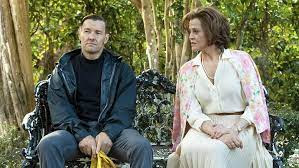
    Sometimes I wonder how keenly Paul Schrader, like some of his characters, feels what it’s like to reside alone in a dimly lit room with an alarming lack of amenities. I thought about this after watching Joel Edgerton in The Master Gardener, the third in a string of movies Schrader began six years ago, the other two being First Reformed (2017) and The Card Counter (2021).
   Schrader is one of the few directors who seems to pursue his interests wherever then take him and they often take him to dark places. Remember this is the guy who wrote Taxi Driver, perhaps director Martin Scorsese's most luridly compelling movie.
    In The Master Gardner, Schrader, as he often does, charts another search for redemption. But the movie resists categorization. Despite the specificity of its settings -- a garden tended by Edgerton's Narvel Roth,  a few downscale southern neighborhoods, and several last-resort motels -- Master Gardner can't be taken as realistic. 
   The Master Gardener isn't exactly dreamlike either; it occupies a world scoured of human bustle and although the characters don't always make sense -- at least when you step back for further reflection -- Schrader encourages buy-in while you're watching.
    Working minimally and with his emotions clipped as tight as his slicked down hair, Edgerton plays a former Neo Nazi living in the witness protection program after turning on nine of his former colleagues. Narvel since has tried to rehabilitate himself by becoming a skilled gardener: He heads the team that takes care of a showpiece garden for a wealthy woman (Sigourney Weaver).
    Sigourney’s Norma Haverhill (yes, the name sounds Dickensian) saw something in Narvel and took a chance on him -- or maybe she got an erotic charge from sleeping with a guy with a spray of SS and white supremacist tattoos that are revealed when he removes his shirt. Narvel's torso has become a poster for his past. Usually, he keeps it covered.
      None of the characters are easily understood. Weaver's Norma has a cruel streak fortified by flinty determination. Norma can be beneficent but she's also threatening and severe. She doesn’t like to be questioned.
   The arrival at the garden of Norma's grandniece, a mixed raced young woman played by Quintesssa Swindell, gives the story a jolt.
   Norma instructs Narvel to take Swindell's Maya under wing, educate her in the horticultural arts, and prepare her to inherit Gracewood Gardens. He obliges.
    A fast learner, Maya adapts to the gardening life and begins to develop a close relationship with Narvel.
    Despite bits of gardening information that are dispensed during Narvel's narration of the movie, Schrader isn't content simply to putter around the garden. When he brings Maya's drug-dealing ex boyfriend (Jared Bankens) into the story, the winds of corruption begin to ruffle the flower petals.
     The plot, such as it is, finds Narvel and Maya getting crosswise with Norma. Putting on her most judgmental face, Norma expels them from the garden, turning them into an unlikely Adam and Eve.
    Time for the elephant in the room.
    How can an intelligent woman of color, even one such as Maya who’s addicted to drugs, fall for an older man who happens to be a former white supremacist? Narvel is supposed to have seen the error of his brutal ways, but Edgerton keeps us away from Narvel's inner life. Flashbacks to Narvel's violent racist days haunt him but he carries himself stiffly, like a dutiful soldier who's following a new set of orders.
     Perhaps we’re meant to think that Narvel channels his former racist fury into a commitment to protecting Maya, a woman whose existence represents the racial mixing he once despised. 
    But Maya isn't a helpless damsel in distress; she's got some fire of her own. She doesn’t ignore Narvel’s past. Still, it’s a stretch to think she could live with it.
     Schrader builds toward a violent confrontation. In Master Gardner, violence can be both destructive and purgative.
    Schrader mixes beauty and shabbiness and leaves us to ponder deep questions: Can the most rotted among us find redemption? Can the corruption of the world be detoxified by those who've helped corrupt it? Can what has been destroyed by hate be restored by love?     
     So where do I stand on the movie? I'll say only this:  It sometimes can be better for a movie to be interesting than gratifying and whatever else I thought about The Master Gardener, I did find it interesting. 
    Such a movie, even when not fully realized, can reflect the uncompromising integrity of the artist who made it. That’s something to consider.

Wednesday, July 27, 2022

'Thirteen Lives' tells an amazing story


   Ron Howard's Thirteen Lives can be regarded as a procedural; i.e.,  a straightforward account of a story in which 12 boys and their soccer coach were stranded in a flooded cave in Thailand. 
   The event -- which happened in 2018 -- captured the world's attention as a team of divers combatted monsoon rains while trying to locate the boys and figure out how to extricate them from the cave.
   So, a procedural, yes, but one that tells an incredible story about a team of international divers and Thai Navy Seals who, after 18 days guided the boys to safety. 
   Difficult to begin with, the task became nearly impossible because the boys had to be equipped with diving gear that would enable them to breathe as the divers navigated treacherous waters and narrow passageways. 
   Howard introduces five divers played by Colin Farrell, Viggo Mortensen, Joel Edgerton, Tom Bateman, and Paul Gleeson. 
 Mortensen and Farrell receive the most attention as divers who don't always agree. The story also deals with tensions between Thai authorities, the Thai military, and the foreigners who arrived to help. 
  The Thai characters aren't especially well-developed but neither are the principal divers, who are given sketchy backgrounds. 
    The characters spend little time interacting with one another in ways unrelated to the rescue mission, so it's up to the actors to suggest deeper character traits. Credit Mortensen, Farrell, and Edgerton with doing as much as they can in this regard.
    Howard and cinematographer Sayombhu Mukdeeprom up the dramatic ante with rescue sequences that involve a decision that's best discovered in a theater, presuming you don't already know it. 
   The movie's underwater scenes must have been difficult to film but they tend to become slightly repetitive as divers make multiple trips through tunnels of the cave to save the boys.
    I expected an emotionally richer film from Howard whose filmography includes the gripping Apollo 13. He's working with a subject that seems firmly located in his wheelhouse but Thirteen Lives proves more resolute than inspiring.
   I don't think it's a spoiler to say that we know the outcome of such a well-known story from the outset. Aside from becoming international news, the rainy season rescue also is the subject of Rescue, a well-regarded 2021 documentary. But whatever its limitations, Thirteen Lives still has an amazing story to tell.

Thursday, July 29, 2021

'The Green Knight' casts an eerie spell


   Alluring and visually arresting, The Green Knight takes place during the time of Arthurian legend but hosts no knights in shining armor. The armor is tarnished, as are the lives of most of the movie’s characters.
   Although it boasts a fair measure of squalor, mud, and brutality, Green Knight hardly qualifies as realistic. Based on the 14th Century poem, Gawain and the Green Knight, the story lives entirely in the realm of legend.
  The Green Knight of the title appears early in the movie so there’s no spoiler in telling you that he’s a creature with a tree-like body and a head made of bark. He creaks when he moves. Know this, though. As writer/director David Lowry treats The Green Knight, he's no joke -- and neither is a movie that haunts, unsettles, and holds us in its visionary grasp.
   The story follows a simple enough outline.
   On a Christmas morn, The Green Knight (Ralph Ineson) shows up at King Arthur’s court. He addresses the Round Table, asking whether anyone will accept the challenge he’s about to throw down. Perhaps motivated by ambitions to become a knight, only Gawain (Dev Patel) responds.
   Here’s the bargain: Whatever Gawain does to The Green Knight, he’ll have to submit to the same fate a year later. Gawain beheads the Green Knight, who picks up his detached cranium and departs, laughing as rides his horse into the mist.
   If the general arc of the story is straightforward, the details sometimes blur the border between mystery and confusion. Scene-to-scene, Green Knight becomes increasingly strange as Gawain — once a carousing youth who liked to drink and womanize — tries to demonstrate his honor.
  After a year of being treated royally, he heads (you’ll pardon the pun) for his promised rendezvous with The Green Knight.
   It’s not exactly a pleasurable trip. Gawain encounters vandals on the road who leave him for dead. Barry Keoghan has a compelling turn as The Scavenger, one of the thieves who attack Gawain. 
    Gawain also meets a woman who says that she’s St. Winfred (Erin Kellyman). She wants him to retrieve her skull from a pond. He says she already has a head. It looks like I have a head, but — trust me — I don’t, she tells Gawain. 
   When he meets a nobleman (Joel Edgerton) and his wife (Alicia  Vikander),  sexual currents begin to flow.
   Sarita Choudhury appears as Mother/Morgan Le Fay, a witch, a seer and Gawain's mom, dual faces of the same character. 
   Sean Harris's King Arthur can seem riven by doubt. For the record, the movie refers to him only as King. He's also Gawain's uncle.
   I haven’t even mentioned the talking fox that becomes Gawain’s companion.
   That may sound Disneyesque, but again take heed: Nothing about Green Knight has a family oriented feel. Lowry not only wants to tell a mythical story, he wants to create a mythical reality — and he comes very close to succeeding at a task that could have gone terribly wrong.
     Lowry nicely fits the characters into the environment. 
    As Gawain, a bearded Patel winds up with a tortured face you might see on a religious icon. 
   The Green Knight may be an angel of death — or at least that’s how I saw it.
    There were times when I wished Lowry had restrained the impulse toward mystery — at least a bit. The dialogue often seems whispered as if the characters are living in a secret world that we can’t totally penetrate. 
      You need to be comfortable with that feeling to go along with Green Knight. For the most part, I was and I did.
    Reservations? Some. Dimly lit images make you long for the presence of a bit of clarifying light — even though electricity had yet to be invented. I understand the impulse to place a mythical tale in a naturalistic environment, but enough is enough.
    Various sections are titled but the headings sometimes flash by too quickly for easy reading.
    Viewers may be puzzled by the movie’s ending, which is subject to interpretation, but the overall message speaks with power. The world may be forbidding, but Gawain can’t escape the most essential condition of the human contract: He must die.
   What is the honor that Gawain sought to achieve on his journey? Perhaps nothing more than being ready when the time of departure arrives. In the end, debts must be acknowledged: Payment is due.
   

Thursday, November 8, 2018

A young gay man confronts conversion therapy

Lucas Hedges shines as a young man caught between his family and his sexual identity.

The skills of Lucas Hedges are on display in three highly anticipated fall movies: Mid-90s, Boy Erased and Ben is Back. In Boy Erased, the second of these movies to reach the nation's screens, Hedges plays Jared, a young gay man whose religious parents send him to conversion therapy. In Ben is Back, due in December, Hedges portrays a drug-addicted kid whose mother (Julia Roberts) desperately wants to get him off his self-destructive path.

Although his role in the skateboard movie Mid90s is a small one, Hedges -- nominated in 2016 for a best-supporting actor Oscar for Manchester by the Sea -- clearly is having a moment. He deserves it: He should be contributing to movies for a long time.

Boy Erased casts Hedges as the intriguingly conflicted Jared Eamons, a character who can't reconcile his desire to be a normal kid with this sexual inclinations. Sensitive and vulnerable, Hedges never loses touch with the essence of Jared's character: He's a kid who wants to please by doing the right thing.

Jared has been brought up in a fundamentalist Christian environment by his homemaking mother (Nicole Kidman) and his pastor father (Russell Crowe). Unrebellious by nature, Jared takes his faith background seriously.

Boy Erased focuses on what happens when Jared's parents learn that he might be gay and send him to Christian conversion therapy, something he initially approaches with the hope that it will work. Jared wants to be "cured" and he harbors no apparent ill will toward his parents.

Based on a memoir by Gerard Conley -- the model for Jared -- Boy Erased spends much of its time following Jared through conversion therapy where he's guided by Victor Sykes (Joel Edgerton). Part cheerleader and part disciplinarian, Sykes bases his actions on the notion that gayness is a choice that can be unchosen with hard work and rigorous applications of faith.

Sykes is assisted by Brandon (Flea), a guy who approaches his job as if he's a drill sergeant charged with yelling the gay out of the young people who find themselves in this program.

During Jared's conversion therapy, he stays in a motel with his mother, who offers support and who watches the impact the "therapy" has on Jared.

The movie, which marks Edgerton's second directorial effort after 2015's The Gift, doesn't spend a lot of time on the other young people who have been sent to Love in Action, the program in which Jared has been enrolled. Troye Sivan plays a curly headed blonde who tells Jared that he should fake his conversion, get out of Love in Action in one piece and then decide how he wants to live. Britton Sear appears as Cameron, a kid with no ability to articulate what he's going through.

For all of its sincerity in trying to deal with the devastating impact such therapy can have on young people, the movie's most interesting and vividly drawn characters are pushed to the periphery: As Jared's mother, Kidman backs her husband in his faith decisions; she's spent her life as a supporting player in her husband's drama. Gradually, she begins to understand that her heart has room in it for two loves: God and her son.

Crowe receives less screen time but wastes none of it. A Baptist pastor who also owns a Ford dealership, Crowe's Marshall Eamons can't break through the boundaries that have defined his life. When he tells his son that he can't live in his house as a gay man, he's not threatening, he's simply stating what he sees as a bedrock fact of his existence.

Crowe has a strong final scene with Hedges that wisely refuses to resolve this difficult father/son relationship.

Boy Erased isn't the first movie this year to deal with conversion therapy. This summer saw the release of The Miseducation of Cameron Post, which starred Chloe Grace Moretz as a young woman pushed into a program like the one in which Jared finds himself. That movie focused on the way Moretz's rebellious character found kindred spirits to help her survive brainwashing by people who present a friendlier front than those in Boy Erased.

Though quite different in their style and tone, both movies are credible -- if unexceptional -- dramas. The path through conversion therapy offers few surprises. Still, a high-powered cast adds distinction to Boy Erased. Kidman and Crowe do memorable work and Lucas adds another strong performance to his already impressive resume.


Thursday, March 8, 2018

An uneven 'Gringo' founders

The movie features a surprising comic turn from David Oyelowo as a mid-level executive with the world's worst luck.

Another exercise in cynical comedy with a violent streak, Gringo includes at least one element we haven't seen before: A Nigerian businessman nicely played by David Oyelowo struggles to establish himself in a less-than-honorable segment of the US economy.

Overall, though, Gringo seems stuck in a genre rut that’s too familiar to any strike strong chords.

It doesn’t help that Gringo's purposefully convoluted plot revolves around a medical marijuana pill that a variety of different folks are trying to use for ill-gotten gains or that the screenplay involves the kind of strained cleverness that allows for apparently unrelated characters to crisscross.

It’s enjoyable to watch Oyelowo, still best known for having portrayed Martin Luther King in Selma, play a beaten-down chump who has piled up some major debt. His immigrant character, who believes in following rules, makes a perfect target for his scheming bosses at a Chicago-based pharmaceutical company, a duo played by Joel Edgerton and Charlize Theron.

As the story — most of which takes place in Juarez, Mexico — unfolds, director Nash Edgerton — Joel’s brother — introduces a variety of supposedly colorful characters, some of them outright duds. I'm thinking of a couple (Harry Treadaway and Amanda Seyfried) that works in a guitar shop. These two more or less stumble into the plot as does a predictably ruthless Mexican drug lord (Carlos Corona) known as The Black Panther.

Edgerton and Theron fulfill the movie’s dueling viper quotient with Theron giving her all as a woman for whom cunning, calculation, and profane insults come as easily as breathing. At one point -- presumably to show how callous her character can be -- the screenplay has Theron's Elaine do an impression of a deaf woman trying to speak. A line is crossed: An attempt to be funny makes you wince.

Also on board, Thandie Newton as the wife of Oyelowo’s beleaguered Harold, a woman whose infidelity constitutes a case of dramatic piling on.

But that’s the deal. Nothing goes right for poor Harold as the movie puts him through a half-serious, half-comic wringer that includes the arrival of the brother (Sharlto Copley) of Edgerton's character, a supposedly reformed mercenary who we first meet trying to straighten out his crooked life by doing volunteer work in earthquake-stricken Haiti.

Amusing in spurts, Gringo is easily shrugged off, probably because little about it seems plausible or pointed.

Thursday, March 1, 2018

'Red Sparrow' doesn't fly high

Jennifer Lawrence takes up the role of a Russian spy.
Those damn Russians will stop at nothing when it comes to advancing their cause.

\
No, we're not talking about interference in the last presidential election, but about the spycraft that tends to shape relations between Russia and the rest of the world.

Of course, we're also talking about a movie in which the Russians have invented a special spy-training agency that teaches men and women the fine arts of seduction and manipulation. Humiliation and intimidation are used to turn female students into "whores" for the Motherland, wiping out any traces of propriety or pity.

Those who make it out of the program are called Sparrows.

The aptly titled Red Sparrow stars Jennifer Lawrence as Dominika Egorova, who -- at the movie's outset -- is an acclaimed star of the Bolshoi ballet. Dominika’s career comes to an abrupt end when her leg is broken by a clumsy dance partner during a performance.

Eager to preserve her Bolshoi privileges — mostly for the sake of her ailing mother — Dominika follows the advice of her sleazy uncle (Matthias Schoenaerts), a man who happens to be a part of the Russian intelligence establishment. Without knowing exactly what's involved, Dominika agrees to be trained as a Sparrow.

Working with director Francis Lawrence, who directed Lawrence in a couple of Hunger Games movies, Lawrence (Jennifer, that is) has no trouble portraying a powerful woman who learns to walk the fine line between convincing her superiors that she’s all in with the Sparrow program and trying to preserve some of her personal integrity.

That’s no easy task considering she’s working for a branch of the intelligence service that believes her body belongs to the state.

Added to the mix are an American CIA agent (Joel Edgerton) who offers Dominika a way out of her complicated predicament, Dominika’s hardened instructor in Sparrow World (Charlotte Rampling), another Russian intelligence agency big-wig (Jeremy Irons) and the head of Russian intelligence (an under-utilized Ciaran Hinds).

Much has been written about Lawrence’s nude scene, which reveals most (but not all) of an actress who certainly has the charisma and smarts to carry a movie that’s presumably trying to attain franchise status. Lawrence creates a bold, sexy character who's also capable of calculated bursts of fury.

Unfortunatley, Lawrence isn't enough to save the day. A convoluted plot, boiled down from a novel by Jason Matthews, results in an often murky spy drama enriched by a variety of locations — from Moscow to Budapest.

The movie attempts a somewhat tepid romance between Edgerton’s CIA man, a character who finds himself on the outs with the CIA after he blows his cover protecting a source. Edgerton gives a muted performance that dampens any sparks that could have enlivened his relationship with Dominika. p>
The movie's atmosphere isn’t one defined by virtue. Many of the characters are advancing personal agendas, notably, an American traitor portrayed by Mary-Louise Parker who has possession of floppy discs that both the Russians and Americans are eager to get their hands on.

There’s no point dwelling on a plot that generates too little suspense, but it should be noted that Red Sparrow includes a brutal scene of torture which many will find difficult to watch.

Downbeat and doom-struck, Red Sparrow doesn’t reflect the kind of intricate intelligence that defines spy movies adapted, say, from the work of author John LeCarre nor does it offer the brash pleasures of overstated action we associate with movies with blockbuster aspirations.

The result: A medium-grade thriller that relies on Lawrence and a reliable cast, but which comes off as watered-down and more than a bit weary.

Thursday, June 8, 2017

A family fights for survival

It Comes at Night serves up a slice of narrowly focused, end-of-the-world horror -- minus a ton of gore.

Sometimes a movie benefits from a willingness not to be specific about something that, on its face, seems of paramount importance.

Director Trey Edward Shults (Krisha) bravely refuses to define the threat that endangers his characters in It Comes at Night. That bit of restraint determines almost everything else about his movie -- both in terms of its strengths and weaknesses.

All we know is that something unseen and mysterious has caused people to contract a highly contagious disease that inflicts terrible suffering and always proves fatal.

Faced with this mass contagion, Dad (Joel Edgerton), Mom (Carmen Ejogo) and their 17-year-old son Travis (Kelvin Harrison Jr.) have withdrawn to an isolated cabin in a woods. They've sealed their home which features a corridor leading to a red door, the only way in or out.

Set in the midst of what appears to be an end-of-the-world scenario, It Comes at Night makes wise use of its limitations, focusing on how people respond to a situation that's fraught with fear and peril.

The family does its best to protect itself from danger. When family members leave their cabin, gas masks give them an ominous, alien look. Inside, they try to keep their environment as impenetrable as possible.

Early on, the family confronts an intruder (Christopher Abbott). As it turns out, Abbott's character also has a family. He offers to share food in return for shelter and water. After plenty of initial doubts, Edgerton's Paul agrees to join forces with a new family, which also includes a wife (Riley Keough) and a child (Griffin Robert Faulkner). None of them has yet to contract the sickness.

Harrison gives the film's best performance, ably reflecting the disoriented quality that accompanies what seems to have been the family's sudden retreat from everyday life, as well as the gloomy acknowledgment that the future must be bleak.

It doesn't help that Travis also is haunted by what he sees in the movie's opening scene, the mercy killing of the family's grandfather (David Pendelton), an early victim of the unidentified "sickness," a malady that causes those who suffer to breathe unevenly and break out in festering sores.

For all its virtues, It Comes at Night also makes us realize that this kind of concentrated, hot-house approach to filmmaking can hamper the way characters are deepened or a film's themes are enriched.

Still, most of the performances click. Behind a thick beard, Edgerton does pared-down work in his second interracial relationship movie since Loving, and Abbott conveys an understanding of the harrowing difficulties involved in negotiating an impossible situation. The script shortchanges Ejogo, as well as any potential racial issues.

If there's real horror here, it has less to do with jolts and gore than with the realization that under extreme conditions, mistrust can become an essential, if double-edged, survival tool. That's a truly scary idea -- and one that seems to fit the precarious moment in which we currently find ourselves.

Thursday, November 17, 2016

The couple that changed the law

Loving tells the story of ordinary people deprived of justice because of race.

After the Obama presidency, it may be difficult for younger audiences to realize that it wasn't until 1967 that the Supreme Court set aside Virginia laws prohibiting interracial marriage such as the one that produced our 44th president.

In the new movie, Loving -- named for Mildred and Richard Loving, the couple at the heart of a groundbreaking case -- director Jeff Nichols works in a deliberately muted style that pushes away melodrama and allows us react to the movie with an appropriate sense of outrage and empathy.

Nichols wisely gives his movie an abiding quality of ordinariness as he tells the story of a white man (Joel Edgerton) and a black woman (Ruth Negga), two Virginians who, in 1958, skirted Virginia law by traveling to Washington, D.C. for their wedding.

After a brief foray back to their home state, the Lovings settled in Washington, D.C. as they searched for a less troubled life. In 1963, they decided to return to Virginia, and their problems re-surfaced.

Edgerton gives a quietly staunch performance. No crusader or civil rights champion, Richard is an average guy who loves his wife.

As the story develops, Negga's equally reticent Mildred develops more of a political consciousness, but Nichols's point is clear: In a more just society, we never would have heard anything about these two people.

Richard would have spent his time working, being a good father and tinkering with cars; Mildred might have been a typical '50s wife and mother.

Although Nichols (Take Shelter, Mud) resists the temptation to turn the movie into thundering court room drama, we do meet the lawyers (Nick Kroll and Jon Bass) who took on the case. They became involved when Robert Kennedy, to whom Mildred had written about her plight, referred the case to the American Civil Liberties Union.

Michael Shannon plays the Life Magazine photographer who took an iconic photo of the Lovings that helped bring them to national attention, but the Lovings mostly wanted to live freely (and anonymously) in Virginia. They wanted to be near their respective families, and Mildred didn't much like city life.

Throughout its legally and morally resonant story, Loving remains rooted in the lives of two people who clearly would have been happier had they been allowed to pursue the kind of lives that most of their fellow citizens were able to take for granted.

Thursday, September 17, 2015

Depp puts ice water in a movie's veins

Black Mass , a gangster movie played in a very minor key.
Those of us who've been hoping that Johnny Depp would take a break from Pirates of the Caribbean-style clowning have gotten our wish.

In Black Mass, Depp gives one of his strongest performances as Boston gangster James "Whitey" Bulger, the character who inspired Jack Nicholson's Frank Costello in director Martin Scorsese's The Departed.

For better and sometimes for worse, The Departed casts a shadow over Black Mass, so much so that the movie can be seen as a commentary on its 2006 predecessor.

That's not necessarily a bad thing, but it turns Black Mass into a gloom-shrouded reflection on life in South Boston, an area that spawned its share of Irish-American criminals in the 1970s and '80s.

With his hairline made to recede and his teeth made to look rotten, Depp uses his face as a frightening mask. He portrays Bulger as a man who easily could put a forgiving arm around someone who insulted him and then fire a bullet into the guy's head.

In scene-after-scene, Depp gives Bolger -- head of the notorious Winter Hill Gang -- his scary best.

That's not to say that Depp's performance becomes monotonous. Bulger could be respectful of older women in his neighborhood; he doted over a son who died at the age of six; and he remained loyal to his younger brother (played here by Benedict Cumberbatch).

Cumberbatch's Billy Bulger became a state senator and later the president of the University of Massachusetts, a job he ultimately lost because he communicated with Whitey after the gangster had become a fugitive.

Told in chronologically delivered chunks as various of Bulger's henchman rat him out to the feds, the story hinges on an "alliance" between an ambitious FBI agent (Joel Edgerton) and Bulger.

Edgerton's John Connolly protects Bulger from prosecution in return for information that supposedly helps topple Italian mobsters from Boston's North End.

Having been raised in Southie, Connolly believes in the loyalty of the streets, which -- of course -- is the kind of loyalty that lasts until it doesn't. The threat of prison has turned many a "loyalist" into a "rat."

Director Scott Cooper surrounds Depp with a fine supporting cast that includes Kevin Bacon (as an FBI agent who's at odds with Connolly); Peter Sarsgaard (as a low-level, drug-addicted thug); and Rory Cochrane (as another of Bulger's henchmen).

Corey Stoll makes a late-picture appearance as a no-nonsense prosecutor who wants to unravel the law enforcement web that enables Bulger to conduct his business unimpeded.

This isn't the world or the movie in which to look for heavy contributions from women, but Dakota Johnson has a nice, small turn as Lindsey Cyr, the mother of Bulger's child; Juno Temple does stand-out, cameo work as a prostitute; and Julianne Nicholson portrays Connolly's increasingly frustrated wife.

It falls to Nicholson's character to peer into the darkest corner of Bulger's plenty dark soul in a scene that brims with sexual menace.

Cooper (Out of the Furnace) brings grim steadiness to a narrative that ultimately leads to Bulger's disappearance from Boston in December of 1994.

Bulger, who hid from authorities for 16 years, was captured in California in 2011. He's now serving two consecutive life terms plus five years for involvement in 11 murders and for racketeering.

We've seen movies about the Boston criminal milieu before. The Friends of Eddie Coyle (1973) still tops my list. And like it or not, The Departed (over-rated in my view) probably defines Boston crime drama for most contemporary audiences.

All of this means that Black Mass can feel shackled to the past. Moreover, Cooper's avoidance of the rise-and-fall energies that drive most gangster movies doesn't always pay off.

Still, Black Mass unfolds to disquieting effect. Much of the credit for that goes to Depp. Like a winter plunge into an icy Charles River, Depp's performance leaves you chilled and unsettled.

Thursday, December 11, 2014

Escaping bondage -- with help

Ridley Scott directs, Christian Bale plays Moses and the Hebrews flee.
If I were able to talk to Ridley Scott, who directed Exodus: Gods and Kings -- a 3-D rendering of one of the best-known Bible stories -- I'd ask him what on Earth (or under the heavens) attracted him to the material.

It's a question the movie itself never entirely answers.

Cecil B. DeMille's Ten Commandments combined gaudy spectacle with an Americanized freedom agenda as the benighted children of Israel -- with a snarling Edward G. Robinson in tow -- fled 400 years of bondage in Egypt.

Scott downplays the story's religious/spiritual aspects, but doesn't find enough by way of replacement. I'm no literalist when it comes to Bible stories so I have no problem with an artist using the Bible's rich and venerable stories as a springboard for an interpretive statement.

But in skipping some of the key ingredients of the story -- serial confrontations between Moses and Pharaoh, for example -- Scott not only makes an interpretive choice: He abandons some of the story's most fertile dramatic ground.

Gods and Kings makes masterful use of CGI to create great battles (Egyptians vs. Hittites), the fabled plagues -- frogs, boils, rivers turned to blood, etc. -- and, of course, the parting of the Red Sea. It would be shocking if a 21st Century filmmaker couldn't outdo DeMille in the effects department. Scott clearly does.

But then there's the rest of the movie ....

I suppose the movie's most controversial element involves Scott's depiction of God, the prime mover in the Exodus narrative. Turns out that Moses sees God as a shepherd boy (Isaac Andrews) with a close-cropped hair, a British accent and a confrontational attitude.

This vision -- it should be noted -- may be a hallucination, an image resulting from a rock slide that beans Moses and leaves him buried under a ton of mud.

Hallucination or not, the relationship between God and Moses sometimes gets testy. They argue about such details as whether God has gone too far over the top with the plagues, particularly the final one which takes the lives of the first born of all the Egyptians, including Pharaoh's son.

Are we supposed to find irony in the fact that mighty Pharaoh is undone by a child whose voice has yet to change?

Then there's Moses himself. Poor Christian Bale. Any actor who tackles this kind of iconic role must pit himself against the cumulative weight of centuries of western art and kitsch -- from Michelangelo to Charlton Heston.

Bale opts for a contemporary interpretation, aided by language in a script by a quartet of credited writers (Adam Cooper, Bill Collage, Jeffrey Caine and Steven Zaillian) that does its best to avoid any trace of poetry. The movie treats Moses as a warrior/general and early action hero.

Moses's greatest internal struggle seems to revolve around his initial inability to accept his ethnic origins as a Hebrew, but even that conflict lacks much by way of urgency.

Joel Edgerton plays the movie's other key figure: Ramses. With a bulbous shaved head, Edgerton more resembles Kojack than a king.

Perhaps in an effort to give Ramses a bit of shading, he's presented as a cruel man, but one who loves his son and who sometimes seems confounded, particularly when his own priests and priestesses are unable to stem the tide of so many vicious plagues.

What's a Pharaoh to do? Grumble and, on at least one occasion, play with his pet snakes.

The rest of the cast largely is reduced to non-entity status. That would include Aaron Paul as Joshua, and Andrew Tarbet as Aaron, key figures in the story who are reduced to ... well ... almost nothing.

John Turturro makes an interesting Seti, Rhamses's father, a god/king who prefers Moses to his own son. Blink and you'll miss Sigourney Weaver as Seti's duplicitous wife.

Ben Kingsley makes a bit of an impression as Nun, a wise old Hebrew slave who knows Moses's true identity.

The always interesting Ben Mendelsohn brings a seamy twist to the role of Hegep, a conniving Egyptian who exposes Moses as a Hebrew, the development that pushes Moses into exile where he meets his wife (Maria Valverde), a woman made to look like a Bedouin princess.

Beset by structural flaws, including a tendency not to build toward the story's key events, Scott's Exodus shortchanges both the spiritual and political relevancies of a story that still resonates on many levels. The movie doesn't exactly break new ground as an action/adventure, either.

Most memorable shot: An upward look at the corpses of Egyptian soldiers floating in the Red Sea after the Hebrews have reached safety.

So what are we left with? At times, Moses seems like an actor who can't quite find a center for his portrayal -- or maybe that's Bale. Ramses can come off as a bit of a schlub, and God seems like a cosmic spoilsport.

When Moses reunites with his wife after his Egyptian exploits, she quite reasonably asks about the throngs who are traveling with him.

Who are they?

My people, says Moses, demonstrating that he finally has accepted his true identity.

What else to say but, "Mazel tov, Moses." Or maybe, where's Mel Brooks when we need him?

Thursday, May 9, 2013

A 'Gatsby' full of razzle dazzle

Baz Luhrmann goes way over the top to tell a classic American story.


Director Baz Luhrmann has accomplished something close to extraordinary in his vivid, dizzying and ultimately misguided version of The Great Gatsby. He has taken F. Scott Fitzgerald's iconic 1925 novel -- a classic of American literature -- and turned into as glossy and colorful an extravaganza as might have been seen in the days when big-screen spectacles were drenched in three-strip Technicolor.

Put another way: Luhrmann's Gatsby has the glamour-laden production values of a musical -- only one in which somebody forgot to write the songs.

Luhrmann, who already has proven himself a maestro of overstatement in works such as Moulin Rouge! and Romeo & Juliet, has added 3-D to this version of Gatsby, presumably to give the movie a sense of immersive depth. The 3-D images might be the only depth you'll find in this showy, anachronistic and occasionally cartoonish version of the Gatsby story.

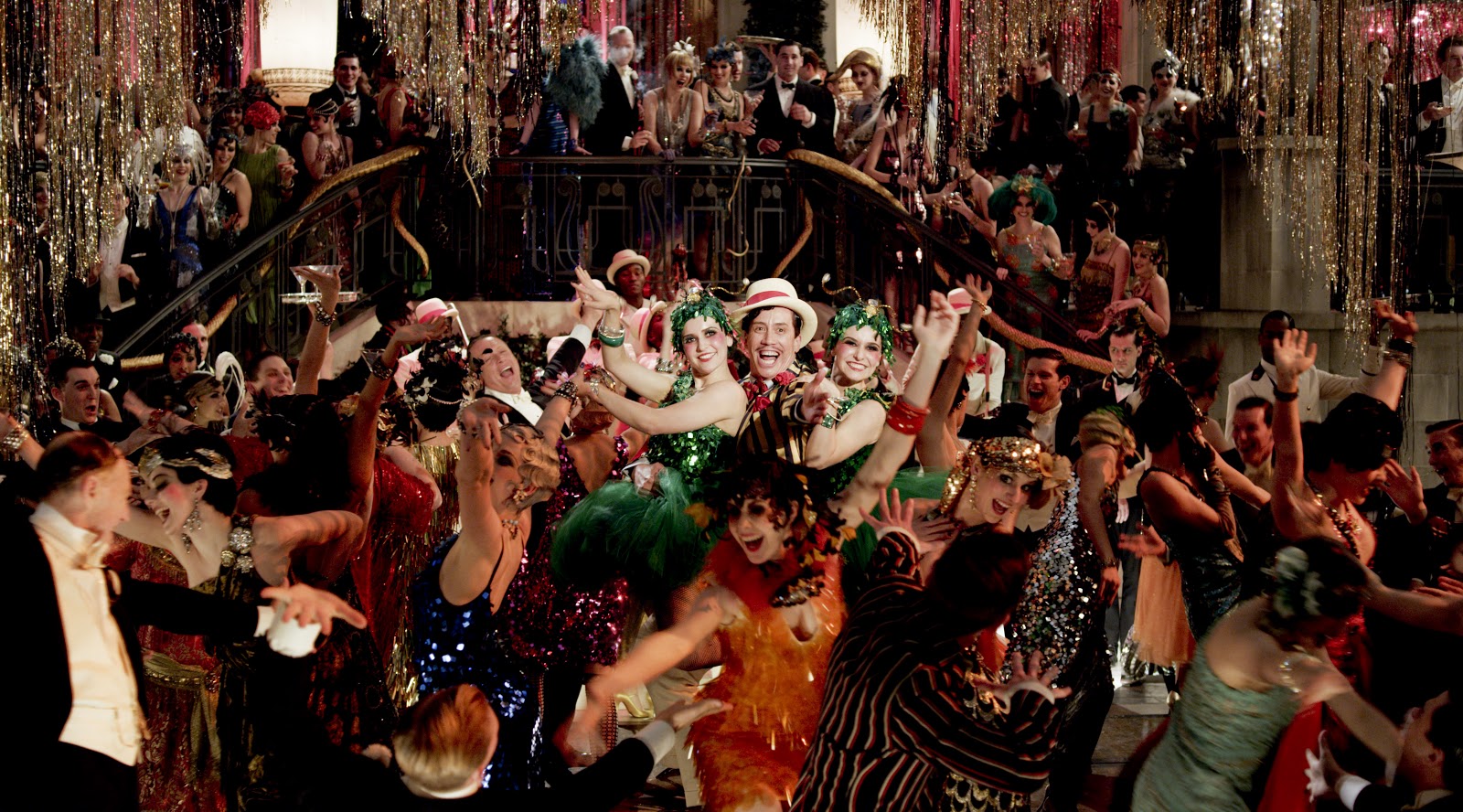
In Luhrmann's hands The Great Gatsby has become a frenzied display of technique, much of it devoted to creating the bacchanalian delirium that turned Gatsby's fabled parties into a magnet for New York's high-living crowd. Are we talking Gatsby or outtakes from the Playboy Mansion? You be the judge.

Fitzgerald, of course, told the story through a narrator named Nick Carraway, a Midwesterner who travels to New York and rents a small cottage next to Gatsby's ostentatious Long Island mansion. Nick meets Gatsby because of Gatsby's long-standing and unquenchable love for a woman named Daisy, who happens to be Nick's cousin. Nick is supposed to serve as a go-between for Gatsby and Daisy.

When we meet Daisy, she's already married to Tom Buchanan, Yale graduate and certifiable lout who indulges his libido with Myrtle (Isla Fisher), a low-class mistress from Queens.

Luhrmann uses some of Nick's narration (i.e., Fitzgerald's prose), even allowing pieces of it to wander across the screen in the form of typescript that floats above the fray.

But fidelity to text is hardly the point here: Luhrmann hasn't recreated America of the 1920s. He has invented a dreamscape all his own; the movie -- which mixes rap and Gershwin on its sound track -- isn't so much an evocation of the past, but a visit to an alternate universe stocked with jiggling flappers, feverish jazz musicians and a Jewish gangster played by an Indian actor (Amitabh Bachchan) who seems to have wandered into the story from some multi-cultural universe of the 21st century.

Luhrmann's Gatsby is a bold, vividly realized and distressingly literal retelling of a story that has been put on film before, but never with so much loudly trumpeted artifice and self-conscious daring; the soundtrack arrives complete with musical contributions from Jay Z and Beyonce.

Of course, Luhrmann has made alterations to the story (Nick tells the tale from some sort of rehab facility where he's struggling with alcoholism and regret), but changes to Fitzgerald's story are the least of the problems. Most of those center around the fact that Luhrmann has taken the events of the novel -- always secondary to Fitzgerald's prose -- and added so much technologically created upholstery that everything collapses into it.

Only those who do not own television sets can have escaped prior knowledge that Leonard DiCaprio portrays Jay Gatsby, the hopeful and deluded man who spends a lifetime trying to recreate his past so that he can become a suitable suitor for Daisy, a member of the upper classes to which the low-born Jay longingly aspires.

Looking as if he's posing for a fashion ad in the Sunday New York Times magazine, DiCaprio projects the calm of a man who's willing to create a storm to attract the beautiful Daisy who lives across the bay from him. And, yes, Gatsby spends an inordinate amount of time staring across the dark waters of Long Island Sound at the luminous green light that glows on dock of the Buchanans' East Egg home. The symbolism is inescapable: The light represents everything that remains visible but out of reach for Gatsby.

Gatsby is one of those amorphous figures who tries to create a new version of himself, but only can achieve it by associating with and profiting from the corruption and crime that leads to quick wealth. He has obscene amounts of money, but his affluence never can equal the more seasoned wealth that people such as the Buchanans have come by as a birth right.

Daisy is played by Carey Mulligan, who seems entirely too grounded for the part of a dreamy fantasy girl. A scowling Joel Edgerton portrays her husband Tom, polo player and former Ivy League jock, a man with a smash-mouth personality. In Luhrmann's hands, these pivotal characters seldom seem like plausible people; they move through the movie carrying the weight of the literary archetypes that they seem to represent.

As for Nick, the narrator ... well ... let's just say that Tobey Maguire rises to the challenge of making him as uninteresting as most narrators are, the man who floats outside the story, fascinated by it but unattached to its core.

Of all the characters, only Daisy's friend Jordan Baker -- played by Elizabeth Debicki -- seems to fit into a recognizable universe.

By now, I'm sure you've caught my drift; Luhrmann's movie is more about production design than about the distorting powers of the American dream. Its rewards have more to do with vintage cars, sprinting camera movements and glitzy overstatement than with the tragic undertow of Fitzgerald's story.

A confession of sorts: I watched The Great Gatsby with a sense of sustained amazement at Luhrmann's capacity for emotional amplification, but presenting an entire movie in an over-the-top style doesn't leave much by way of wriggle room.

I suppose sales of Fitzgerald's much-purchased novel will enjoy an inevitable boomlet because of Luhrmann's movie, but I'd be willing to bet that this Gatsby has more influence on American fashion than on the country's intellectual, emotional or cultural life.

In that sense, Luhrmann may have found the key to bringing Fitzgerald's film-resistant novel to the screen. Luhrmann may not get at much that feels real or substantial, but his Gatsby sure as hell is dressed for success.